
Harvard leads new National Academy of Medicine members with 13 elected
The US National Academy of Medicine (NAM) has elected 90 regular members and 10 international members, recognising researchers, clinicians and other leaders for contributions to health, medicine and public health. The new members were announced on 19 October during NAM’s annual meeting. Election to the academy is considered one of the highest honours in the health and medical sciences and recognises individuals who have demonstrated outstanding professional achievement and a commitment to service. “I am thrilled to welcome these outstanding health and medicine leaders into the National Academy of Medicine,” said NAM president Monica M. Bertagnolli. “Their extraordinary talent and commitment to advancing evidence-based guidance and solutions for our country’s greatest health care challenges will strengthen our efforts to improve health for all,” she said. New members are elected by existing NAM members through a process that recognises major contributions to medical science, healthcare and public health. The newly elected members bring NAM’s total membership to more than 2,600, including more than 200 international members. Harvard leads university affiliationsHarvard University had the largest number of newly elected regular members, with 13 individuals associated with the university and its affiliated hospital system. Johns Hopkins University had seven new regular members, followed by the University of Pennsylvania with six and Columbia University with five. The University of Colorado Anschutz and the University of Washington each had four new members, while the University of California, Los Angeles (UCLA) and the University of California, San Francisco (UCSF) each had three. The university affiliations illustrate the strong representation of major US academic medical centres among the new NAM members. Many researchers and physicians at leading universities also hold appointments at affiliated hospitals and health systems. International members span nine universitiesThe 10 newly elected international members are affiliated with universities and medical institutions across North America, Europe and Asia. Their affiliations include the University of Manitoba, Washington State University, Sun Yat-sen University, Vita-Salute San Raffaele University, Charité – Universitätsmedizin Berlin, Duke-NUS Medical School, the University of Osaka, the University of Valencia and the Federal University of Pelotas. The international cohort reflects NAM’s broader global membership and includes expertise spanning medicine, public health, biomedical research and related fields. NAM’s membership is intentionally designed to draw expertise from beyond the health professions. Its Articles of Organization require at least one-quarter of members to come from fields outside the health professions, including law, engineering, social sciences and the humanities. Founded in 1970 as the Institute of Medicine by the National Academy of Sciences, NAM is one of three US national academies, alongside the National Academy of Sciences and National Academy of Engineering. The academies provide independent analysis and advice on major issues in science, medicine, health and public policy. They also support education and research, recognise significant contributions to knowledge and seek to strengthen public understanding of science, technology, engineering and mathematics. Election to NAM also carries a commitment to contribute voluntary service to activities of the National Academies, including work to inform policy and address complex challenges in health and medicine.
Packard Awards Nearly $1 Million Each in Unrestricted Funding to 20 Young Researchers
The David and Lucile Packard Foundation on October 15 announced the 2026 class of Packard Fellowships for Science and Engineering, awarding 20 early-career researchers at 20 universities across the United States a total of roughly $19.7 million in unrestricted support over the next five years. Each Fellow receives $985,834 — an unusually large sum for a fellowship at this career stage — with no restrictions on how it is spent. The foundation deliberately leaves the allocation to the researchers themselves, who may direct the money toward new equipment, additional lab members, conference travel, or child care during the demanding first years of running an independent group. "The scientists, engineers, and mathematicians in this class are asking ambitious questions about our bodies, our planet, and the technologies shaping our future," said Nancy Lindborg, president and CEO of the Packard Foundation. "At a time of significant uncertainty in the research landscape, flexible, long-term support for early-career researchers matters more than ever." The 2026 class spans 20 institutions, one Fellow apiece. The University of California system claims five Fellows across four campuses — Los Angeles, Irvine, Berkeley, San Diego and Santa Barbara — more than any other university system in the country. The remaining 15 Fellows are spread one each across the rest of the list: the University of Illinois, Urbana-Champaign; Carnegie Mellon University; the University of Texas at Austin; Harvard University; the California Institute of Technology; the University of North Carolina, Chapel Hill; Duke University; Johns Hopkins University; the University of Chicago; Stanford University; Princeton University; the Massachusetts Institute of Technology; Stony Brook University; Rice University; and Cornell University. The announcement lands at a moment of anxiety in American academic research. In 2026 the foundation created the Packard Fellows Emergency Relief Fund, a $3.3 million rapid-response effort administered by the Science Philanthropy Alliance that helped 42 existing Fellows sustain their research teams through disruptions in federal funding — an unusual intervention for a philanthropy that has historically focused on forward-looking bets rather than bridge financing. The foundation also said it will increase fellowship award amounts again beginning with the 2027 class, following this year's expansion of support. "What is exciting about supporting researchers at this early stage of their career is that some of their most important discoveries are impossible to anticipate," said Richard Alley, chair of the Packard Fellowships Advisory Panel and himself a 1991 Packard Fellow. "This year's Fellows combine deep expertise with the curiosity and ambition to take their fields into entirely new directions." About the Packard Fellowships for Science and EngineeringThe program, now in its 38th year, was inspired by David Packard's conviction that the success of Hewlett-Packard, which he co-founded, grew out of breakthroughs made in university laboratories. Each year the foundation invites 50 universities to nominate two faculty members apiece. A 12-member advisory panel of internationally recognized scientists and engineers evaluates the nominations and recommends Fellows to the foundation's board of trustees for approval. Since 1988, the Packard Foundation has awarded more than $550 million through the program to 755 scientists and engineers from 55 universities. Former Fellows have gone on to receive Nobel Prizes in Chemistry and Physics, Fields Medals, Alan T. Waterman Awards, Breakthrough Prizes and Kavli Prizes, and to be elected to the National Academies of Sciences, Engineering, and Medicine.
Harvard's $68 Billion Endowment Can't Shield It From Mounting Budget Pressures
Harvard University's endowment grew by more than $11 billion to nearly $68 billion in fiscal year 2026, buoyed by a 27.1 percent investment return — its strongest since 2021 — according to the university's annual financial report released Thursday. N.P. Narvekar, chief executive of Harvard Management Company, said the year's gains were driven primarily by venture capital, public equities and hedge funds. Harvard also posted a $100 million operating surplus, reversing the $113 million operating loss it reported a year earlier. But Chief Financial Officer Ritu Kalra and Treasurer Timothy R. Barakett cautioned that the surplus amounts to a 1.5 percent margin on $6.7 billion in revenue — "an insufficient measure of Harvard's financial health." The report showed that unrestricted funds — the money that pays for day-to-day operations — ran a $78.7 million deficit. The portion of the budget Harvard directly controls, including salaries and facilities renewal, finished nearly $80 million in the red, offset by a $180 million surplus in restricted funds. Kalra noted that the endowment comprises roughly 15,000 separate funds, each designated for a specific purpose and barred from being diverted to payroll or campus upkeep. Cost-cutting proved central to the turnaround. Salaries and wages — the university's largest expense — fell by $104 million, a nearly 4 percent decline that officials attributed to a hiring freeze, attrition and restructuring. Total expenses dropped more than 2 percent to $6.64 billion. Executive Vice President Meredith Weenick said that "without those interventions, we would have ended the year in deficit," while acknowledging that the reorganizations had cost colleagues their jobs through "painful decisions." The endowment tax looms as the biggest source of uncertainty. Under the One Big Beautiful Bill Act enacted in July 2025, the tax rate on endowment earnings will rise from 1.4 percent to 8 percent, a cost Harvard projects at roughly $300 million a year. Because the university was required to book the effect of the law this year, its tax liability jumped from $317 million to $1.9 billion. Kalra said Harvard has held its fiscal year 2027 endowment distribution flat in order to absorb the tax — funds, she said, that would otherwise have supported research, teaching and financial aid. Even as federal research funding receded, Harvard spent more than $1.2 billion on research activity this year, a third of it funded by the university itself, and announced a $150 million research initiative in September. Harvard's 27.1 percent return trailed several peer institutions: Stanford reported 31.7 percent and the University of Pennsylvania 27.4 percent, while Brown returned nearly 20 percent and MIT just over 10 percent.
WorldHE NS Watch: Global NS Output Surges as U.S. and China Mainland Lead
Global university publication output in Nature and Science surged last week, while 64 universities worldwide have now published at least 10 NS papers over the past year, underscoring the increasingly intense competition for high-impact research. WorldHE continuously tracks the latest and rolling 12-month Nature and Science publication data from universities worldwide, providing a dynamic view of the shifting global higher education and research landscape. Click here to access the complete university NS publication data. Global University NS Publications: October 5–11, 2026A total of 47 universities worldwide published papers in Nature or Science last week. The United States accounted for 19 of these universities, followed by China Mainland with 11, putting both well ahead of other countries and regions. Notably, four South Korean universities also published NS papers last week, signaling the emergence of South Korea as a rising research powerhouse. Harvard University and Stanford University led the weekly output among U.S. institutions, each publishing four NS papers — three in Nature and one in Science. All four of Harvard’s papers listed the university as both the first-author and corresponding-author institution. Stanford was also the corresponding-author institution on all four papers, highlighting its strong leadership role in international research collaboration. The University of California, San Diego, the University of Cambridge, and the University of Chinese Academy of Sciences each published three NS papers, representing the United States, the United Kingdom, and China Mainland, respectively. Eastern Institute of Technology, Ningbo, ShanghaiTech University, and the University of Chicago each published two NS papers. Two of the three are universities from China Mainland, further highlighting the strong performance of leading Chinese universities in high-impact research last week. Global University NS Rankings: October 11, 2025–October 11, 2026Over the rolling 12-month period, 64 universities worldwide have published at least 10 papers in Nature or Science, underscoring the increasingly intense competition for high-impact research. The global Top 10 continues to comprise five universities from the United States, three from China Mainland, and two from the United Kingdom. Harvard University remains the clear global leader with 142 NS papers, including 93 in Nature and 49 in Science. Harvard ranks first among all universities in publication output in both journals. MIT also remains above the 100-paper mark, with 108 papers, ranking second globally. Stanford University follows with 94 papers. Together, Harvard, MIT, and Stanford form a firmly established elite research cluster at the 100-paper level and above. The University of California, Berkeley ranks fourth with 60 NS papers, maintaining a relatively balanced output between Nature (29) and Science (31). The University of Cambridge ranks fifth globally with 54 papers, making it the highest-ranked non-U.S. university. The University of Chinese Academy of Sciences follows in sixth place with 53 papers. Peking University remains seventh with 47 papers. Tsinghua University overtakes the University of California, San Francisco to rank eighth with 44 papers, while UC San Francisco ranks ninth. The University of Oxford rounds out the Top 10 with 36 papers. Click here to access the complete university NS publication data. MethodologyFor Nature, only publications classified as Article and Review Article were included. For Science, the analysis includes Research Article, Special-Issue Research Article, and Review. Only the physically affiliated first author was counted as the first author. All corresponding-author affiliations were included, with each affiliated institution counted once. If the first-author institution and the corresponding-author institution were the same, the publication was counted only once for that institution. Only formally published articles were included in the analysis. Advance online publications and papers in pre-publication status were excluded.

From Training Talent to Winning Nobels: The Universities Behind the Laureates
With the 2026 Nobel Prize season now complete, WorldHE has continued to examine the awards and the people and institutions behind them. Previous analyses have explored Nobel laureates’ ages, research fields and their track records with awards widely regarded as potential “Nobel predictors.” But another question is equally worth asking: if Nobel laureates represent the pinnacle of a university’s research and talent, what does the global university landscape behind them look like? (Note: All analyses in this article exclude the Nobel Peace Prize.) WorldHE examined the institutions where Nobel laureates were affiliated at the time of their awards, as well as their undergraduate, master’s and doctoral education, covering nearly three decades from 1997 to 2026. The data show that Nobel laureates during this period were affiliated with 108 universities at the time of their awards. All universities with 10 or more laureates were based in the United States. Stanford University ranks first, with 15 laureates across the period: three in Physiology or Medicine, two in Physics, five in Chemistry and five in Economic Sciences. This year’s laureates Karl Deisseroth and Robert E. Hall were both affiliated with Stanford at the time of their awards. The Massachusetts Institute of Technology (MIT) follows with 13 laureates, while the University of California, Berkeley has 11. Columbia University, Harvard University and Princeton University each have 10. Looking at the Nobel categories separately reveals an even clearer picture of the distinct academic strengths of leading universities. In Physiology or Medicine, Rockefeller University ranks first with five laureates, reflecting its longstanding global influence in biomedical research. In Physics, the University of California, Santa Barbara and Princeton University share the top spot, with five laureates each. Stanford leads Chemistry with five laureates, while MIT and the University of Chicago dominate Economic Sciences, with seven laureates each. Where Nobel Laureates Were TrainedThe educational pathways of Nobel laureates present a considerably more diverse picture than their institutional affiliations at the time of the award. Over the past three decades, 222 universities and research institutions have educated Nobel laureates. Harvard University ranks first, with 55 alumni affiliations, including 20 bachelor’s-degree alumni and 28 doctoral alumni. Its presence at both the undergraduate and doctoral levels highlights its dual role in nurturing talent early in the academic journey and providing advanced research training. MIT follows with 37 Nobel alumni affiliations, while the University of Cambridge has 31, the University of California, Berkeley 22, and the University of Chicago 21. These institutions appear prominently in both the affiliation and alumni rankings. Their strength lies not only in developing sophisticated talent pipelines, but also in attracting leading researchers and providing the academic environments in which major discoveries can emerge. The result is a self-reinforcing cycle: universities train exceptional researchers, attract outstanding talent, and sustain research ecosystems capable of producing high-impact discoveries. Over time, talent and research excellence reinforce one another, helping these institutions maintain a lasting presence on the global Nobel landscape.
Getting Older, Crossing Disciplines: What Nobel Prize Data Reveal
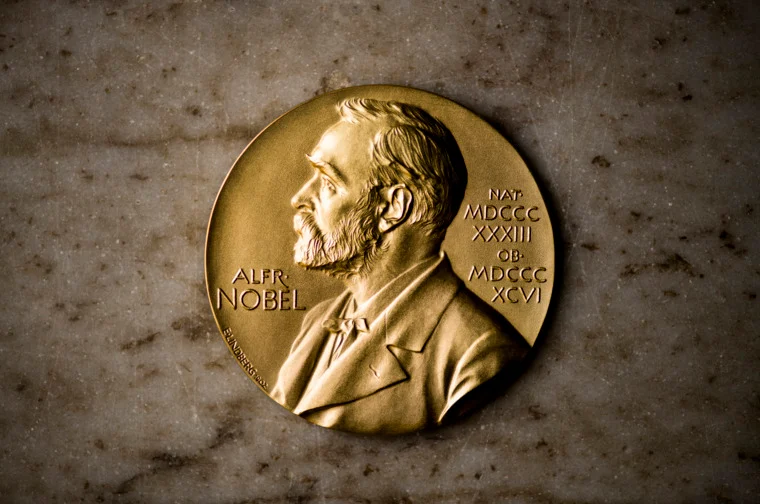
With the Nobel Prize in Economic Sciences announced, the 2026 Nobel Prize season has come to a close. This year’s laureates have opened up new frontiers across disciplines: Karl Deisseroth, Peter Hegemann and Georg Nagel gave the brain a “light switch”; Francis Halzen detected cosmic “ghost particles” deep beneath the Antarctic ice; Henri B. Kagan and Kenso Soai helped unravel the mystery of molecular mirror images; Anne Carson forged creative connections between classical literature and the contemporary world; and Robert E. Hall and Michael Woodford brought microeconomic foundations into macroeconomic analysis. This year also marks the 125th anniversary of the Nobel Prizes. Guided by Alfred Nobel’s vision of delivering “the greatest benefit to humankind,” the laureates collectively represent the global landscape of outstanding research and talent. How long does it take to reach the pinnacle of this landscape? What do their achievements reveal about the frontiers of human knowledge? And what patterns emerge from the institutions and disciplines behind their success? To explore these questions, WorldHE compiled data on Nobel laureates’ ages at the time of their awards, their prize-winning achievements, their institutional affiliations, and the universities where they earned their bachelor’s, master’s and doctoral degrees. (Note: All analyses in this article exclude the Nobel Peace Prize.) This article offers an overview of the laureates and their achievements. The next instalment will examine the global university landscape behind the Nobel Prizes. Nobel Laureates Are Winning at Increasingly Older AgesHow long does it take a scientist to reach Nobel Prize recognition? The answer varies widely. Since the first Nobel Prizes were awarded in 1901, 892 individuals have received the honour. At just 25, Lawrence Bragg remains the youngest Nobel laureate in history. He shared the 1915 Nobel Prize in Physics with his father in recognition of their work on the analysis of crystal structures using X-rays. At the other end of the spectrum is John B. Goodenough, who was 97 when he received the 2019 Nobel Prize in Chemistry for his contributions to the development of lithium-ion batteries. In a striking coincidence, Henri B. Kagan, this year’s Chemistry laureate, is only two years younger than Goodenough. Now 95, Kagan is being recognised for work that helped lay the foundations of asymmetric catalysis four decades ago. Many observers believe he missed out on the Nobel Prize in 2001, making this year’s award seem, to some, like long-overdue recognition. For many laureates, Nobel recognition comes only after a long wait. Across the history of the prizes, the average age at the time of winning has reached 60.5. Economic Sciences laureates have the highest average age, at 67.2, significantly above the 57.8 average for Physics laureates. This gap may reflect the time often required for economic research to accumulate evidence, develop theoretical foundations and demonstrate its broader significance. A breakdown by decade reveals an even clearer trend: Nobel laureates are winning at increasingly older ages. The average age at the time of winning was just 55 in the 1900s, compared with 70.1 in the 2020s—an increase of nearly 15 years over more than a century. Nobel Research Fields Continue to EvolveThe growing time between a major discovery and Nobel recognition may also reflect the increasing complexity of scientific research. That complexity is evident in the changing research fields represented by the prizes. Over more than a century, Nobel-recognised research has shifted alongside broader changes in scientific priorities. In the first half of the 20th century, atomic, molecular and optical physics, as well as physiology and metabolism, featured prominently. In the second half, particle physics and organic chemistry gained ground. Since the beginning of the 21st century, interdisciplinary fields have risen rapidly, including biochemistry and chemical biology, materials chemistry and nanomaterials, and neuroscience. The 2024 Nobel Prizes offered a particularly striking illustration of this shift: the Chemistry Prize recognised AI-driven advances in protein structure prediction, while the Physics Prize honoured pioneers of neural networks. These awards suggest that the traditional boundaries between scientific disciplines are becoming less distinct. Can “Nobel Predictor” Awards Offer Early Clues?The Nobel selection process is subject to strict confidentiality, making the winners notoriously difficult to predict. Yet several major international awards are widely regarded as potential “Nobel predictors,” offering clues to research that may later receive Nobel recognition. WorldHE examined the past decade of Nobel laureates and whether they had previously received any of six awards often described as Nobel indicators: the Breakthrough Prize, Clarivate Citation Laureates, the Lasker Awards, the Louisa Gross Horwitz Prize, the Canada Gairdner International Award and the Wolf Prize. Over the past decade, more than 60% of Nobel laureates had received at least one of these awards before winning the Nobel Prize. Clarivate Citation Laureates had the broadest overlap with Nobel winners, with 45 Nobel laureates having previously received the distinction. This year’s Economic Sciences laureates Robert E. Hall and Michael Woodford, as well as Physiology or Medicine laureate Karl Deisseroth, were all previously named Clarivate Citation Laureates. According to Clarivate, the programme has successfully anticipated 92 future Nobel laureates to date. James P. Allison, who received the 2018 Nobel Prize in Physiology or Medicine, achieved a remarkable clean sweep of all six indicator awards. All six were presented between 2014 and 2017, making his Nobel recognition in 2018 widely anticipated. This year, Stanford University professor Karl Deisseroth has also attracted attention on social media, in part thanks to a heartwarming video of his children congratulating him on his Nobel Prize. Beyond the viral moment, his research record is notable: he has received five of the six awards tracked in this analysis, missing only the Wolf Prize. As one of his Stanford colleagues put it, “We knew he deserved it.”
From MIT to Chicago: The Universities Powering Nobel Economics
On October 12, the final Nobel Prize of the 2026 season — the Prize in Economic Sciences — was awarded to Robert E. Hall and Michael Woodford “for microeconomic foundations of macroeconomic stabilisation.” With the announcement, this year’s Nobel Prize season has come to a close. As part of its coverage, WorldHE has reviewed the institutions where Nobel laureates were affiliated at the time of their awards, as well as the universities where they earned their undergraduate, master’s and doctoral degrees, covering the period from 1997 to 2026. This analysis focuses on the Nobel Prize in Economic Sciences. US Universities Dominate the Nobel Economics LandscapeUS universities have maintained a clear dominance in the Nobel Prize in Economic Sciences. Over the past three decades, US institutions accounted for approximately 85% of all laureate affiliations in the dataset, and every university with three or more laureates was American. MIT and the University of Chicago lead with seven laureates each. Both have built exceptionally strong research ecosystems across economic theory, econometrics, macroeconomics, microeconomics and related interdisciplinary fields. Harvard and Stanford each have five laureates, while Columbia, UC Berkeley and Princeton have four each. New York University has three. The 2026 laureates further illustrate this concentration: Robert E. Hall is a professor at Stanford University, while Michael Woodford is a professor at Columbia University. The pattern is closely linked to the way modern economics develops. The discipline relies heavily on academic communities, where leading scholars attract talented researchers from around the world and sustain long-term research networks. Universities, by their very nature, provide the institutional setting for these communities to develop and produce research over time. Beyond the leading US institutions, several universities have also emerged as internationally influential economics centers, including the London School of Economics and Political Science in the UK, Collège de France and Toulouse School of Economics in France, Aarhus University in Denmark, and the Hebrew University of Jerusalem and Tel Aviv University in Israel. US Universities Also Lead in Training Future LaureatesThe dominance of US universities extends beyond where laureates work to where they were educated. Among the 60 universities worldwide that had educated Nobel Economics laureates in the dataset, 31 were in the United States. Harvard leads with 21 alumni affiliations, including seven bachelor’s, three master’s and 11 doctoral degrees. MIT follows with 18, including 15 PhD alumni — the highest doctoral total among all universities in the dataset. Yale has 14 alumni affiliations, with a relatively balanced distribution across undergraduate, master’s and doctoral degrees. The University of Chicago has nine, Princeton seven, while Cambridge and Stanford have five each. UC Berkeley, Carnegie Mellon and the London School of Economics each have four. Notably, all four of Carnegie Mellon’s laureate alumni earned PhDs there, underscoring the university’s strength in advanced economics research training. The two 2026 laureates also reflect these academic networks. Both Hall and Woodford earned PhDs in Economics from MIT. Hall previously earned his undergraduate degree in Economics from UC Berkeley, while Woodford earned a bachelor’s degree from the University of Chicago before studying at Yale and subsequently completing his economics PhD at MIT. A Self-Reinforcing Academic EcosystemThe data point to a powerful cycle at the top of the economics field. Universities such as MIT, Chicago, Harvard, Stanford and Princeton have not only produced Nobel-caliber research; they have also built highly successful systems for training future economists. Their advantage comes from combining research excellence, strong academic communities and talent development — creating a self-reinforcing ecosystem in which leading scholars attract new talent, train future researchers and generate influential research. Over three decades of Nobel Economics data, this combination has helped a small group of universities establish a remarkably durable position at the center of the global economics research landscape. Data note: Institutional names have been standardized where universities have undergone clear mergers or name changes; where historical institutions have split into independent universities, their original names are retained. Alumni are counted by degree earned, with each bachelor’s, master’s and doctoral degree counted separately. If a laureate held positions at multiple institutions at the time of the award, each institution is counted once. The data were manually collected and should be considered an incomplete statistical sample.
Robert E. Hall and Michael Woodford Win 2026 Nobel Prize in Economic Sciences
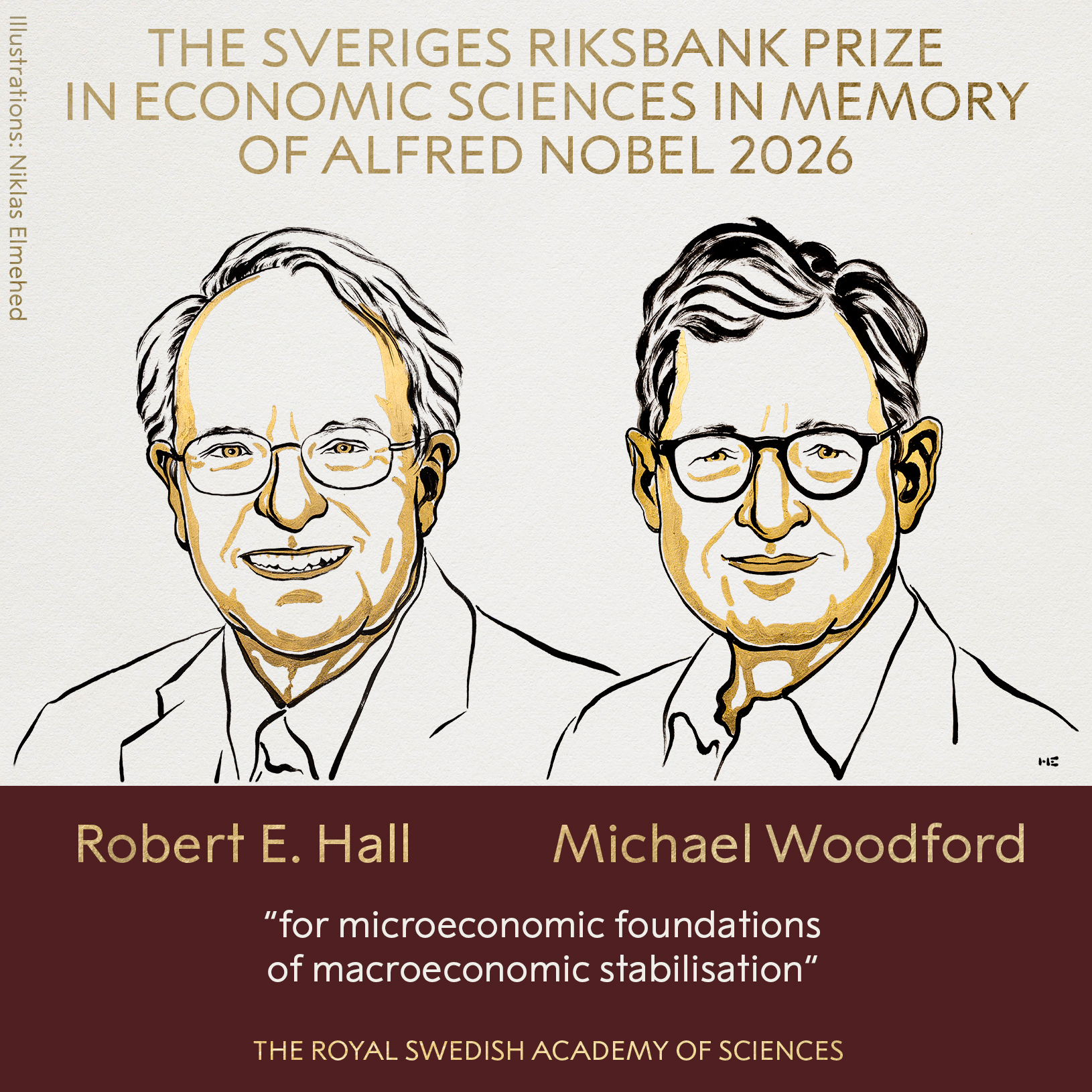
The 2026 Nobel Prize in Economic Sciences has been awarded to Robert E. Hall and Michael Woodford “for microeconomic foundations of macroeconomic stabilisation.” According to the Nobel Prize, the two economists developed new macroeconomic models that have significantly improved our understanding of how to implement effective stabilisation policies. Their work shows how timely fiscal and monetary policy measures can help smooth economic peaks and troughs. Two Economists, Two Leading US UniversitiesRobert E. Hall, born in 1943 in Palo Alto, California, earned his PhD from the Massachusetts Institute of Technology (MIT) in 1967. He is a professor at Stanford University. Michael Woodford, born in 1955 in Chicopee, Massachusetts, earned his PhD from MIT in 1983. He is a professor at Columbia University in New York. The award highlights the continuing importance of strong university-based research in economic policy, bringing together microeconomic foundations and macroeconomic stabilisation to better understand how economies respond to shocks and policy interventions.
MIT Overtakes Harvard as U.S. and China Dominate September Nature and Science Output
The 2026 Nobel Prizes in the natural sciences have now all been announced, with six scientists recognized for breakthroughs that have reshaped their respective fields. Yet the awards may also be seen as a long-overdue tribute: many of the key discoveries recognized by the Nobel committees were made two or three decades ago. In this sense, the Nobel Prize itself is a scorecard that comes with a considerable time lag. So what does the global research landscape look like today? Publications in leading scientific journals may offer one useful snapshot. WorldHE continuously tracks university publication output in Nature and Science. Its latest data show that 134 universities worldwide published papers in Nature or Science in September, with research output remaining highly concentrated among leading institutions. A relatively small group of world-class research universities accounted for a substantial share of NS publications, while nearly two-thirds of universities published just one paper during the month. At the same time, universities in the United States and China Mainland continued to occupy a central position in global research output. MIT and Harvard Continue to LeadIn September, MIT overtook Harvard to rank first, with 12 publications, including 10 in Nature and two in Science. MIT also recorded the highest number of Nature publications among universities during the month. Harvard followed with 11 publications, including eight in Nature and three in Science. The two institutions were the only universities to record more than 10 NS publications in September. Both also published papers in Nature or Science every week of the month, demonstrating a sustained and consistent research output. The University of California, San Francisco (UCSF) and the Icahn School of Medicine at Mount Sinai saw a significant increase in NS publications compared with August, with six publications each. UCSF published four papers in Nature and two in Science, while all six of Mount Sinai's publications were in Nature. The University of Washington Seattle, UC Berkeley, the University of Cambridge, the University of Oxford, Stanford University and Yale University each published five papers, while Peking University, New York University, Tsinghua University and the University of Chinese Academy of Sciences each published four, forming the next tier of leading institutions. Behind the high publication volumes of these leading universities is a strong degree of institutional leadership in research projects and collaborations. Leading universities frequently appeared as the corresponding-author affiliation. At Mount Sinai, UC Berkeley and Stanford, all of their September publications counted the institution as both the first-author and corresponding-author affiliation, highlighting their central role in global research collaboration networks. In contrast to the concentration of output among leading institutions, 88 universities published only one NS paper in September. Universities capable of maintaining a high and consistent level of publication in Nature and Science therefore remain a relatively small group within the global research system. U.S. Universities Maintain Their Global Lead in NS PublicationsOf the 10 universities that published five or more papers in Nature or Science in September, eight were from the United States and two from the United Kingdom. U.S. universities continued to be the largest contributors to Nature and Science output. In September, 39 U.S. universities published NS papers, accounting for approximately 40% of all universities represented in the global dataset. The United States remained well ahead of other countries and regions in both the number of universities publishing in the two journals and their overall publication volume. China ranked second, with 35 universities represented — including 29 in China Mainland, four in Taiwan, China, and two in Hong Kong, China. Together, universities in the United States and China accounted for more than half of the world's universities publishing in Nature or Science in September, reinforcing their position as the two central forces in global top-tier research output. However, the two countries showed noticeably different publication profiles across the two journals. U.S. universities had a stronger presence in Nature, while Chinese universities were more prominent in Science. Among the 29 China Mainland universities represented in September, 21 published papers in Science. Of the four NS publications recorded by Tsinghua University and the University of Chinese Academy of Sciences, three were published in Science, putting both institutions among the universities with the highest Science output in September. Beyond the United States and China, 12 German universities and 11 UK universities were represented in the September data. Canada, Japan, Switzerland and several other countries also maintained a significant presence in high-impact scientific research. MethodologyFor Nature, the analysis includes Article and Review Article publications. For Science, it includes Special-Issue Research Article, Research Article and Review publications. The affiliation of each first author and corresponding author is counted once. If the first author and corresponding author are affiliated with the same institution, the institution is counted only once. The statistics include only papers that have been formally published and exclude papers in pre-publication or advance online status. Further ReadingWorldHE NS Watch: Harvard, MIT and Stanford Lead Global Nature and Science Output in August Global Nature and Science Leaders, H1 2026

US DOE awards $159 million to 12 Genesis Mission projects
The US Department of Energy (DOE) has awarded $159 million to 12 Phase II projects under the Genesis Mission, bringing universities, national laboratories and industry together to use artificial intelligence and advanced computing to accelerate scientific discovery. Announced on 8 October, the awards build on the Genesis Mission portfolio launched in July and are intended to develop new capabilities using what the DOE calls “Super Intelligence” (SI) for science. Seven US universities are leading newly funded projects: the University of California, San Diego; Massachusetts Institute of Technology (MIT); University of California, Irvine; University of Illinois Urbana-Champaign; University of Washington, Seattle; Harvard University; and Northeastern University. The awards bring the total number of Phase II Genesis Mission projects to 14, including two previously announced projects: GridFM 2.0, supported by the DOE’s Office of Electricity, and Prometheus, supported by the Office of Nuclear Energy. President Donald Trump launched the Genesis Mission in November 2025 to accelerate scientific discovery and strengthen US leadership in science, medicine and technology. “These projects represent a critical step in turning the promise of Super Intelligence for science into transformative scientific capability,” said DOE Under Secretary for Science Darío Gil. The Phase II teams have already demonstrated the potential of integrating SI with scientific expertise, data and computing, Gil said. The new awards will allow researchers to expand those efforts and develop new capabilities to address complex national science and technology challenges. By connecting researchers with advanced AI systems, supercomputing, scientific data and DOE research infrastructure, the Genesis Mission aims to accelerate research across areas ranging from fusion energy and biotechnology to quantum computing, particle physics and advanced materials. Universities lead projects across key research areasThe 12 newly funded projects span a broad range of scientific and technological fields. The University of California, San Diego will lead Decoding the RNA Structurome to Secure AI Advantage for the Bioeconomy, which aims to expand the RNA structure database fivefold to train SI models capable of supporting the development of more resilient crops and sustainable microbes. MIT will lead Lattice Quantum Chromodynamics (LQCD) at the Intelligence Frontier, integrating SI with supercomputing calculations in fundamental particle physics to accelerate research into the basic building blocks of matter. At the University of California, Irvine, the Multi-agent AI Expert for Subsurface Reasoning and Optimization (MAESTRO) project will develop an SI platform to map, stimulate and manage deep underground reservoirs, with the goal of expanding access to geothermal energy. The University of Illinois Urbana-Champaign will lead AI-extended Interfacial Separations (AXIS), which will use SI to design more efficient electrochemical processes for extracting critical rare-earth elements from domestic sources. The University of Washington, Seattle will lead a project focused on overcoming barriers in computational enzyme design through improved sequence-structure ensemble modelling. The work aims to develop foundational SI tools for predicting and designing functional enzymes. Harvard University will lead Application-Aware Error Correcting Codesign for Scientific Quantum Computing (ASQC), combining SI with advanced quantum hardware to address challenges in quantum error correction. Northeastern University will lead Agentic Assistance for Advanced Rare Isotope Separator Operations at the Facility for Rare Isotope Beams (FRIB). The project will develop an intelligent automated assistant to streamline the safe operation and tuning of the facility's particle separator, potentially freeing hundreds of hours of research time each year. Industry and national laboratories will lead the remaining projects. Commonwealth Fusion Systems will lead a project to develop an AI-enabled digital twin platform for a fusion demonstration device, with the aim of simulating and optimising operations and accelerating the path towards commercial fusion energy. Fermilab will lead Accelerating Extreme Environment Specs-to-Silicon (AXESS), using SI to design rugged, high-performance microchips for extreme environments including space, high-radiation settings and ultra-cold conditions. Lawrence Berkeley National Laboratory will lead The Multi-office Accelerator Team Core (MOAT-Core), which will develop a shared SI platform for national laboratories to autonomously design and operate particle accelerators more efficiently. Argonne National Laboratory will lead An Iterative Framework of AI-Assisted Scientific Development and Optimization (AI4HPC), aimed at modernising, optimising and verifying scientific software used in supercomputing. Oak Ridge National Laboratory will lead a project on AI-empowered Design of Functional Quantum Magnets, developing a physics-informed SI framework to design new quantum magnets based on desired properties. Potential applications include quantum sensing, low-power electronics and other quantum technologies. The DOE said the projects demonstrate how SI can be combined with scientific expertise, large-scale computing and research infrastructure to address some of the country's most complex scientific challenges. The initiative also reflects a growing emphasis on closer collaboration among universities, national laboratories and industry in developing AI-enabled research capabilities. For universities, the programme provides access to national research infrastructure and opportunities to work alongside government laboratories and technology companies on large-scale scientific problems. The DOE said the Genesis Mission will continue to build capabilities at the intersection of AI, scientific data and high-performance computing, with the broader goal of strengthening US leadership at the frontiers of science and technology.


TRENDING
The Global Higher Education Map Is Shifting: The Universities on the Rise — and in Retreat
Data & Rankings
The Global Higher Education Map Is Changing: Winners, Rising Powers and New Entrants
Data & Rankings
MIT Overtakes Harvard as U.S. and China Dominate September Nature and Science Output
Data & Rankings
From Training Talent to Winning Nobels: The Universities Behind the Laureates
Data & Rankings
Getting Older, Crossing Disciplines: What Nobel Prize Data Reveal
Data & Rankings