

The US Department of Energy (DOE) has awarded $159 million to 12 Phase II projects under the Genesis Mission, bringing universities, national laboratories and industry together to use artificial intelligence and advanced computing to accelerate scientific discovery. Announced on 8 October, the awards build on the Genesis Mission portfolio launched in July and are intended to develop new capabilities using what the DOE calls “Super Intelligence” (SI) for science. Seven US universities are leading newly funded projects: the University of California, San Diego; Massachusetts Institute of Technology (MIT); University of California, Irvine; University of Illinois Urbana-Champaign; University of Washington, Seattle; Harvard University; and Northeastern University. The awards bring the total number of Phase II Genesis Mission projects to 14, including two previously announced projects: GridFM 2.0, supported by the DOE’s Office of Electricity, and Prometheus, supported by the Office of Nuclear Energy. President Donald Trump launched the Genesis Mission in November 2025 to accelerate scientific discovery and strengthen US leadership in science, medicine and technology. “These projects represent a critical step in turning the promise of Super Intelligence for science into transformative scientific capability,” said DOE Under Secretary for Science Darío Gil. The Phase II teams have already demonstrated the potential of integrating SI with scientific expertise, data and computing, Gil said. The new awards will allow researchers to expand those efforts and develop new capabilities to address complex national science and technology challenges. By connecting researchers with advanced AI systems, supercomputing, scientific data and DOE research infrastructure, the Genesis Mission aims to accelerate research across areas ranging from fusion energy and biotechnology to quantum computing, particle physics and advanced materials. Universities lead projects across key research areasThe 12 newly funded projects span a broad range of scientific and technological fields. The University of California, San Diego will lead Decoding the RNA Structurome to Secure AI Advantage for the Bioeconomy, which aims to expand the RNA structure database fivefold to train SI models capable of supporting the development of more resilient crops and sustainable microbes. MIT will lead Lattice Quantum Chromodynamics (LQCD) at the Intelligence Frontier, integrating SI with supercomputing calculations in fundamental particle physics to accelerate research into the basic building blocks of matter. At the University of California, Irvine, the Multi-agent AI Expert for Subsurface Reasoning and Optimization (MAESTRO) project will develop an SI platform to map, stimulate and manage deep underground reservoirs, with the goal of expanding access to geothermal energy. The University of Illinois Urbana-Champaign will lead AI-extended Interfacial Separations (AXIS), which will use SI to design more efficient electrochemical processes for extracting critical rare-earth elements from domestic sources. The University of Washington, Seattle will lead a project focused on overcoming barriers in computational enzyme design through improved sequence-structure ensemble modelling. The work aims to develop foundational SI tools for predicting and designing functional enzymes. Harvard University will lead Application-Aware Error Correcting Codesign for Scientific Quantum Computing (ASQC), combining SI with advanced quantum hardware to address challenges in quantum error correction. Northeastern University will lead Agentic Assistance for Advanced Rare Isotope Separator Operations at the Facility for Rare Isotope Beams (FRIB). The project will develop an intelligent automated assistant to streamline the safe operation and tuning of the facility's particle separator, potentially freeing hundreds of hours of research time each year. Industry and national laboratories will lead the remaining projects. Commonwealth Fusion Systems will lead a project to develop an AI-enabled digital twin platform for a fusion demonstration device, with the aim of simulating and optimising operations and accelerating the path towards commercial fusion energy. Fermilab will lead Accelerating Extreme Environment Specs-to-Silicon (AXESS), using SI to design rugged, high-performance microchips for extreme environments including space, high-radiation settings and ultra-cold conditions. Lawrence Berkeley National Laboratory will lead The Multi-office Accelerator Team Core (MOAT-Core), which will develop a shared SI platform for national laboratories to autonomously design and operate particle accelerators more efficiently. Argonne National Laboratory will lead An Iterative Framework of AI-Assisted Scientific Development and Optimization (AI4HPC), aimed at modernising, optimising and verifying scientific software used in supercomputing. Oak Ridge National Laboratory will lead a project on AI-empowered Design of Functional Quantum Magnets, developing a physics-informed SI framework to design new quantum magnets based on desired properties. Potential applications include quantum sensing, low-power electronics and other quantum technologies. The DOE said the projects demonstrate how SI can be combined with scientific expertise, large-scale computing and research infrastructure to address some of the country's most complex scientific challenges. The initiative also reflects a growing emphasis on closer collaboration among universities, national laboratories and industry in developing AI-enabled research capabilities. For universities, the programme provides access to national research infrastructure and opportunities to work alongside government laboratories and technology companies on large-scale scientific problems. The DOE said the Genesis Mission will continue to build capabilities at the intersection of AI, scientific data and high-performance computing, with the broader goal of strengthening US leadership at the frontiers of science and technology.
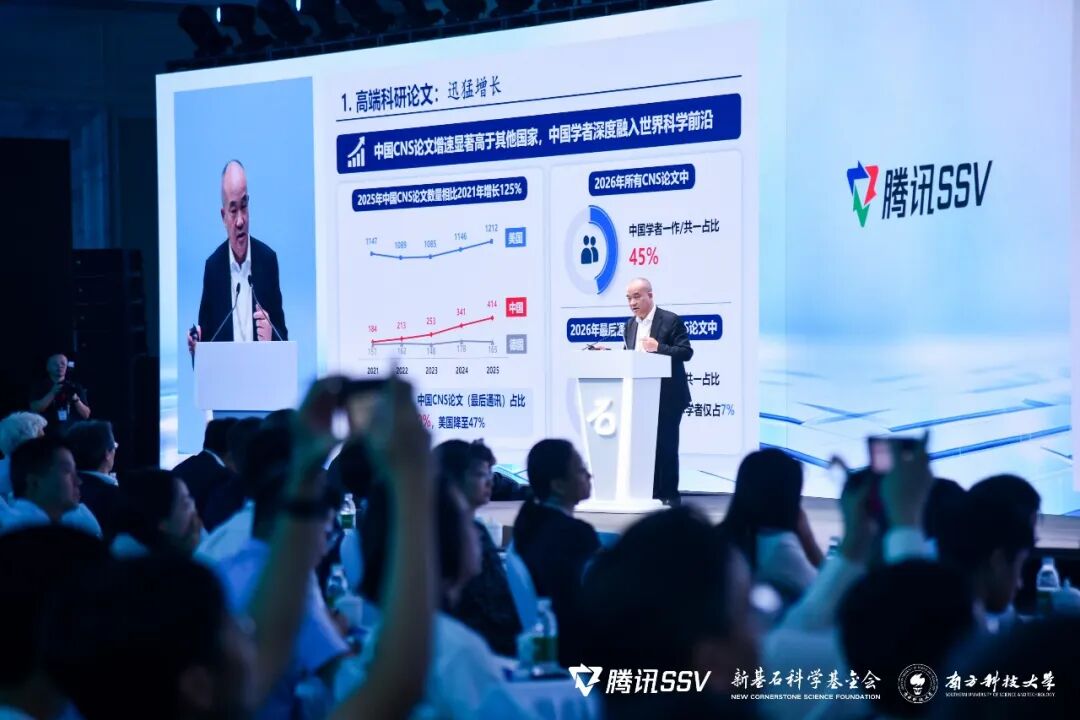
China’s growing contribution to high-impact research reflects the country’s expanding pool of research talent and increasing investment in science, according to Dou Xiankang, president of the National Natural Science Foundation of China (NSFC) and an academician of the Chinese Academy of Sciences. Speaking at the sixth New Cornerstone 50² Forum, held by the New Cornerstone Science Foundation in Shenzhen on 19 September, Dou outlined the current state of Chinese science and the reforms planned by the country’s main funding agency for basic and applied fundamental research. China’s growing presence in top journalsDou said that while individual papers are not sufficient to measure the strength of a country’s research system, publication patterns in leading journals can provide a useful indicator when considered at scale. He cited data from the first half of 2026 showing that researchers in China accounted for around 20% of papers published in Cell, Nature and Science — collectively known as the CNS journals. When looking only at papers for which the final corresponding author was based in China, the proportion was approximately 20%, compared with around 47% for the United States, according to figures presented by Dou. However, he said the picture changes when the contribution of Chinese researchers working in international research teams is taken into account. Among CNS papers with a US-based final corresponding author, Chinese researchers accounted for 39% of first or co-first authors. When papers with final corresponding authors based in Germany, the UK and Japan were also included, the proportion of papers with a Chinese first or co-first author rose to about 45%. Using a broader measure of major contributors, Dou put the figure at approximately 56%. Taken together, he argued, the figures suggest that Chinese researchers are now closely connected to a substantial share of the world’s highest-profile scientific research. Talent at the centre of research breakthroughsFor Dou, the key question is what will determine China’s next phase of scientific development. “The source of breakthroughs in scientific research is talent,” he said, arguing that China’s future research performance will depend increasingly on its ability to stimulate the creativity and initiative of its most innovative researchers. He pointed to several developments underpinning China’s growing research capacity, including rapid economic growth, increased investment in science and research, more flexible research policies, the expansion of high-level academic staff at universities, and improvements in scientific infrastructure and instrumentation. China has also seen a substantial increase in the number of internationally trained researchers returning to the country. Dou said that, by last year, the number of Chinese students going overseas to study and those returning had reached a dynamic balance — a development he described as evidence of the country’s growing scientific and economic strength. Data presented by Dou also pointed to the growing scale of China’s active research community. The number of active researchers publishing in leading international journals surpassed that of the US in 2021, he said, and is now around seven times the level in Japan. Dou also highlighted the age profile of highly cited researchers. In China, researchers aged over 55 accounted for 44% of the group, those aged 40 to 55 for 47%, and those under 40 for 9%, a distribution he described as comparatively healthy among major research systems. The figures form part of a broader shift in China’s research system towards greater support for younger scientists. NSFC shifts funding towards early-career researchersDou outlined a series of reforms at the NSFC, which has become one of China’s principal funding bodies for basic research, applied fundamental research and frontier interdisciplinary research following reforms to the country’s national research system. Funding has increasingly shifted towards younger researchers. According to Dou, almost 90% of NSFC-funded projects this year are led by early-career researchers, while researchers under the age of 45 account for around 75% of total funding. The NSFC has also expanded its Young Scientists Fund (Category C), which is designed to provide early-career researchers with an initial opportunity to establish an independent research programme. An additional RMB36 billion has been allocated to the programme this year, supporting 12,046 more projects and representing an increase of more than 50%, Dou said. A further reform introduced this year creates a separate track within the Young Scientists Fund Category A for researchers under 35, or women under 38. The first cohort includes 44 researchers. Dou said the selected researchers would receive support under a “5+5+5” model, with funding designed to provide longer-term continuity. “We do not conduct any short-cycle target assessment. We assess only one thing: whether you are in the laboratory,” he said. The approach reflects an attempt to give promising young researchers greater time and flexibility to pursue high-risk or longer-term research, rather than subjecting them to frequent short-term performance assessments. Expanding international research collaborationDou also highlighted the NSFC’s efforts to expand its international funding and research partnerships. In addition to supporting collaboration between Chinese and overseas researchers, the foundation is seeking to attract international doctoral students to China. “We hope that students from technologically advanced Western countries, particularly those studying the natural sciences, will be able to come to China to complete their PhDs,” Dou said. The NSFC and China’s Ministry of Education are jointly working on the initiative, he added, expressing confidence that it would produce further results in the near future. The proposals reflect a broader effort to position China not only as a major source of scientific research and talent, but also as a destination for international researchers and doctoral students.
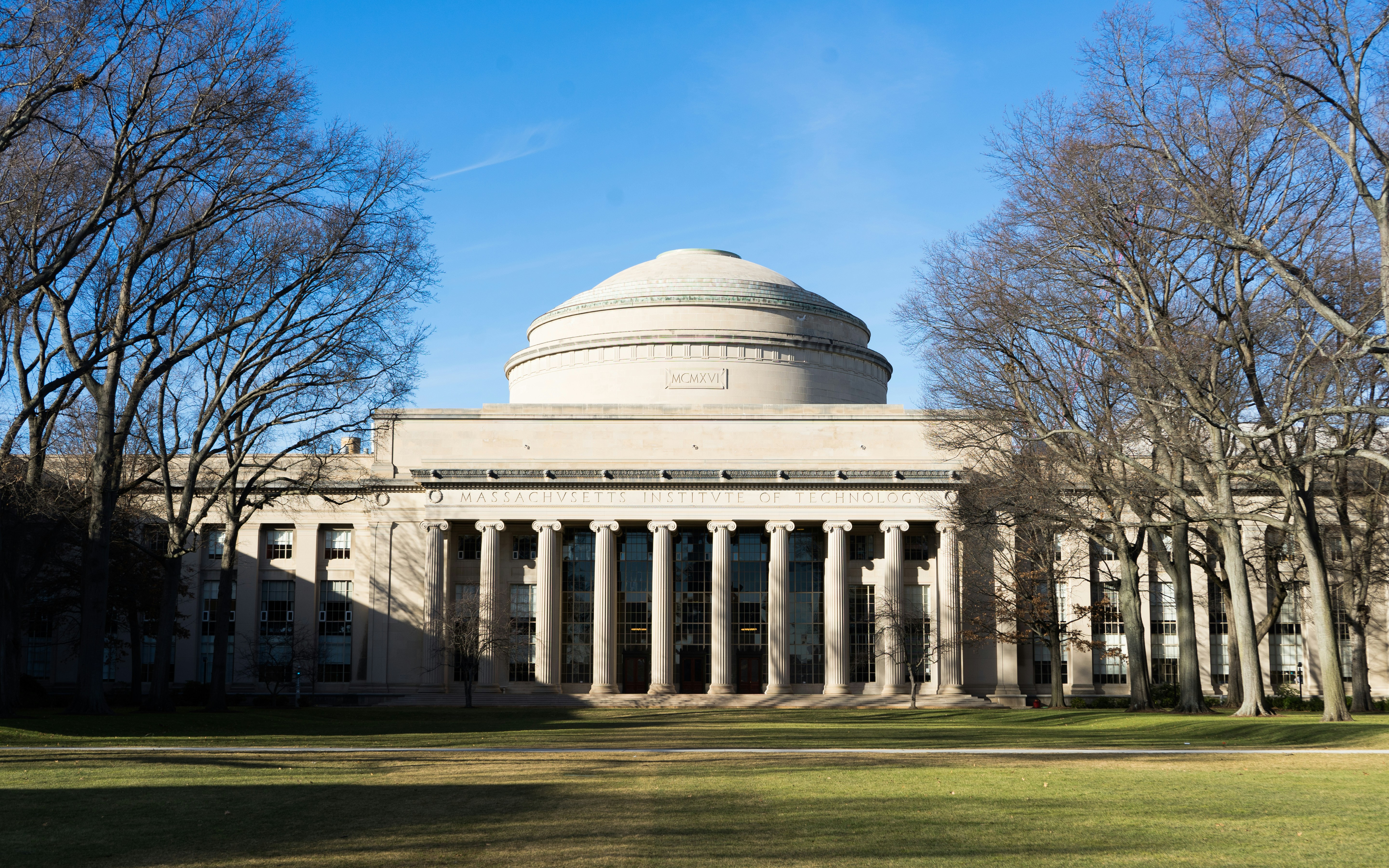
Recently, the U.S. Department of War issued formal notifications to 30 U.S. academic institutions, directing them to launch immediate and comprehensive reviews of their academic, financial, and research collaborations with foreign entities of concern. The list of foreign institutions identified in the notifications indicates that the directive is primarily focused on collaborations with Chinese research institutions. According to the notifications, to maintain eligibility for future federal research funding, the universities must conduct a comprehensive audit of all identified foreign collaborations, assess their exposure to sensitive or export-controlled research, and implement strict mitigation measures, including terminating problematic partnerships where necessary. The institutions are required to report their findings and the actions they have taken directly to the Department no later than August 31, 2026. A U.S. official provided The Guardian with the full list of the 30 universities required to conduct the reviews. They are: the University of California, Berkeley; the University of California, Los Angeles; the University of California, San Diego; the University of Southern California; Illinois Institute of Technology; Southern Illinois University Carbondale; the University of Illinois Urbana-Champaign; Harvard University; Massachusetts Institute of Technology; Worcester Polytechnic Institute; Cornell University; New York University; Stony Brook University; Duke University; the University of North Carolina at Chapel Hill; Northeastern State University in Tahlequah; Oklahoma State University; the University of Delaware; Emory University; Drake University; Johns Hopkins University; the University of Minnesota; the University of Cincinnati; Portland State University; Penn State University; Bryant University; the University of South Carolina; the University of Texas at Austin; Virginia Polytechnic Institute and State University; and Georgetown University. The list includes many highly ranked U.S. universities. U.S.-China research collaboration is facing increasingly stringent restrictions. In July, the National Science Foundation (NSF) published a notice on its website titled “Prohibition on Collaborations with Restricted Entities,” announcing a new policy that will take effect in fiscal year 2027. Under the policy, NSF-funded researchers will be prohibited from using NSF grant funds to collaborate with institutions or their employees that appear on U.S. government restricted lists. In addition, during the period of an NSF-funded project, key research personnel may not hold positions at, or receive research support from, restricted entities. The list covers hundreds of leading Chinese universities, national laboratories, and other research institutions. The policy would effectively bar NSF-funded U.S. scientists from collaborating with nearly all Chinese research institutions and scientists. At the same time, the White House Office of Management and Budget (OMB) has issued a proposed rule that is expected to take effect in December this year and would overhaul federal grant policies. The proposal seeks to establish uniform standards across federal agencies that would prohibit the use of federal grant funds for any research collaborations involving China, Russia, Iran, North Korea, and other designated “countries of concern.”
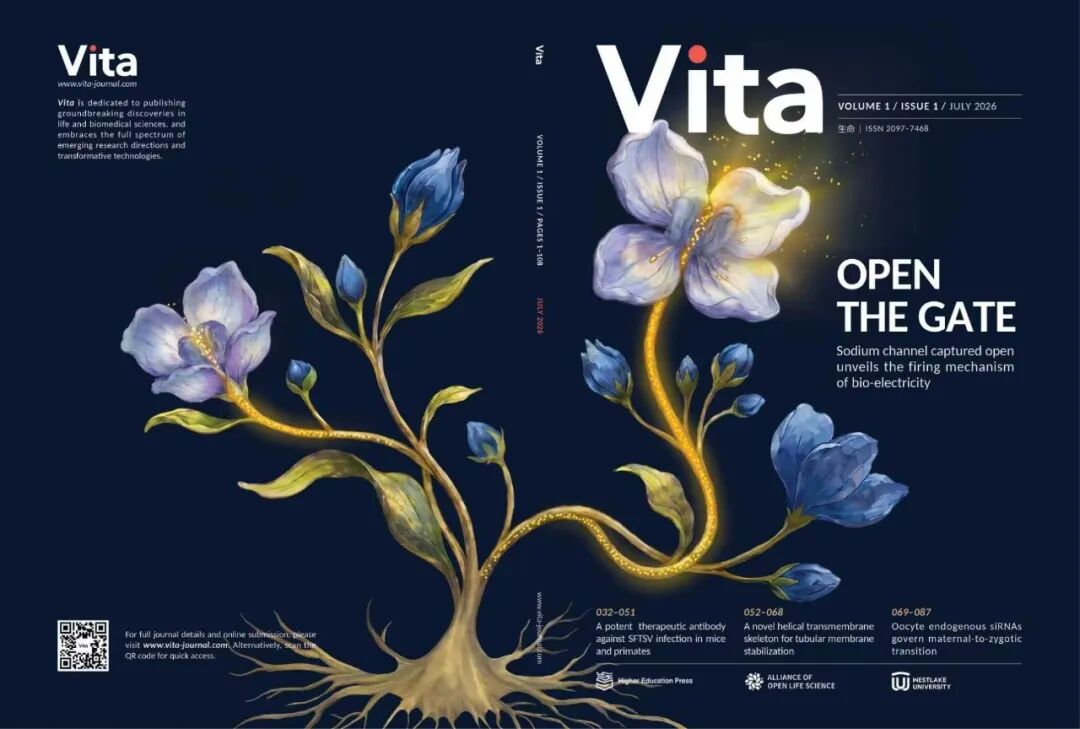
The first print issue of Vita, a China-led journal series in the life sciences, has recently been published, marking the official launch of the flagship journal alongside five companion titles. Launched under the leadership of Westlake University, Vita is positioned as a top-tier international journal covering life sciences and biomedicine. Westlake University President Shi Yigong and Li Dangsheng, former editor-in-chief of Cell Research, serve as its editors-in-chief. Since the beginning of this year, a growing number of leading Chinese scientists have launched new academic journals. In April, qScience, co-founded and co-edited by Westlake University Chair Professor Pei Duanqing and several internationally renowned scientists, was officially launched. In May, AI Horizons, with Eastern Institute of Technology, Ningbo President Chen Shiyi as its founding editor-in-chief, was launched in Hangzhou. In June, Data Express, the first English-language data journal in China, was launched under the editorship of ecologist Yu Guirui. In August, Peking University launched National Materials, with Peking University Chair Professor and Chinese Academy of Sciences academician Zhang Jin and Nobel Prize-winning physicist Konstantin Novoselov serving as its founding co-editors-in-chief. At the same time, media reports indicate that China’s independently developed global scientific citation database has completed the cross-language integration of major Chinese-, English- and Japanese-language journals and is expected to enter trial operation by the end of this year. China is also developing its own directory of world-class scientific and technological journals and an accompanying evaluation framework, which are expected to be unveiled next year and offer a China-developed approach to assessing leading journals worldwide. China’s scientific journals are entering a new spring. More than 90% of China’s SCI papers are published in overseas journalsWhy are an increasing number of Chinese scientists turning to journal publishing? In part, the answer may lie in the huge gap between China’s enormous volume of research output and the relatively limited capacity of its domestic scientific journals to publish it. According to the Blue Book of China’s Scientific Journal Development (2025), Chinese authors published more than 830,000 international research papers in 2024, accounting for 36.38% of the global total and ranking first worldwide—nearly twice the number published by U.S. authors. Yet hundreds of thousands of research papers produced in China each year are still published primarily in overseas journals. Data show that in 2024, more than 95% of papers by Chinese scholars were published in journals outside China. This means that while China is a global powerhouse in research output, its domestic journal system has far less capacity than is needed to absorb the country’s growing scientific production. It also lacks a sufficient number of internationally influential, world-class journals. This imbalance has developed into something of a structural pattern. An article published by China’s Qiushi Journal noted that for a long period, Chinese basic research was characterized by a “two ends abroad” problem: research topics were sourced from foreign academic journals, instruments and equipment were imported from overseas, and once results were obtained, researchers paid to publish them in foreign journals and on overseas platforms. In terms of research publishing, this “two ends abroad” model can lead to the outflow of high-quality research and substantial waste of research funding, while weakening China’s academic autonomy and influence in setting global research agendas. According to the 2024 Global OA Journals and APC Monitoring Report released by the National Science Library of the Chinese Academy of Sciences, Chinese authors published 313,500 papers in 6,276 open-access (OA) journals, paying approximately RMB 6.474 billion in article processing charges (APCs). Accelerating the development of world-class domestic scientific journals has therefore become an imperative for China. “Building high-level domestic journals is not only an important step toward improving China’s academic publishing system; it will also help China participate more deeply in the co-development of global academic rules,” said Professor Cheng Zongming of Nanjing Agricultural University, founder of the leading journal Horticulture Research. China backs the drive to build world-class journalsIn recent years, the Chinese government has rolled out a series of policies and committed substantial funding to accelerate the development of “world-class scientific and technological journals,” creating an unprecedented opportunity for Chinese scientists to establish and run journals. In August 2019, the Chinese government issued guidelines on cultivating world-class scientific and technological journals, setting a goal for China’s scientific journal sector to enter the world’s top tier in overall strength by 2035, with a number of internationally competitive journal brands and publishing groups to be established. One month later, the China Association for Science and Technology launched the China Association for Science and Technology Excellence Action Plan for Science and Technology Journals. Implemented on five-year cycles, the program supports flagship journals, key journals, emerging journals, new journals launched from a high starting point, and journal-cluster pilot projects. Its goal is to help nearly 300 journals reach international standards and increase the number of top-ranked journals in major disciplines sixfold. In 2024, the second phase of the Excellence Action Plan was significantly expanded. The number of English-language single-journal projects increased from 150 to 200, Chinese-language projects from 100 to 200, and journal-cluster pilots from five to 13. The focus shifted from elevating individual journals to building a broader publishing ecosystem and strengthening the sector as a whole. Today, 65 Chinese journals rank among the top 5% globally in their respective disciplines, while 25 have reached the top position in academic influence within their fields. Compared with five years ago, those figures represent increases of 160% and 257%, respectively, marking a significant step forward. How can Chinese journals go global?Yet even after cultivating a growing group of high-level academic journals, China still faces a difficult question: How can these journals establish a truly global presence? Statistics from 2018 showed that 75% of China’s English-language academic journals had chosen to work with overseas publishers. Even today, partnering with international publishers remains the dominant route for Chinese English-language journals seeking to reach global audiences. The strategy can help Chinese scientific journals quickly gain access to international distribution and publishing networks, but it also comes with substantial partnership costs. More fundamentally, it raises concerns about data sovereignty and the risk of breaking the chain of academic communication. Although journals retain backups of their original data, the online versions processed by publishers are stored on the publishers’ platforms. “How they process and manage the data is something over which we have limited control,” Xu Jun, executive editor of Friction, a leading tribology journal ranked No. 1 globally in its field, said previously. In an effort to reclaim greater control over academic publishing and dissemination, Chinese scientific journals have in recent years stepped up efforts to build independent publishing platforms and improve the internationalization and clustering of journal operations. For example, with support from the Excellence Action Plan, Tsinghua University Press began developing SciOpen, an international digital publishing platform for scientific journals, in late 2019. The platform went live in June 2022. As of July this year, SciOpen hosted more than 220 journals and nearly 90,000 papers, with an average of 15 million page views per month. Its users span more than 220 countries and regions, and visitors from outside China account for more than half of total traffic. Two leading journals, Nano Research and Friction, also began operating independently on SciOpen in early 2025. Meanwhile, Chinese journals are experimenting with new publishing models. Vita, for example, plans to build a professional editorial team and uphold high academic standards to ensure the originality and authority of published research. It is also committed to open access without charging authors any OA or page fees, while returning to the fundamentals of scholarship by exploring a new model of evaluating journals based on the quality of individual papers. The first three high-quality journals launched by Insight Press debuted together in April this year, exploring a new model of “scientist-led journal publishing.” Under the model, the platform provides professional operations and financial support, freeing scientists from a wide range of non-academic tasks such as typesetting, promotion and copyright management. Scientists, meanwhile, retain control over the journals’ academic standards and evaluation systems. China’s drive to build world-class scientific and technological journals is well underway.

Recently, China Chunlai Education Group Co announced that it has entered into a Share Purchase Agreement with Kaplan International UK Holdings Limited to acquire 100% of the issued share capital of Accountancy & Business College (Ireland) Limited for US$127.5 million. As part of the transaction, the Group will also acquire the relevant intellectual property rights transferred by Kaplan Inc. Upon completion of the transaction, Dublin Business School (DBS), operated by Accountancy & Business College (Ireland) Limited, will become a wholly owned subsidiary of China Chunlai. DBS is Ireland’s largest independent third-level college. With more than 9,000 students, DBS offers a comprehensive range of full-time and part-time undergraduate, postgraduate, professional and executive education programmes. Established in 1975, the College quickly built an excellent reputation for teaching quality and academic standards, providing flexible and innovative learning opportunities that meet the evolving needs of students and employers. DBS has a diverse international student body from Ireland, Europe, Africa, Asia and the Americas. As the only English-speaking country in the European Union, Ireland offers a globally recognised education system and has attracted more than 970 multinational companies to establish operations there, creating strong employment prospects for graduates. China Chunlai Education Group is a private higher education group founded in 2004. The Group currently operates four colleges in Henan Province, two colleges in Hubei Province, and one college in Jiangsu Province. For the fiscal year 2025 (ended 31 August 2025), the Group recorded annual revenue of RMB1.791 billion, representing a year-on-year increase of 9.8% and marking ten consecutive years of revenue growth. Profit attributable to the Group’s owners reached a record high of RMB836 million, up 7.4% year on year. Notably, the Group achieved a net profit margin of 46.7%, placing it among the leading players in China’s private higher education sector. During the 2024–2025 academic year, China Chunlai had a total student enrolment of 109,952, surpassing the milestone of 100,000 students for the first time. In 2026, the Group continued its growth momentum. According to its interim report for the six months ended 28 February 2026, the Group recorded revenue of RMB956 million, representing a year-on-year increase of 7.4%, while adjusted net profit rose 7.3% year on year to RMB432 million. Total student enrolment further increased to 116,784, representing a year-on-year growth of 5.3%. The acquisition of Dublin Business School marks another step in China Chunlai’s expansion into global education. Prior to this transaction, the Group had already entered into Sino-foreign cooperative education agreements with institutions including the Australian Institute of Elite Education and Massey University in New Zealand. DBS President Tim Bicknell said: “We’re excited about this next chapter alongside China Chunlai. Together, we will build on these strong foundations, enhancing academic excellence and creating even greater opportunities for our students, staff and wider academic community through the outstanding experience they have come to expect from DBS.”

3 August, The University of Greenwich and University of Kent have confirmed that their merger has successfully completed as expected and the new London and South East University Group – to be known as LASE – is now an official legal entity. The official launch of the LASE University Group will take place on Monday 7 September. The group will have more than 50,000 students across four campuses in London, Medway and Kent, making it the third-largest higher education institution in the UK. The new multi-university group, described as “the UK’s first super-university”, is a first of its kind model – allowing the creation of the new university group whilst enabling the two universities to continue trading under their individual names with their distinct identities, courses, and local presence. It is designed to enable other universities to join in the future. Students will continue to apply to, study at, and graduate from the University of Greenwich or the University of Kent. The two universities first announced their intention to explore the creation of a new multi-university group in September last year. In February this year, they formally agreed to merge and signed the relevant legal agreements. A new Chancellor, governing body and senior executive team for LASE have been appointed and officially take up their roles. Professor Jane Harrington, Vice-Chancellor of the University of Greenwich and Chief Executive of LASE University Group, said: "There has been tireless work over the last year working to an ambitious timetable and developing a new university model that has never been done before." She added: "It means we are starting with a smooth transition, an extremely strong senior executive team and clear direction so that we can fulfil our potential as the UK's first super-university." Previously, the Office for Students (OfS), the UK's higher education regulator, described this type of merger as an "innovative approach" and suggested that more universities could consider similar models to address growing financial pressures. The Universities of Greenwich and Kent have also stated that they hope their collaboration will provide a blueprint for other institutions, as the merged group will establish a stronger financial foundation to help navigate future economic challenges. The merger reflects the increasingly severe financial pressures facing the UK higher education sector. According to The Guardian, the Office for Students (OfS) warned that 24 higher education providers were at risk of becoming insolvent and closing within the 12 months from November last year. The regulator also estimated that 45% of higher education providers could be operating at a deficit during the 2025–26 academic year. In May, members of the House of Commons Education Select Committee described the higher education sector as "facing a financial crisis", warning that there was "a clear possibility of a university closing." Their report acknowledged that many universities had already responded by cutting jobs, selling buildings or land, and closing academic programmes. Another major merger is also on the horizon. In May this year, King's College London (KCL) and Cranfield University reached a preliminary agreement to merge, with the transaction expected to be completed in August 2027. Under the proposed arrangement, Cranfield University will become part of King's College London and will no longer exist as an independent institution. The merged university is expected to become the second-largest university in the UK by student population, behind only University College London (UCL). University of GreenwichFounded in 1890, the University of Greenwich traces its origins to Woolwich Polytechnic and the Royal Naval College, making it the second polytechnic established in the UK. Located in London, the university further strengthened its research capacity in 1996 through the integration of the internationally renowned Natural Resources Institute and the Maritime Research Institute. In 2013, it joined University Alliance, a group of leading professional and technical universities in the UK. Today, the University of Greenwich is recognized as one of the UK's leading institutions, with strong performance in teaching, research, and talent development, particularly in applied disciplines. In 2023, it entered the top 100 of the Times Higher Education Impact Rankings for the first time and ranked first in the UK for student satisfaction in a national university survey published the same year. It also received a Gold rating in the Teaching Excellence Framework (TEF) in 2023. In 2026, it was ranked the fifth-best university in London. University of KentEstablished in 1965, the University of Kent is a leading comprehensive research university located in Canterbury, Kent, in southeast England. It is one of only seven collegiate universities in the UK. Its business school holds the prestigious triple accreditation from EQUIS, AACSB, and AMBA, placing it among the top 1% of business schools worldwide. In the Times Higher Education World University Rankings 2026, the University's Law and Psychology subjects were both ranked among the top 100 globally.
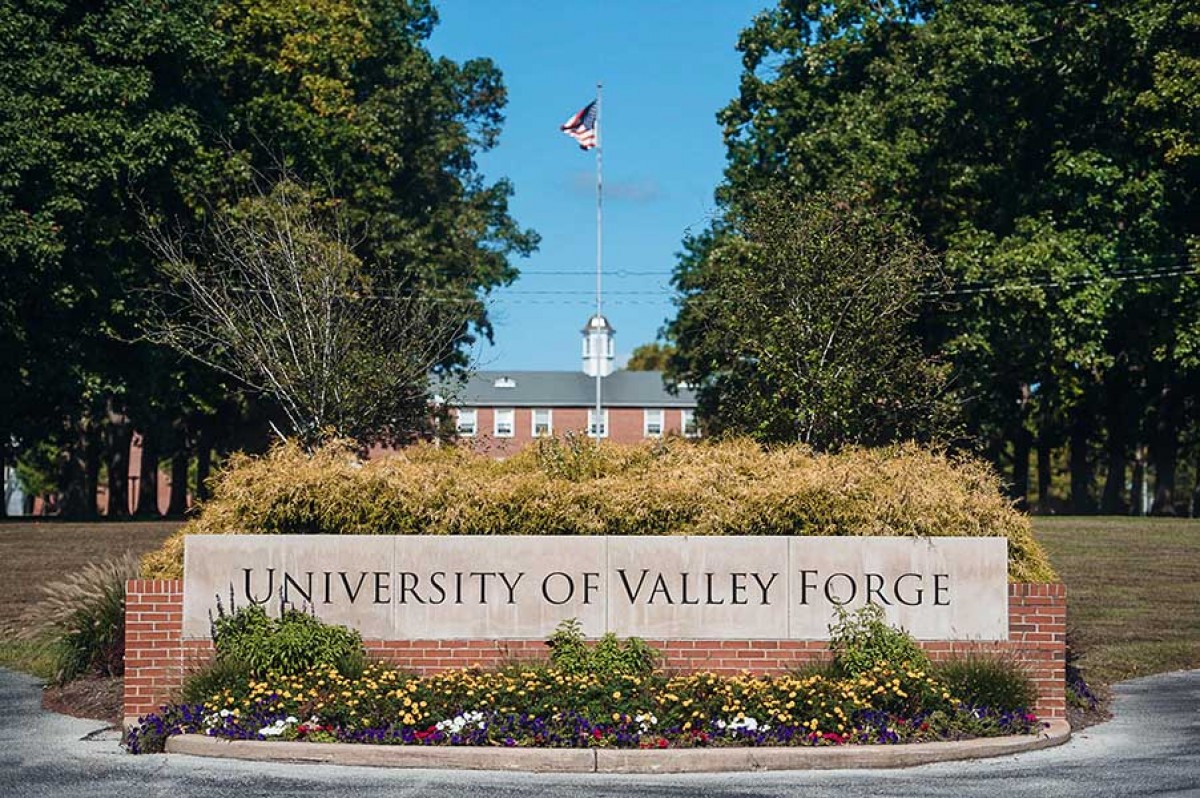
The University of Valley Forge, a private Christian institution in Pennsylvania founded in 1939, has announced that it will suspend academic operations at the conclusion of the Summer 2026 semester, becoming the latest casualty in a growing wave of financially distressed U.S. colleges. In a statement posted on the university's official website, the Board of Trustees said the decision came after years of efforts to stabilize the institution's finances. "This decision follows extensive efforts to address the University's financial challenges, pursue strategic partnerships, and identify sustainable paths forward. These challenges have been well documented over several decades and were reflected in the recent action of the Middle States Commission on Higher Education, which placed the University on Show Cause status." The Board said university personnel will remain in place to assist students with transferring to other institutions, preserve academic records, steward institutional assets, and oversee the university's remaining administrative responsibilities. The University of Valley Forge enrolled 589 students in Fall 2024, the vast majority of them undergraduates. Financial strain had been building for years. As early as fiscal year 2021, the university cited steep declines in net tuition revenue as a major factor behind its deteriorating financial position. According to its FY2021 audited financial statements—the most recent audit report the university has publicly released—its total debt had reached $30.8 million. A Growing Wave of College ClosuresThe University of Valley Forge is far from an isolated case. Across the United States, an increasing number of colleges have announced closures or mergers in recent years as they struggle with declining enrollment, rising operating costs, and persistent financial challenges. In May, Hampshire College, a private liberal arts institution with a six-decade history, announced that it would permanently close after the Fall 2026 semester, saying it no longer possessed the financial resources necessary to sustain full operations and meet its regulatory obligations. According to the State Higher Education Executive Officers Association (SHEEO), 312 degree-granting institutions in the United States closed between 2008 and 2024. The outlook remains bleak. Consulting firm Huron estimates that 442 of the nation's 1,700 private nonprofit four-year colleges and universities could face closure or merger within the next decade. For students, the consequences can be profound. Although institutions typically pledge to help students transfer elsewhere, the outcomes are often far less encouraging. A SHEEO study tracking 143,000 students affected by the closure of 467 campuses between 2004 and 2020 found that only 47% successfully transferred to another institution. Among those who did transfer, only about one in three ultimately earned a degree. Demographic HeadwindsDemographic change has emerged as one of the most significant structural challenges facing American higher education. The U.S. birth rate has been declining steadily since 2007, and the number of 18-year-olds has fallen by nearly 15% over the past decade. Since 2010, overall college enrollment has dropped by approximately 2.3 million students nationwide. Shrinking enrollment, coupled with tighter government funding, has left many institutions increasingly dependent on tuition revenue. To offset mounting financial pressure, colleges have repeatedly raised tuition. Over the past three decades, tuition at U.S. colleges has nearly tripled, substantially outpacing inflation. Rising costs, however, have made higher education less affordable, further discouraging enrollment and reinforcing a cycle of declining student demand and worsening institutional finances. Layoffs Become the New NormalClosures and mergers are only part of the picture. Workforce reductions have also become an increasingly common response to financial strain. Johns Hopkins University announced plans to eliminate 2,200 positions in March 2025 and has since cut an additional 110 jobs following reductions in federal research funding. Since the beginning of 2025, the University of Southern California has eliminated more than 900 positions, while Stanford University has cut at least 363 jobs and Northwestern University has reduced its workforce by 425 positions. Meanwhile, federal policy changes could further complicate the outlook for American higher education. According to The Wall Street Journal on July 30, the Trump administration is considering imposing a $100,000 fee on international students who wish to remain in the United States for employment after graduation. Beginning in September, a new student visa policy is also expected to take effect, limiting most international students to a maximum stay of four years. If implemented, these measures could further weaken international demand for U.S. higher education at a time when many institutions are already grappling with declining domestic enrollment. For colleges that have long relied on international students to offset demographic decline at home, the challenges ahead may become even more daunting.
A federal judge in Boston ruled on Friday, July 17, that the Trump administration cannot rely on a White House budget office regulation to cancel billions of dollars in federal grants simply because the programs no longer align with the president's priorities. U.S. District Judge Indira Talwani, who was appointed by President Barack Obama, granted summary judgment in favor of a coalition of 20 states, the District of Columbia, and the governors of Kansas, Kentucky, and Pennsylvania. The lawsuit, led by the attorneys general of New Jersey, Massachusetts, and New York, targeted the Office of Management and Budget (OMB), OMB Director Russell Vought, and eleven federal grant-making agencies, including the Departments of Justice, Agriculture, and Homeland Security, the EPA, FEMA, the National Science Foundation, and the National Endowment for the Humanities. The case centered on a "Termination Clause" in federal regulations — a provision added in 2020 during Trump's first term and later revised under the Biden administration — that allows agencies to end a grant if it no longer serves current program goals or agency priorities. Since returning to office, the Trump administration had cited that clause repeatedly to cancel grants it associated with diversity, equity and inclusion initiatives and climate-related programs, triggering a wave of related litigation nationwide. Judge Talwani found that the clause does not give agencies authority to terminate grants based on priorities identified only after the awards were already made. The plaintiff states said $5.4 billion in existing grants had been at risk, on top of funding already cut from universities, crime-prevention programs, and school lunch initiatives. New Jersey Attorney General Jennifer Davenport said the ruling put an end to the administration's weak justification for the cuts, while New York Attorney General Letitia James also criticized the funding terminations. Not every recent ruling has gone against the administration, however. In a separate case decided the same week, U.S. District Judge John Cronan in Manhattan — a Trump appointee — declined to order the National Science Foundation to restore STEM diversity grants canceled since April, ruling that such claims belonged before the Court of Federal Claims rather than his court. The rulings add to a broader pattern of legal battles over the administration's efforts to reshape federal research and grant funding, with outcomes so far varying depending on the court and the specific legal theory at issue.
Recently, Nature reported that on July 15, U.S. Republican Representative John Moolenaar, chairman of the House Select Committee on China, chaired a congressional hearing on U.S. research funding. The hearing came just one week after the U.S. National Science Foundation (NSF) announced a new policy prohibiting NSF-funded American scientists from collaborating with international institutions that the federal government has designated as posing a threat to U.S. national security—a list that includes several of China's leading universities. During the hearing, Moolenaar praised the NSF's new policy and urged other U.S. research agencies represented at the hearing to adopt similar restrictions. By contrast, representatives from other agencies took a more cautious stance. Officials from the National Institutes of Health (NIH) and the Department of Energy (DOE) said their agencies are reviewing the NSF's approach, while emphasizing that both organizations already have their own research security oversight mechanisms in place. Democrats argued that although scientific collaboration with China carries legitimate risks, the Trump administration's cuts to staffing and funding at U.S. research agencies are making the situation worse. Rebecca Keiser, head of the NSF's Office of Research Security Policy and Strategy, confirmed during the hearing that her office currently has only five staff members, down from ten in 2024, before President Trump took office. Over the past two decades, as China's global influence has grown, scientific cooperation between the United States and China has become increasingly strained. During Trump's first term, the administration launched the controversial China Initiative, under which a number of Chinese American scholars were arrested. Many of those cases were later dropped or dismissed. In Trump's second term, Republicans have adopted an even more aggressive stance toward limiting scientific cooperation with China. They have repeatedly called on the Department of Energy to prohibit ethnically Chinese researchers who are not U.S. citizens from working at U.S. national laboratories. Last year, Moolenaar attempted to advance the SAFE Research Act, but the bill failed to pass. The proposed legislation would have barred federal research funding for U.S. researchers who had collaborated within the previous five years with scientists affiliated with Chinese entities designated as "restricted." Growing political pressure in the United States is already having a tangible impact on U.S.–China scientific collaboration. A Nature analysis found that between 2020 and 2025, the number of preprints and research papers co-authored by U.S. and Chinese researchers and funded by the DOE, NIH, or NSF declined by approximately 40%. A genetics researcher at Guilin Medical University said that most U.S. researchers he knows who previously collaborated with Chinese partners have now scaled back or ended those partnerships. As a result, there are now virtually no active U.S.–China collaborative projects in his field. Chinese scientists, however, continue to maintain strong research partnerships with colleagues in Europe and other regions. Steven Kivelson, a physicist at Stanford University, warned that policies such as the NSF's would sever productive international collaborations and ultimately harm the development of fundamental research in the United States, while being unlikely to achieve their intended objectives. As he put it: "So this notion that having Chinese nationals coming to US campuses opens us up to intellectual-property theft is just completely wrong."

A new British Academy analysis of official workforce data reveals that financial strain across the UK higher education sector is now reaching well beyond traditionally vulnerable subjects, pulling business studies, law and English into the wave of cuts. Britain's universities eliminated close to 4,000 academic positions in the social sciences, humanities and arts over the twelve months to December 2024, according to a new British Academy analysis prepared for The Guardian. The breakdown shows roughly 3,000 social science posts, 820 humanities posts and 240 arts posts disappeared in that period alone. Nearly all of the losses — all but around 110 positions — occurred outside the elite Russell Group — a coalition of the UK's leading research-intensive universities — concentrating the impact on students at less selective institutions and raising concerns about widening inequality in subject access. Social work suffered the steepest proportional decline at nine percent, followed closely by English and classics, each down eight percent, with anthropology and linguistics also posting significant losses. In raw numbers, business and management — a field that also captures accounting, finance, hospitality, HR and marketing — lost the most posts of any subject area, shedding roughly 930 jobs, a five percent drop in just one year. Education and social work combined lost close to 1,000 positions, while English lost 440, media and journalism 235, performing arts 230, languages 225 and law 215. British Academy chief executive Hetan Shah framed the findings as extending far beyond campus budgets, warning that the damage touches social mobility, the career prospects of young people and the skill base the wider economy depends on. He noted that pressure once confined to the humanities and arts has now spread into subjects like English and business, and is increasingly being felt even at Russell Group institutions. The analysis also mapped growing regional "cold spots," where entire subject areas are becoming effectively inaccessible outside a handful of highly selective universities. Language degrees with below-average entry requirements have all but vanished from the south-west, north and east of England and the East Midlands, while cuts to language staff and course closures have clustered in the south-east. More than 1,000 additional job losses have been proposed at Russell Group universities including Exeter, Nottingham, Edinburgh and Glasgow — a trend the report warns will deepen these cold spots further. Jo Grady, general secretary of the University and College Union, described the humanities as being systematically eliminated by university leadership nationwide, and called for emergency government intervention to halt the decline of Britain's universities. Universities UK chief executive Vivienne Stern acknowledged that acute financial pressure is forcing institutions into difficult staffing decisions. Shah urged policymakers to treat the findings as a warning sign, arguing that continued erosion of these disciplines threatens not only student choice but also the research base that underpins Britain's economy, democratic institutions and international standing.


Data & Rankings
Data & Rankings
Data & Rankings
Data & Rankings
Data & Rankings