
NSF Tightens Restrictions on China Research Ties


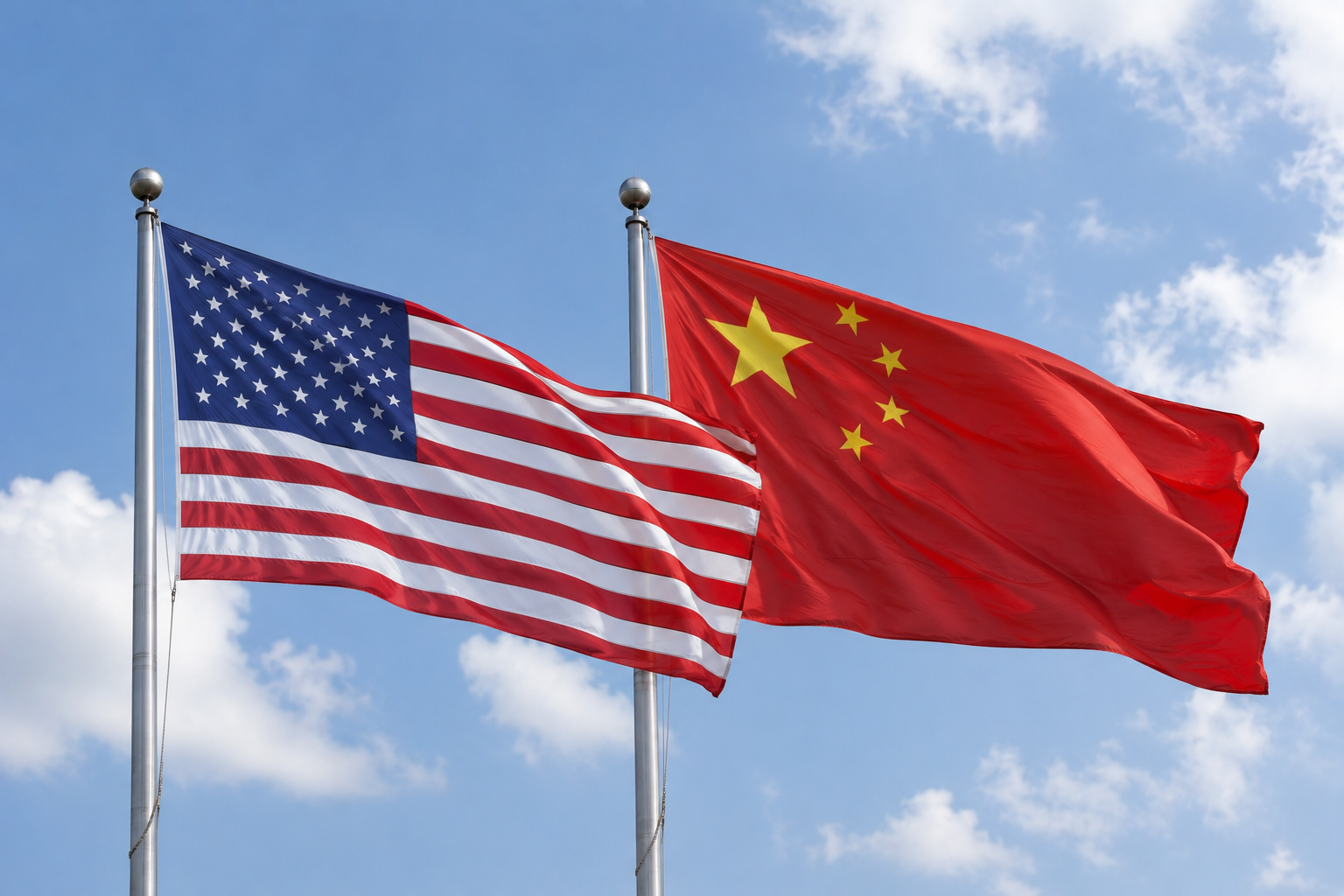
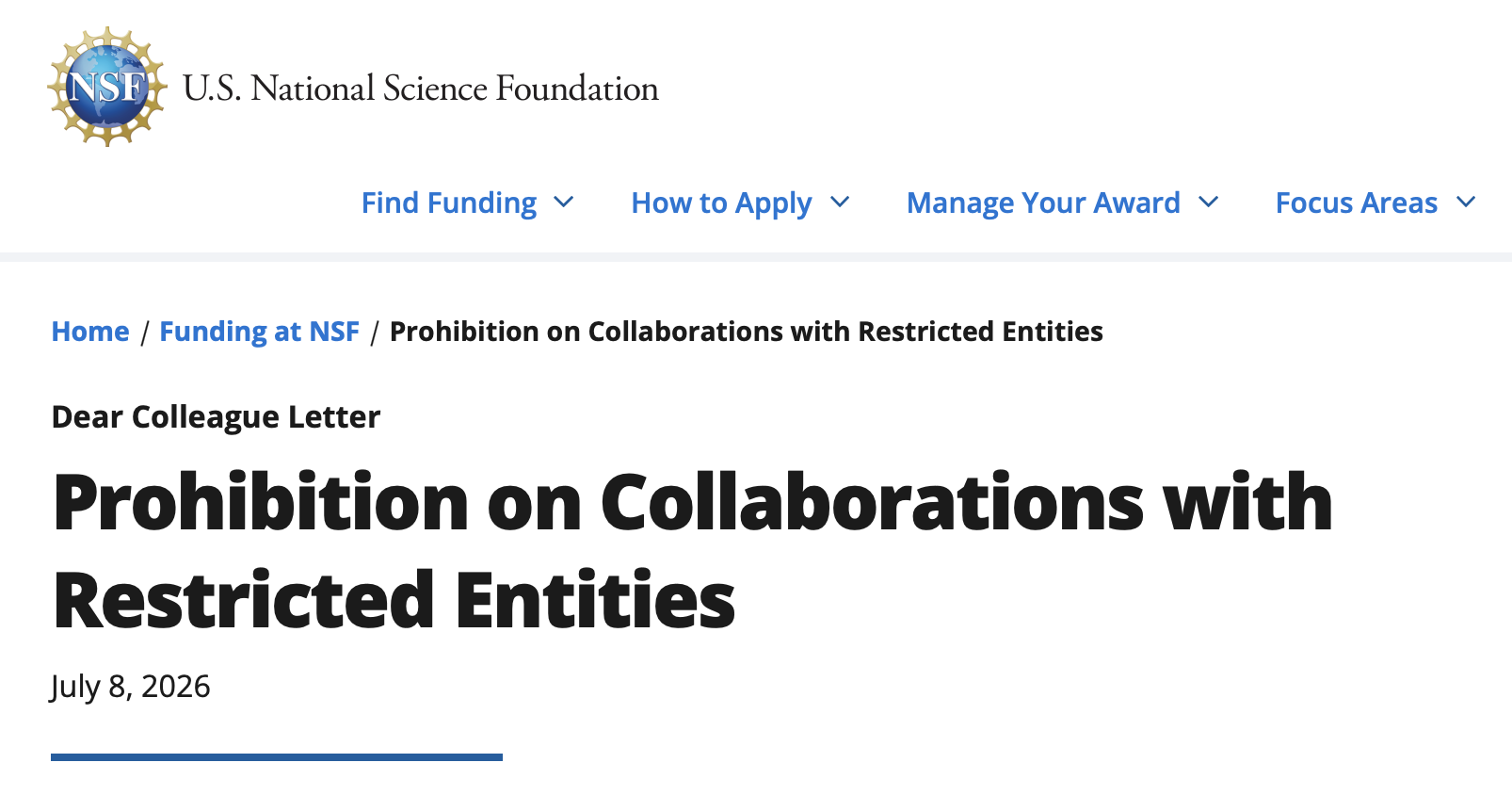
On July 8, the U.S. National Science Foundation (NSF) published a notice on its official website titled "Prohibition on Collaborations with Restricted Entities," announcing a new policy that will take effect in fiscal year (FY) 2027 prohibiting NSF funds from being used to support collaborations with entities appearing on U.S. restricted party lists.
Under the new policy, senior/key personnel will be prohibited from collaborating with these restricted entities on NSF-funded projects. In addition, senior/key personnel will be prohibited from holding an appointment or position with, or receiving research support from, any restricted entity for the duration of an NSF award. To implement the policy, NSF plans to revise its current guidance to include the following provisions:
- NSF appropriated funds shall not be used for grants, contracts, other transactions, or other assistance to an organization if the purpose is to conduct research in collaboration with restricted entities. This funding prohibition also extends to the employees of such restricted entities.
- Senior/key personnel are prohibited from holding an appointment or position with, or receiving research support from, a restricted entity. Further, senior/key personnel are prohibited from collaborating with a restricted entity, or any employee thereof, on research funded by their NSF award.
To comply with this prohibition once it becomes effective, organizations' Authorized Organizational Representatives (AORs) and senior/key personnel will be required to certify compliance at the time of proposal submission. Organizations will also be responsible for ensuring that senior/key personnel are aware of and comply with the prohibition, and for identifying and addressing any prohibited activities before NSF funds are expended.
The U.S. Proscribed Party Lists referenced by NSF draw from seven U.S. government departments and agencies, including the U.S. Department of Defense, the Department of Commerce's Bureau of Industry and Security (BIS), the Department of the Treasury's Office of Foreign Assets Control (OFAC), the Department of State, the Federal Communications Commission (FCC), the Department of Homeland Security (DHS), and U.S. Customs and Border Protection (CBP).
According to Science, the lists cover hundreds of China's leading universities, national laboratories, and other research institutions. However, some prominent Chinese institutions have notably been omitted from the restricted lists. For example, Tsinghua University, which is not currently on the list, recently hired away 2025 Nobel laureate in Chemistry Omar Yaghi from the University of California, Berkeley.
Representative John Moolenaar (R–MI), chairman of the Select Committee on China in the U.S. House of Representatives, described the NSF's move as "commendable and commonsense" and urged other federal agencies to "follow the lead of the Pentagon and NSF." Many scientists, however, argue that the policy overlooks the mutual benefits of U.S.-China scientific collaboration and could ultimately harm research in both countries.
The constraints on U.S.-China scientific cooperation have continued to tighten. On May 29, the White House Office of Management and Budget (OMB) released a proposed rule that would comprehensively overhaul federal grantmaking policies. The proposal seeks to establish a uniform standard across all federal agencies by prohibiting federal grant funds from supporting any research collaboration with entities in "countries of concern," including China, Russia, Iran, and North Korea. The proposal is open for public comment until July 13, with a final rule expected to be issued in October.
The OMB proposal has sparked widespread concern across the U.S. higher education community. Critics argue that, if adopted, the rule would allow federal agencies to terminate grants at any time if they are deemed inconsistent with "evolving national interests." They also warn that it could significantly impede university researchers' ability to collaborate with scientists outside the United States and to co-author research papers with international partners.
In an interview with Science, Stanford University physicist Peter Michelson said, "This NSF policy and the likely new OMB regulations are definitely not good for U.S. science. Very damaging!"
Science also noted that one of the greatest uncertainties concerns the definition of a "research collaboration." Would it include informal conversations at academic conferences about publicly available research, or co-authorship on papers where the authors conducted their work independently? Agencies such as the National Institutes of Health (NIH) and NASA already appear to be limiting grantees' freedom to co-author papers with foreign scientists. "Co-authorship is not necessarily equivalent to collaboration," said Kevin Wozniak of the Council on Governmental Relations (COGR), a nonprofit consortium of universities that monitors federal research policy. "But the National Institutes of Health calls it a factor" in determining whether an interaction crosses the line.
The NSF policy is currently still open for public comment. On July 15, officials from the National Institutes of Health (NIH) and the Department of Energy's Office of Science are scheduled to testify before the House Select Committee on China. The hearing may provide greater clarity on the future direction of U.S.-China scientific collaboration.


TRENDING
MIT Overtakes Harvard as U.S. and China Dominate September Nature and Science Output
Data & Rankings
From Training Talent to Winning Nobels: The Universities Behind the Laureates
Data & Rankings
Getting Older, Crossing Disciplines: What Nobel Prize Data Reveal
Data & Rankings
Harvard Leads the Citation Laureates Rankings as Nobel Prize Season Approaches
Data & Rankings
Good University Guide 2027: St Andrews Takes No. 1 as Imperial Climbs Three Places
Data & Rankings