
Harvard University's endowment grew by more than $11 billion to nearly $68 billion in fiscal year 2026, buoyed by a 27.1 percent investment return — its strongest since 2021 — according to the university's annual financial report released Thursday. N.P. Narvekar, chief executive of Harvard Management Company, said the year's gains were driven primarily by venture capital, public equities and hedge funds. Harvard also posted a $100 million operating surplus, reversing the $113 million operating loss it reported a year earlier. But Chief Financial Officer Ritu Kalra and Treasurer Timothy R. Barakett cautioned that the surplus amounts to a 1.5 percent margin on $6.7 billion in revenue — "an insufficient measure of Harvard's financial health." The report showed that unrestricted funds — the money that pays for day-to-day operations — ran a $78.7 million deficit. The portion of the budget Harvard directly controls, including salaries and facilities renewal, finished nearly $80 million in the red, offset by a $180 million surplus in restricted funds. Kalra noted that the endowment comprises roughly 15,000 separate funds, each designated for a specific purpose and barred from being diverted to payroll or campus upkeep. Cost-cutting proved central to the turnaround. Salaries and wages — the university's largest expense — fell by $104 million, a nearly 4 percent decline that officials attributed to a hiring freeze, attrition and restructuring. Total expenses dropped more than 2 percent to $6.64 billion. Executive Vice President Meredith Weenick said that "without those interventions, we would have ended the year in deficit," while acknowledging that the reorganizations had cost colleagues their jobs through "painful decisions." The endowment tax looms as the biggest source of uncertainty. Under the One Big Beautiful Bill Act enacted in July 2025, the tax rate on endowment earnings will rise from 1.4 percent to 8 percent, a cost Harvard projects at roughly $300 million a year. Because the university was required to book the effect of the law this year, its tax liability jumped from $317 million to $1.9 billion. Kalra said Harvard has held its fiscal year 2027 endowment distribution flat in order to absorb the tax — funds, she said, that would otherwise have supported research, teaching and financial aid. Even as federal research funding receded, Harvard spent more than $1.2 billion on research activity this year, a third of it funded by the university itself, and announced a $150 million research initiative in September. Harvard's 27.1 percent return trailed several peer institutions: Stanford reported 31.7 percent and the University of Pennsylvania 27.4 percent, while Brown returned nearly 20 percent and MIT just over 10 percent.
Tsinghua University’s School of Economics and Management has appointed three new members and five new succeeding members to its Advisory Board, including Nvidia founder and CEO Jensen Huang, AMD chair and CEO Lisa Su, and Marc Pictet, senior managing partner of Pictet Group. The appointments were announced by the school on 29 September. The three new members are all senior executives from globally recognised multinational companies spanning technology and financial services. Huang founded Nvidia in 1993 and has served as its president and chief executive since the company’s establishment. He is also a member of Nvidia’s board. Nvidia is a major provider of accelerated computing technologies and developed the graphics processing unit (GPU) in 1999, helping transform computer graphics and the gaming industry. The company has since expanded its focus to accelerated computing and generative AI, with its technologies increasingly used across industries. Huang is a member of the US National Academy of Engineering. In 2026, he was appointed to the US President’s Council of Advisors on Science and Technology. He has also received the Robert N. Noyce Award and the IEEE Founders Medal. Su has served as chair and CEO of AMD, where she has overseen the company’s transformation into a major provider of high-performance and adaptive computing technologies. Before joining AMD in 2012, she was senior vice-president and general manager of networking and multimedia at Freescale Semiconductor and spent 13 years at IBM in a range of engineering and business leadership positions. Su is a member of the American Academy of Arts and Sciences and the US National Academy of Engineering. She has received the Robert N. Noyce Award and currently serves on the US President’s Council of Advisors on Science and Technology and as chair of the Semiconductor Industry Association’s board. Pictet is senior managing partner of Pictet Group, a Swiss wealth and asset management firm founded in 1805. The group is owned and managed by seven partners and operates across wealth management, asset management, alternative investments and related services. As the ninth generation of his family to join the firm’s partnership, Pictet is involved in the group’s overall management and strategic initiatives. He also serves on the board of the Swiss Bankers Association, is vice-chair of the Swiss Private Bankers Association committee, and chairs the Fondation de Genève. He is also a board member of the Swiss think tank Avenir Suisse. The five new succeeding members are Milan Nedeljković, chair of the board of management of BMW Group; John Furner, president and CEO of Walmart; Henrique Braun, CEO of Coca-Cola; Martín Escobari, co-president and head of global growth equity at General Atlantic; and Meg O’Neill, CEO of bp. Tsinghua SEM’s Advisory Board was established in October 2000, with the initiative supported by then-school dean and former Chinese premier Zhu Rongji. The board brings together senior executives from multinational companies as well as leaders from leading business schools and Nobel laureates in economics. It aims to strengthen the school’s links with external stakeholders and support improvements in research and teaching as the school seeks to develop into a world-leading institution in economics and management. The current chair of the Advisory Board is Tim Cook, executive chairman of Apple’s board.
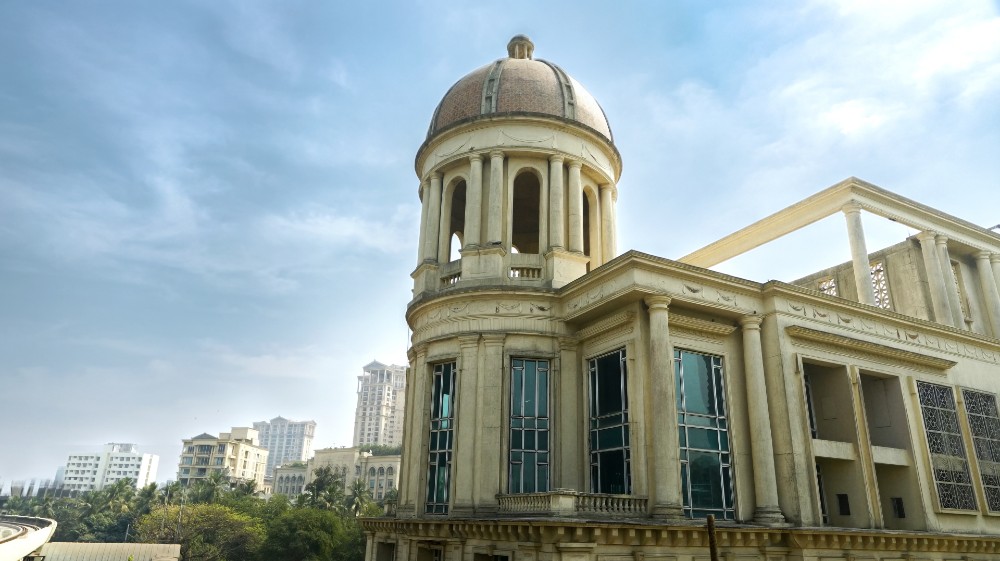
The University of York has opened its first campus in India, welcoming an inaugural cohort of students as the UK university expands its international teaching and research presence. The University of York Mumbai has enrolled its first students across undergraduate and postgraduate programmes in computer science with artificial intelligence and cyber security, business, and the creative industries. The launch follows a two-week induction programme over the summer and marks the latest development in India’s efforts to attract leading international universities through reforms enabling foreign institutions to establish campuses in the country. The opening was attended by students and academic staff, representatives from local business and industry, and senior leaders from the University of York and its Mumbai campus, including Professor Ken Badcock, Interim Vice-Chancellor of the University of York, and Professor Lindsay Oades, Provost of the University of York Mumbai. Research focus on global challengesResearch is set to form a central part of the Mumbai campus, with the university identifying food security, environmental change and future technologies among its initial areas of focus. The university has also announced a new research and policy institute in Mumbai, which will examine major global challenges including artificial intelligence, urbanisation and climate change. The institute is intended to strengthen connections between researchers in Mumbai and York, while creating opportunities for collaboration with industry, policymakers and other external partners. Professor Ken Badcock said the opening was the result of collaboration between teams in India and the UK, as well as the university’s international partners. “Today marks a major milestone,” he said. “The launch of University of York Mumbai is the result of dedication and collaboration from our teams in India and the UK, our global partners, and the vibrant city of Mumbai itself.” He said the campus would contribute to India’s ambition to strengthen its position as a destination for international higher education. Connecting the Mumbai and York research communitiesThe university is also positioning the new campus as a platform for closer academic and industry links between India and the UK. Professor Bob Doherty, Director of Research at the University of York Mumbai, and Professor Benjamin Poore, from the University’s School of Arts and Creative Technologies, have begun secondments to Mumbai. Their work will include developing industry partnerships, research projects, public events and student learning opportunities. Further secondments, joint research programmes and collaboration in teaching and learning are expected to be developed between the two campuses over the coming months. Professor Lindsay Oades said the university’s aim was to give students opportunities to develop skills relevant to rapidly changing industries while maintaining an international perspective. “We aim to empower students to thrive in evolving industries by nurturing enquiring minds with a global outlook,” he said. He added that collaboration with local partners and researchers in both Mumbai and York would help students develop entrepreneurial and creative approaches to complex global challenges. The opening also drew support from UK representatives in India. Alison Barrett MBE, Country Director India at the British Council, said the campus would give students in India access to a UK university education without requiring them to study overseas. Harjinder Kang, His Majesty’s Trade Commissioner for South Asia and British Deputy High Commissioner for Western India, said the University of York would bring its teaching and research strengths to India. “Education lies at the heart of UK-India Vision 2035 and our shared commitment to nurture the next generation of global talent,” he said. The University of York Mumbai is part of a wider expansion of international higher education provision in India, as regulatory changes create new opportunities for overseas universities to establish a direct presence in the country.
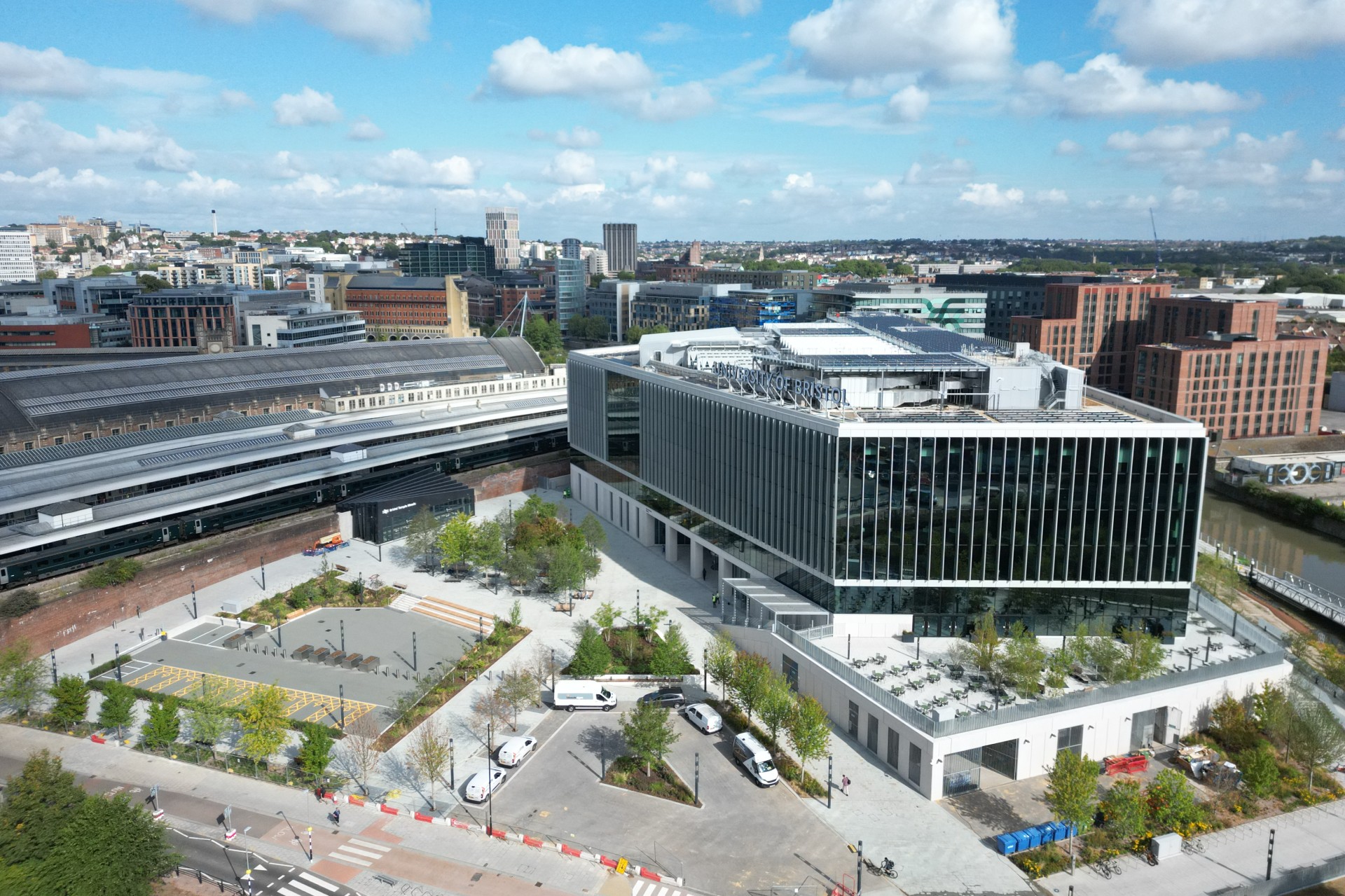
The University of Bristol has opened the main building at its new Temple Quarter Enterprise Campus (TQEC), a £500 million development designed to expand the university’s teaching, research and industry partnerships in emerging technologies. Opened on September 7, the campus is part of the wider Bristol Temple Quarter regeneration project, one of the largest urban regeneration schemes in the UK. The project aims to bring thousands of new homes, workspaces, health facilities and education centres to an area that has been among Bristol and England’s more deprived communities. The new campus will focus on fields including business, innovation, digital engineering, artificial intelligence, cybersecurity, advanced telecommunications and quantum technologies. New Campus Designed for Active Learning and Industry CollaborationThe 38,000-square-metre Sloane Robinson Building, constructed by Sir Robert McAlpine, is designed around collaborative and active learning. Its facilities include the 300-plus-seat Bill Brown Lecture Theatre, one of relatively few “in-the-round” lecture theatres in the UK, designed to encourage discussion and interaction among students and lecturers. The building also contains 22 Active Learning Studios, equipped with shared screens and mobile furniture to support group work and collaboration on real-world challenges, including projects involving external partners. Built on the site of a former Royal Mail sorting office that had stood vacant since 1997, the building will provide teaching, research and collaborative space for around 4,500 students and 650 staff, as well as industry and community partners. The building is named after Bristol alumnus Hugh Sloane and the Sloane Robinson Foundation, following their £20 million donation, the largest individual gift in the university’s history. Deep Tech Innovation HubThe West of England Mayoral Combined Authority has invested £35 million in TQEC to help establish a deep-tech innovation hub connecting businesses, investors and innovators with University of Bristol research, talent and facilities. A key component is the Bristol Innovations Zone, which will provide infrastructure and services to support collaboration between the university and industry in critical and emerging technologies. Building on the university’s existing innovation ecosystem, including the Quantum Technologies Innovation Centre, Engine Shed and SETsquared Bristol, the zone will offer flexible coworking and event spaces, specialist laboratories and equipment, and innovation support services. The university said the development will expand its capacity to work with businesses and support the growth of technology-focused companies in the region. Greater Community Presence in BristolTQEC represents the University of Bristol’s expansion to a second campus in the city and is intended to strengthen its links with local communities. The university said members of the public will be able to access a range of facilities, including cafés, civic spaces and the surrounding public landscape. Professor Evelyn Welch, Vice-Chancellor and President of the University of Bristol, said TQEC represented “the next chapter” in the transformation of Bristol and the West of England into a globally competitive innovation region. She described the campus as an example of how devolution could support economic growth, inclusion and long-term prosperity. Helen Godwin, Mayor of the West of England, said the opening marked a major milestone for Bristol, adding that investment in Bristol Temple Quarter would support economic development across the wider region. Bristol Expands International PresenceThe opening of TQEC comes just days before the University of Bristol is due to open its first international campus in Mumbai, India, on September 10. The Mumbai Enterprise Campus is designed around a similar focus on innovation and industry partnerships, bringing together students, businesses, researchers and other partners within an entrepreneurial ecosystem. The two developments mark a significant expansion of the university’s physical and international footprint, while reinforcing its focus on innovation, technology and collaboration with industry.
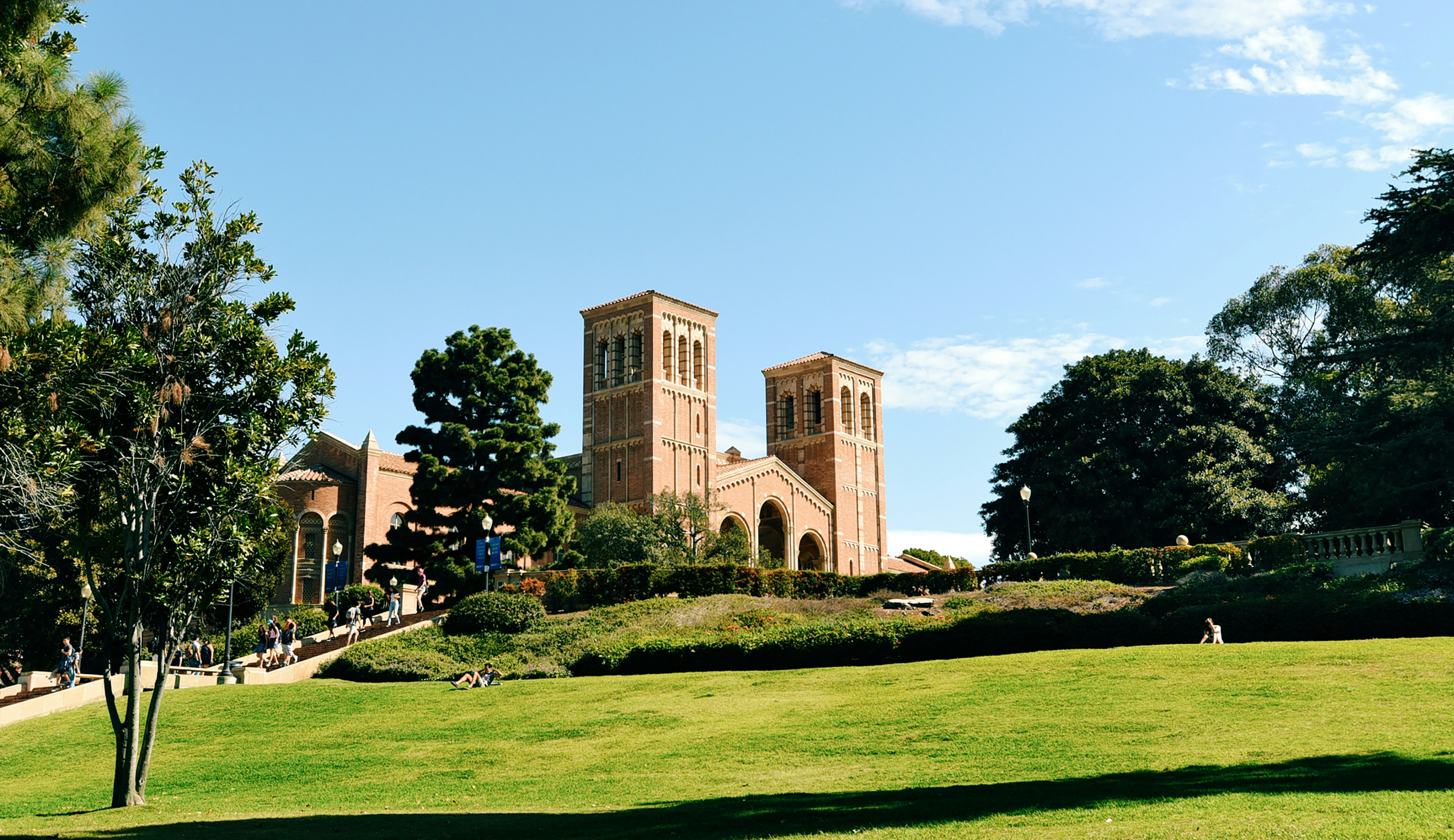
The University of California, Los Angeles, has established a standalone Department of Digital Humanities, becoming the first U.S. university to offer a bachelor’s degree in the field, according to the university. The move elevates digital humanities from an interdisciplinary program within UCLA’s humanities division to a separate academic department, reflecting the field’s growth at the university and its expanding role at the intersection of technology and humanistic inquiry. Digital humanities brings together approaches from the humanities, computing and related fields to examine both technology and human experience. Scholars may use digital tools to study literature, language, history and culture, while also examining how technologies shape individuals, institutions and societies. At UCLA, the field has been developing for more than two decades. The university launched its Program in Digital Humanities in 2010 as part of the UCLA College Division of Humanities. The program was initially expected to serve about 25 students a year. Demand has grown substantially since then. More than 200 UCLA undergraduates minored in digital humanities during the 2025–26 academic year, making it the largest minor in the UCLA College and the second-largest undergraduate minor universitywide. In total, about 750 undergraduates and more than 30 graduate students took digital humanities courses during the year. The new department will offer an undergraduate major leading to a bachelor’s degree, giving students a dedicated academic pathway into a field that has traditionally been housed within existing humanities programs, research centers or interdisciplinary initiatives. Dominic Thomas, chair of the new department and UCLA’s Madeleine L. Letessier Professor of French and Francophone Studies, said the department reflects the university’s view that digital humanities is both a viable area of study and an important component of contemporary undergraduate education. “We need to be thinking and designing curricula that will define what our graduates end up doing as they go about imagining and shaping new futures in the global world,” Thomas said. The curriculum will combine technical and humanistic training. Students will learn to use digital tools to investigate human culture, history and experience while also examining how those technologies are designed and deployed, whose perspectives they represent and how they affect society. That approach is intended to distinguish digital humanities from a purely technical education in computing or data science. The department will draw on expertise in humanities disciplines as well as data science, social sciences and information studies. “UCLA Digital Humanities has humanities at its core and also is interdisciplinary in nature,” said Alexandra Minna Stern, dean of the Humanities Division. She said the combination of disciplines would create opportunities for students to engage with questions that cannot be addressed through a single field. The creation of the department also comes as universities grapple with how to incorporate artificial intelligence and other rapidly developing digital technologies into undergraduate education. For digital humanities programs, that presents a dual challenge: preparing students to work with new technologies while equipping them to critically evaluate their cultural, social and ethical consequences. At UCLA, the new department is positioned to address both sides of that challenge. Its establishment marks a shift in digital humanities from a largely interdisciplinary area of study toward a formal academic discipline with its own department, curriculum and undergraduate degree.
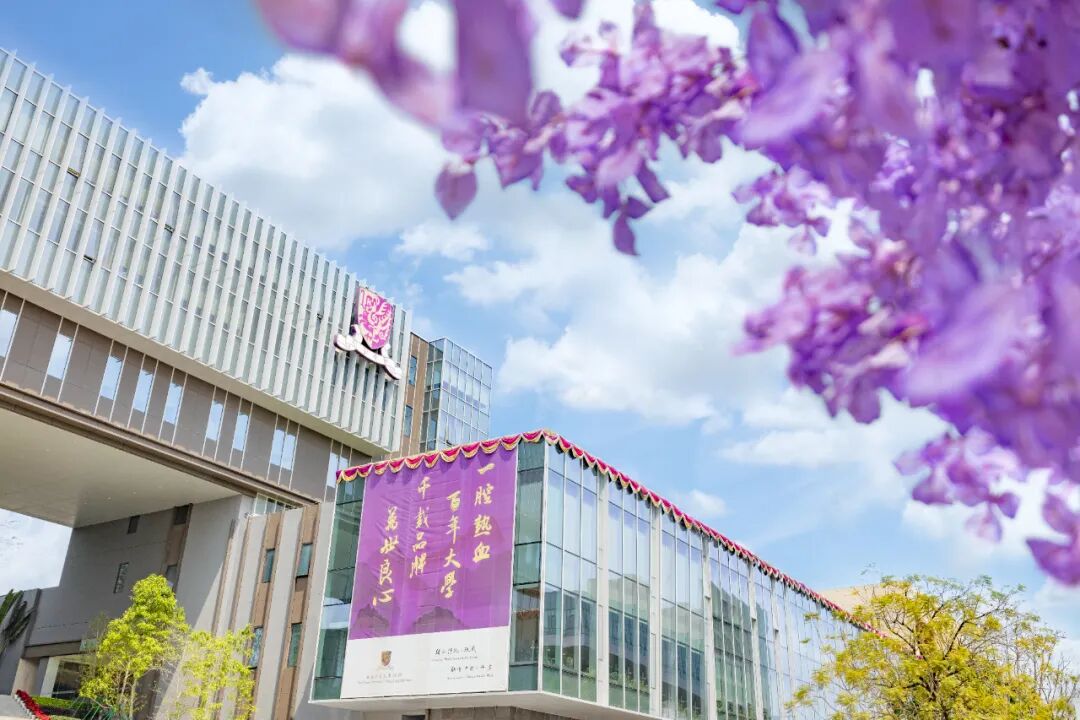
According to the Chinese University of Hong Kong, Shenzhen (CUHK-Shenzhen), mathematician Yurii Nesterov, who recently received the Carl Friedrich Gauss Prize at the 2026 International Congress of Mathematicians (ICM), has joined CUHK-Shenzhen full-time this year. He serves as a professor in the School of Data Science and a professor at the Center for AI Theory and Systems at the Shenzhen Loop Area Institute, an experimental zone for cultivating top-tier innovative talent in artificial intelligence. Professor Yurii Nesterov is a world-leading scholar in optimization theory. He is a foreign member of the U.S. National Academy of Sciences, a member of the European Academy of Sciences, and a foreign member of the Academy of Sciences of Montenegro. His research, including his development of accelerated gradient methods, has laid important foundations for modern machine learning and optimization algorithms and has had a profound impact on mathematics, computer science, and artificial intelligence. Speaking about his decision to join CUHK-Shenzhen full-time, Nesterov said in an interview: “It was actually somewhat accidental. In 2023, I received an award from the World Association of Top Scientists, and the organizers arranged for me to visit several Chinese universities, including universities in Shenzhen and Hong Kong. I found Shenzhen very attractive — it is active, young, and full of opportunities and talented professionals. In 2024, I received an offer for a professorship from CUHK-Shenzhen and decided to give it a try. I worked here as a part-time professor for about three years and found that it was indeed a very good place. So when they proposed that I join full-time, I was very happy to accept. “The Shenzhen Loop Area Institute mainly works with young researchers who have already earned their Ph.D.s, while CUHK-Shenzhen focuses on educating and training new students and researchers. The collaboration between the two is very important.” Nesterov on ShenzhenSpeaking about his impressions of Shenzhen, Nesterov said the city’s pace of development had been particularly striking. “What surprised me most was how quickly Shenzhen is changing. I came to Shenzhen in 2024, and over the past two and a half years, many things have rapidly changed for the better. Shenzhen today is much better than it was in 2024. Everything is moving forward, and that is very encouraging. “Shenzhen has many advantages. First, it has a young and dynamic generation, good universities and research centers, and a great deal of economic activity, particularly in high-tech industries. Its geographical location is also excellent, making it a major regional hub. So it really is a very good place to work and live.” Nesterov also praised the level of mathematics education in Shenzhen, saying that it had reached an internationally leading standard. “I think the level of mathematics education in Shenzhen is very high and has reached a world-class standard. This year, two young Chinese mathematicians received the Fields Medal, one of whom is from Shenzhen. This demonstrates how important China has become in science. “For basic mathematics education, I would suggest teaching not only pure mathematics but also more applied mathematics — teaching people how to build models that can be solved by computers and are numerically tractable.” A Major Year of RecognitionAt the 2026 International Congress of Mathematicians, Nesterov received the Carl Friedrich Gauss Prize, becoming the sixth recipient worldwide since the award was established. The Gauss Prize is one of the highest honors in applied mathematics and is among the most prestigious awards in the mathematical sciences, alongside the Fields Medal and the Chern Medal. Earlier in 2026, Nesterov also received the 2026 NAAI Academy Award from the National Academy of Artificial Intelligence (NAAI) for his foundational contributions to convex optimization theory and their far-reaching impact on modern machine learning. The NAAI Academy Award is the highest honor bestowed by NAAI. It recognizes outstanding scientists whose work has made historically significant contributions to the theoretical foundations of artificial intelligence and its core scientific questions.

July 23–30, 2026: The 2026 International Congress of Mathematicians (ICM) was held in Philadelphia, United States. At the opening ceremony on July 23, the recipients of the 2026 Fields Medal were officially announced. Four mathematicians—Hong Wang, Yu Deng, John Pardon, and Jacob Tsimerman—received the award. Among them, Hong Wang and Yu Deng are Chinese mathematicians, making China the first country in Asia to produce two Fields Medalists in the same ICM. Notably, Hong Wang and Yu Deng are both alumni of the Class of 2007 in the School of Mathematical Sciences at Peking University. The School has long been regarded as the "premier department of China's premier university." At this year's ICM, 14 Peking University faculty members and alumni were invited to deliver lectures, setting a new institutional record and accounting for more than half of all invited talks by Chinese scholars. Each ICM features approximately 200 invited speakers, who present major advances and breakthroughs in their respective fields. These invited lectures represent the highest level of contemporary mathematical research. Being invited to speak at the ICM is considered one of the highest academic honors in mathematics and serves as an important mark of international recognition. With alumni Hong Wang and Yu Deng receiving the Fields Medal and 14 faculty members and alumni delivering invited lectures, Peking University made an outstanding showing at the 2026 ICM, highlighting its leading role on the international mathematical stage and its exceptional strength in cultivating world-class mathematical talent. The 14 Invited Speakers Songxi ChenSongxi Chen received his B.S. (1983) and M.S. (1988) in Mathematics from Beijing Normal University, and his Ph.D. in Statistics from the Australian National University in 1993. He previously served as Lecturer and Senior Lecturer at La Trobe University, Associate Professor at the National University of Singapore, and tenured Associate Professor and Professor at Iowa State University. He joined Peking University in 2008, holding appointments in both the Guanghua School of Management and the School of Mathematical Sciences. In 2021, he was elected a Member of the Chinese Academy of Sciences. His research focuses on ultrahigh-dimensional statistics, environmental statistics, and nonparametric statistical methods. At the ICM, he delivered a 45-minute invited lecture titled "Signal Detection in High-Dimensional Statistics." Xinyi YuanXinyi Yuan studied at the School of Mathematical Sciences, Peking University, from 2000 to 2003, earning his B.S. in Mathematics, and received his Ph.D. from Columbia University in 2008. He was a Clay Research Fellow (2008–2011), Assistant Professor at Princeton University (2011–2012), Assistant Professor and later Associate Professor at the University of California, Berkeley (2012–2020), before returning to Peking University as Professor in 2020. His research interests include number theory and arithmetic geometry, particularly Arakelov geometry, algebraic dynamical systems, Diophantine geometry, Shimura varieties, and special values of L-functions. His ICM lecture was titled "Quantitative Questions in the Mordell Conjecture." Xin SunXin Sun earned his B.S. from the School of Mathematical Sciences, Peking University (2007–2011), and his Ph.D. from MIT in 2017. He subsequently spent three years as a Simons Fellow at Columbia University. In 2020, he joined the University of Pennsylvania as Assistant Professor, spent 2022–2023 as a visitor at the Institute for Advanced Study (IAS), and returned full-time to Peking University in 2023. He is currently Professor at the Beijing International Center for Mathematical Research (BICMR). His research centers on probability theory and mathematical physics, with emphasis on random geometry, statistical physics, and quantum field theory. His ICM lecture was "Liouville Quantum Gravity: From Random Planar Maps to Conformal Field Theory." Junyi XieJunyi Xie received his undergraduate degree from the University of Science and Technology of China, pursued graduate studies at the École Normale Supérieure and Université Paris Diderot, and earned his Ph.D. from the École Polytechnique in 2014. He left a tenured position at the French National Centre for Scientific Research (CNRS) in 2021 to join BICMR at Peking University. His research spans arithmetic dynamics, Diophantine geometry, algebraic geometry, and complex dynamics. His ICM lecture was "Rigidity in Complex Dynamics: Multiplier Spectra and the Dynamical André–Oort Conjecture." Yongchang ZhuYongchang Zhu studied at the Department of Mathematics, Peking University (1980–1984), earning his B.S., and received his Ph.D. from Yale University in 1990. After graduation, he held positions at Caltech, the Institute for Advanced Study, and the Max Planck Institute for Mathematics in Bonn. His research covers conformal field theory, loop groups, and automorphic forms. His ICM lecture was "Automorphic Forms on Loop Groups and Explicit Constructions." Feng XuFeng Xu earned both his B.S. and M.S. from the Department of Mathematics, Peking University (1984–1990), and later completed his Ph.D. at the University of California, Berkeley. Early in his career, he participated in the Chern Study Program in the United States. His research focuses on mathematical physics. He was a plenary speaker at the 2021 International Congress on Mathematical Physics. His ICM lecture was "Entropy in Quantum Field Theory." Jianfeng LuJianfeng Lu received his B.S. from the School of Mathematical Sciences, Peking University (2001–2005), and his Ph.D. in Applied Mathematics from Princeton University in 2009. He was a postdoctoral researcher at the Courant Institute of Mathematical Sciences, New York University (2009–2012). He is currently the James B. Duke Distinguished Professor at Duke University, with joint appointments in Mathematics, Physics, and Chemistry. His research lies at the intersection of computational physics, theoretical chemistry, materials science, high-dimensional partial differential equations, and machine learning. His ICM lecture was "Quantitative Hypocoercivity Estimates for the Underdamped Langevin Equation." Lin LinLin Lin earned his B.S. from the School of Mathematical Sciences, Peking University (2003–2007), and his Ph.D. in Applied Mathematics from Princeton University in 2011. He is Professor of Mathematics at the University of California, Berkeley, and Senior Scientist at Lawrence Berkeley National Laboratory. His research focuses on mathematical modeling and numerical methods for quantum many-body problems, advancing interdisciplinary research in quantum chemistry, quantum physics, materials science, and quantum information. His ICM lecture was "Mathematics and Numerical Analysis of Quantum Signal Processing." Yu DengYu Deng studied at the School of Mathematical Sciences, Peking University (2007–2009), before transferring to MIT, where he completed his bachelor's degree in mathematics. He received his Ph.D. from Princeton University in 2015. He previously held positions as a postdoctoral researcher at the Courant Institute, Assistant Professor at the University of Southern California, and joined the University of Chicago in 2024. His research focuses on partial differential equations, particularly dispersive equations, and their interactions with probability theory and mathematical physics, especially statistical physics, kinetic theory, and quantum field theory. His ICM lecture was "Hilbert's Sixth Problem: Particles and Waves." Yunqing TangYunqing Tang earned her B.S. from the School of Mathematical Sciences, Peking University (2007–2011), and her Ph.D. from Harvard University in 2016. She has held positions at the Institute for Advanced Study, Princeton University, CNRS/Université Paris-Saclay, and Princeton University before joining the University of California, Berkeley as Associate Professor in 2022. Her ICM lecture was "Integrality Bounds and Diophantine Approximation." Hong WangHong Wang entered Peking University in 2007, initially enrolling in the School of Earth and Space Sciences before transferring to the School of Mathematical Sciences in 2008. She received her B.S. in Mathematics in 2011, earned both the Diplôme d'Ingénieur from the École Polytechnique and a master's degree from Université Paris-Saclay in 2014, and completed her Ph.D. at MIT in 2019. After a postdoctoral appointment at the Institute for Advanced Study, she joined UCLA as Assistant Professor in 2021. She is currently Silver Professor at the Courant Institute of Mathematical Sciences, New York University, and a permanent Professor at the Institut des Hautes Études Scientifiques (IHES). Her ICM lecture was "Restricted Orthogonal Projections." Ruixiang ZhangRuixiang Zhang earned his B.S. from the School of Mathematical Sciences, Peking University (2008–2012), and his Ph.D. from Princeton University in 2017. After postdoctoral appointments at the Institute for Advanced Study and the University of Wisconsin–Madison, he joined the University of California, Berkeley. His research focuses on Fourier analysis, analytic number theory, and additive combinatorics. His ICM lecture was "Where Can Free Waves Concentrate?" Junliang ShenJunliang Shen received his B.S. from the School of Mathematical Sciences, Peking University (2009–2013), and his Ph.D. from ETH Zurich in 2018. He served as a C.L.E. Moore Instructor at MIT (2018–2021) before joining Yale University as Assistant Professor in 2021 and being promoted to Associate Professor in 2025. His research interests include Gromov–Witten theory, moduli spaces, and derived algebraic geometry. His ICM lecture was "The Topology of Abelian Fibrations." Ziquan ZhuangZiquan Zhuang earned his B.S. from the School of Mathematical Sciences, Peking University (2010–2014), and his Ph.D. from Princeton University in 2019. He was a C.L.E. Moore Instructor at MIT (2019–2022) and is currently Professor of Mathematics at Johns Hopkins University. His research focuses on algebraic geometry, particularly singularity theory, the minimal model program, and birational geometry. His ICM lecture was "Local Volumes of klt Singularities and K-Stability." Explore More from ICM 20262026 Fields Medal Winners Announced: Four Mathematicians Honored Where Have Fields Medalists Studied and Worked? ICM 2026 Announces Fields Medal and Major IMU Award Winners The List of Speakers at ICM 2026
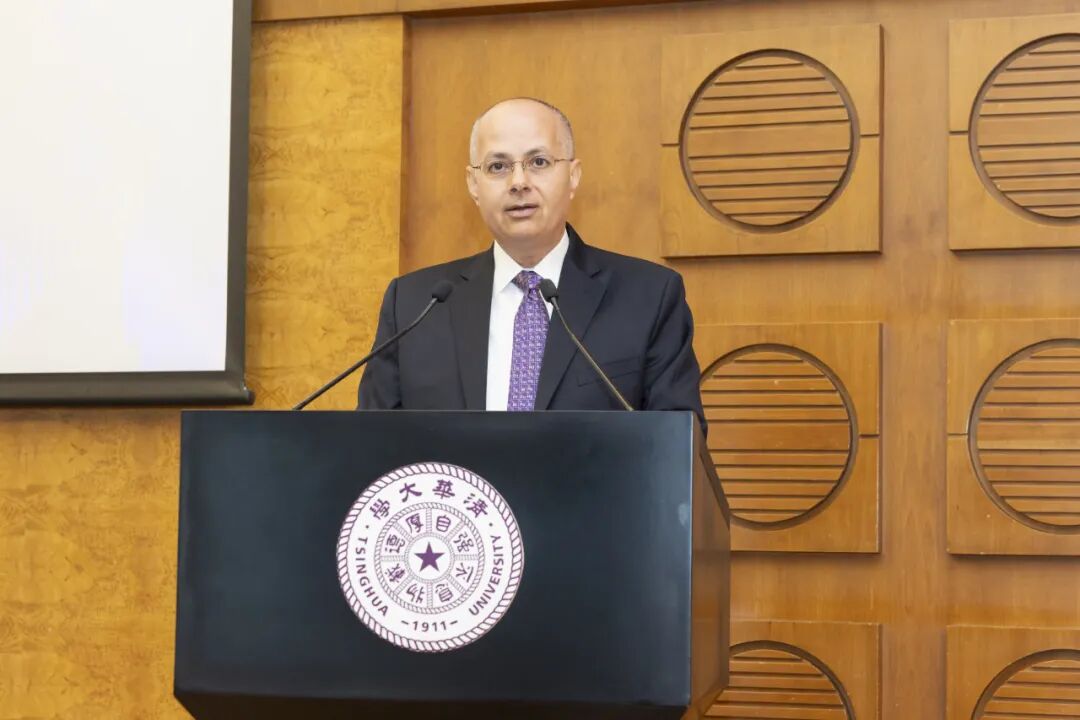
On July 3, Tsinghua University held the appointment ceremony for Professor Omar M. Yaghi, who joins the university as a full-time chaired professor. A recipient of the 2025 Nobel Prize in Chemistry and one of the world's foremost materials chemists, Yaghi will further strengthen Tsinghua's research capabilities in chemistry and materials science. At the ceremony, Professor Yaghi reflected that his fascination with molecules began at the age of ten, and that a pure passion for science has inspired him to transcend geographical and cultural boundaries throughout his career in materials science. Today, his research focuses on global challenges including water security, carbon neutrality, and sustainable development, with the goal of addressing fundamental issues that affect humanity. Acknowledging that scientific research is rarely a smooth journey, he emphasized that science possesses a unique power to transform the unknown into discovery while cultivating curiosity, dedication, and courage in the face of challenges. By joining Tsinghua, he said, he hopes to embark on a new chapter in both research and education with renewed enthusiasm and greater ambition, working alongside colleagues to address the defining questions of our time, expand the frontiers of knowledge, and ensure that scientific innovation benefits the world. According to Tsinghua University, Professor Yaghi will lead the establishment of the University-level AI Materials Chemistry Research Center (AIMATRY). Building upon the Department of Chemistry and the Department of Chemical Engineering, the center will collaborate closely with the Institute for AI Industry Research, the Department of Computer Science and Technology, the School of Materials Science and Engineering, and other academic units. The center will develop forward-looking AI-enabled technologies for materials design and synthesis, with the goal of dramatically shortening the development cycle for new materials. By creating an intelligent, end-to-end research and development framework spanning theory, computation, R&D, and manufacturing, AIMATRY aims to overcome the efficiency limitations of traditional trial-and-error approaches and establish an independent technical standards system covering the entire lifecycle of intelligent materials. Professor Yaghi will also play a leading role in cultivating interdisciplinary talent at the intersection of artificial intelligence and materials science. Leveraging his international academic standing, he will work with leading scholars worldwide to build an integrated AI-plus-Chemistry education and research platform at Tsinghua. Through interdisciplinary curricula, small-class teaching, and hands-on research training, the platform will nurture a new generation of highly qualified researchers with expertise spanning AI, materials chemistry, and related interdisciplinary fields. Omar M. YaghiProfessor Omar M. Yaghi is the recipient of the 2025 Nobel Prize in Chemistry. He is also a foreign member of the Chinese Academy of Sciences, a member of the U.S. National Academy of Sciences, the American Academy of Arts and Sciences, and the German National Academy of Sciences Leopoldina. Born in Amman, Jordan, in 1965, Yaghi received his Ph.D. in Chemistry from the University of Illinois Urbana-Champaign in 1990 before undertaking postdoctoral research at Harvard University. He subsequently held faculty positions at several leading American universities and has served as the James and Neeltje Tretter Chair Professor of Chemistry at the University of California, Berkeley, since 2012, while also serving as a senior scientist at Lawrence Berkeley National Laboratory. Throughout his career, he has received numerous prestigious international honors, including the Einstein World Award of Science, the Wolf Prize in Chemistry, and the Balzan Prize. Professor Yaghi's research encompasses the synthesis, structure, and properties of inorganic and organic compounds, as well as the design and construction of novel crystalline materials. He pioneered the building-block approach, which has enabled exponential growth in the discovery of new materials and generated unprecedented chemical diversity. He is the inventor of metal-organic frameworks (MOFs), covalent organic frameworks (COFs), and molecular weaving, and was the first to define the field of reticular chemistry, establishing an entirely new paradigm for materials design. To date, Professor Yaghi has published more than 300 research papers, which have collectively received over 260,000 citations. He has authored more than 30 papers in the world's leading scientific journals, including Nature and Science.
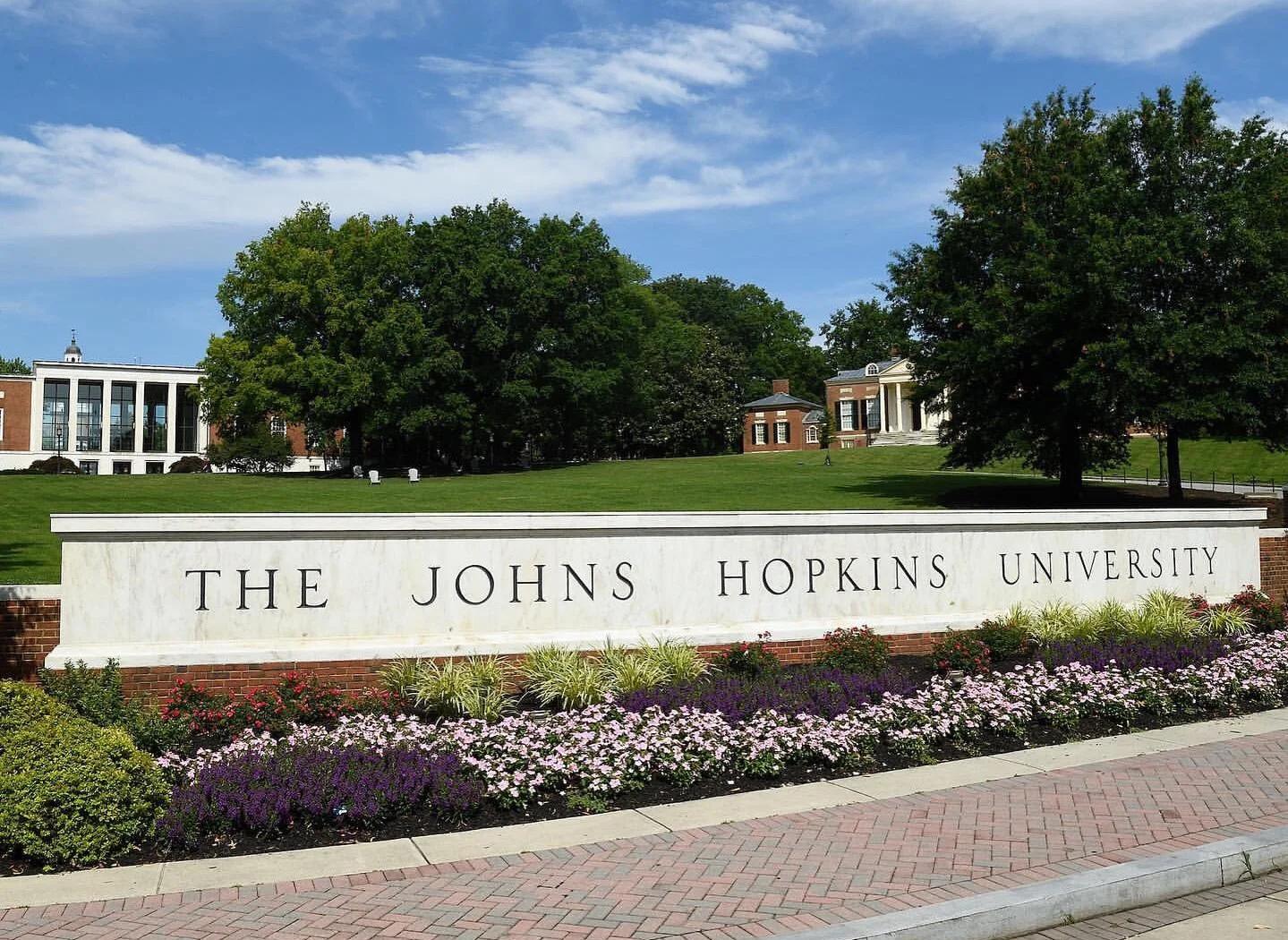
Recently, a spokesperson for Johns Hopkins University confirmed that the university has laid off approximately 110 employees in response to cuts in federal research funding. The latest round of layoffs was described as a last resort and primarily affected administrative staff. In a statement, Johns Hopkins University said: "As our federal research portfolio shrinks, the infrastructure around it must change in parallel. Last year, we implemented significant cost-management initiatives including a hiring freeze, pausing annual increases for anyone making over $80,000, reducing discretionary spending, eliminating vacant positions, and reducing our five-year capital project spending by 20%." In March 2025, the university announced the layoff of 2,200 employees, most of whom were based overseas, in direct response to the administration's unilateral dismantling of the U.S. Agency for International Development (USAID). Further ReadingAccording to Johns Hopkins University, the institution has been the nation's leading recipient of federal research funding every year since 1979. In fiscal year 2024, every dollar invested in research by the National Institutes of Health (NIH) generated approximately $2.56 in economic activity. However, in a 2026 letter to the university community, JHU President Ron Daniels noted that: "The total outstanding value of our multiyear federal research portfolio had declined by more than $500 million in calendar year 2025. This was due in part to our receiving 43% less in federal research funding and 28% fewer awards than in the previous year. Unfortunately, as we approach the midpoint of 2026, these downward trends have continued unabated." To help offset the impact of federal grant terminations and funding delays, the university will invest $60 million annually over the next two years to support faculty members pursuing new research and academic initiatives, as well as PhD students and postdoctoral scholars as they complete their training. The program is open to all research disciplines that have historically relied on competitively awarded federal grants. In addition, this June, Johns Hopkins University and West Virginia University announced a new partnership to bring together researchers from both institutions to tackle complex challenges in health, science, and society, while strengthening faculty teams' competitiveness for future external research funding. At the center of the partnership is the JHU–WVU Research Collaborative, a three-year, $7 million initiative funded through philanthropic support. The program is designed to help faculty teams launch new interdisciplinary research collaborations and compete for larger external funding opportunities.
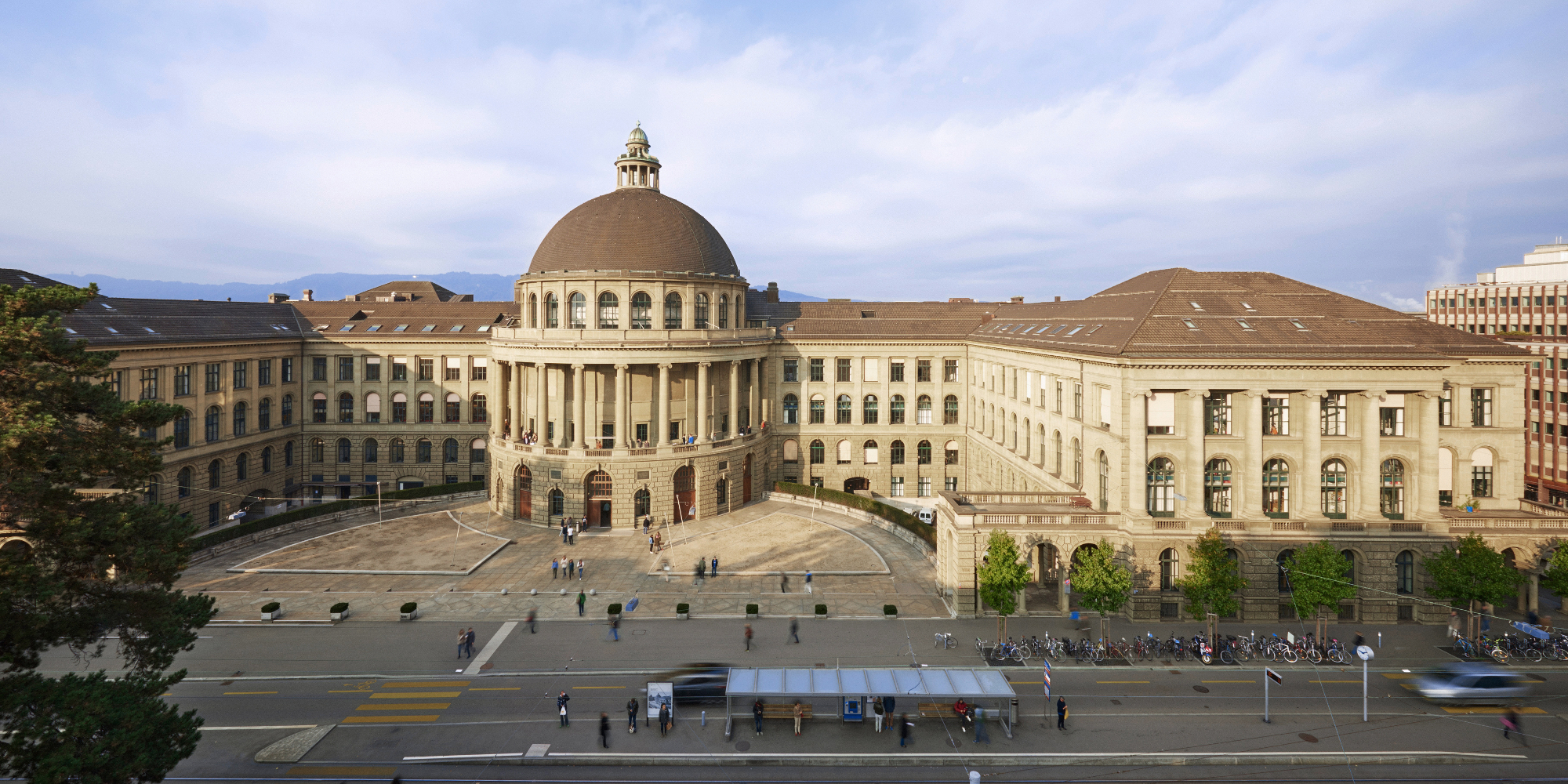
According to an official announcement from ETH Zurich, at the request of the ETH Board, the Swiss Federal Council has confirmed Günther Dissertori as the next President of ETH Zurich. The particle physicist, who currently serves as Rector of the university, will succeed Joël Mesot and assume office on 1 January 2027. Mesot will continue to serve as President of ETH Zurich until the end of December 2026. The Federal Council’s decision to appoint Dissertori, a 56-year-old scientist from South Tyrol, reflects a commitment to continuity. “I’d like to thank the Federal Council for their confidence and am excited about working to keep ETH Zurich a top global university together with the strong team of the Executive Board, our professors and all members of staff,” Dissertori said. He has been a Professor of Particle Physics at ETH Zurich since 2001 and, in 2022, was appointed Rector, Deputy President, and a member of the ETH Zurich Executive Board. Günther Dissertori Image: Markus Bertschi / ETH ZurichGünther Dissertori (born in 1969) is an Italian physicist, scientist, Professor of Particle Physics, and the current Rector of ETH Zurich. He will become President of ETH Zurich at the beginning of 2027, succeeding Joël Mesot. Dissertori studied physics at the University of Innsbruck and began his research career as a doctoral student at CERN in Geneva. His appointment brings a distinguished scientist to one of Switzerland’s most important academic leadership positions. According to the Federal Council’s media release, Dissertori made “key contributions to the discovery of the Higgs boson at CERN’s Large Hadron Collider in Geneva in 2012.” Beyond his achievements in fundamental research, he has also promoted the application of detector technologies in medicine, contributing to the establishment of an ETH spin-off that developed a cost-effective brain PET scanner. As Rector, Dissertori has emphasized collaboration with industry, including through the Learning Factory project in Zug, which connects ETH students with industrial partners. He has also strengthened the Student Project House, a platform that enables students to cultivate entrepreneurial skills and an innovative mindset. Supporting early-career researchers has been a central focus throughout Dissertori’s career. As Rector, he has overseen education and teaching at all levels, including continuing education programs. The Federal Council noted that over the past four years he has “significantly shaped the strategic direction of academic instruction at ETH Zurich.” Among his key initiatives is the launch of the PAKETH project, the most comprehensive curriculum reform since the introduction of the Bologna system. PAKETH is designed to facilitate the development of degree programs, increase flexibility, and create new opportunities for students to engage with industry. Dissertori has also developed a comprehensive vision for teaching, expanded project-based learning formats, and actively promoted the strategic integration of artificial intelligence into the curriculum.


Data & Rankings
Data & Rankings
Data & Rankings
Data & Rankings
Data & Rankings