
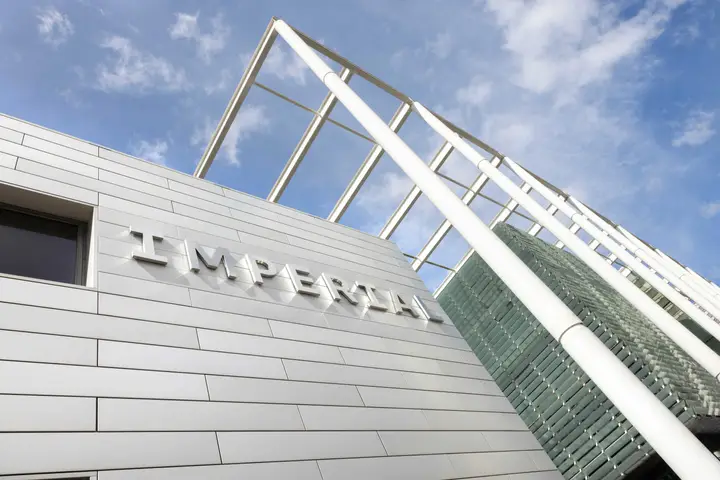
Why Imperial Surpassed Oxford and Cambridge in QS Rankings


In the 2025 and 2026 QS World University Rankings, Imperial College London ranked No. 2 globally and No. 1 in the UK for two consecutive years, second only to Massachusetts Institute of Technology. Yet before this dramatic rise, the university had long remained around 6th place globally, behind both University of Oxford and University of Cambridge.
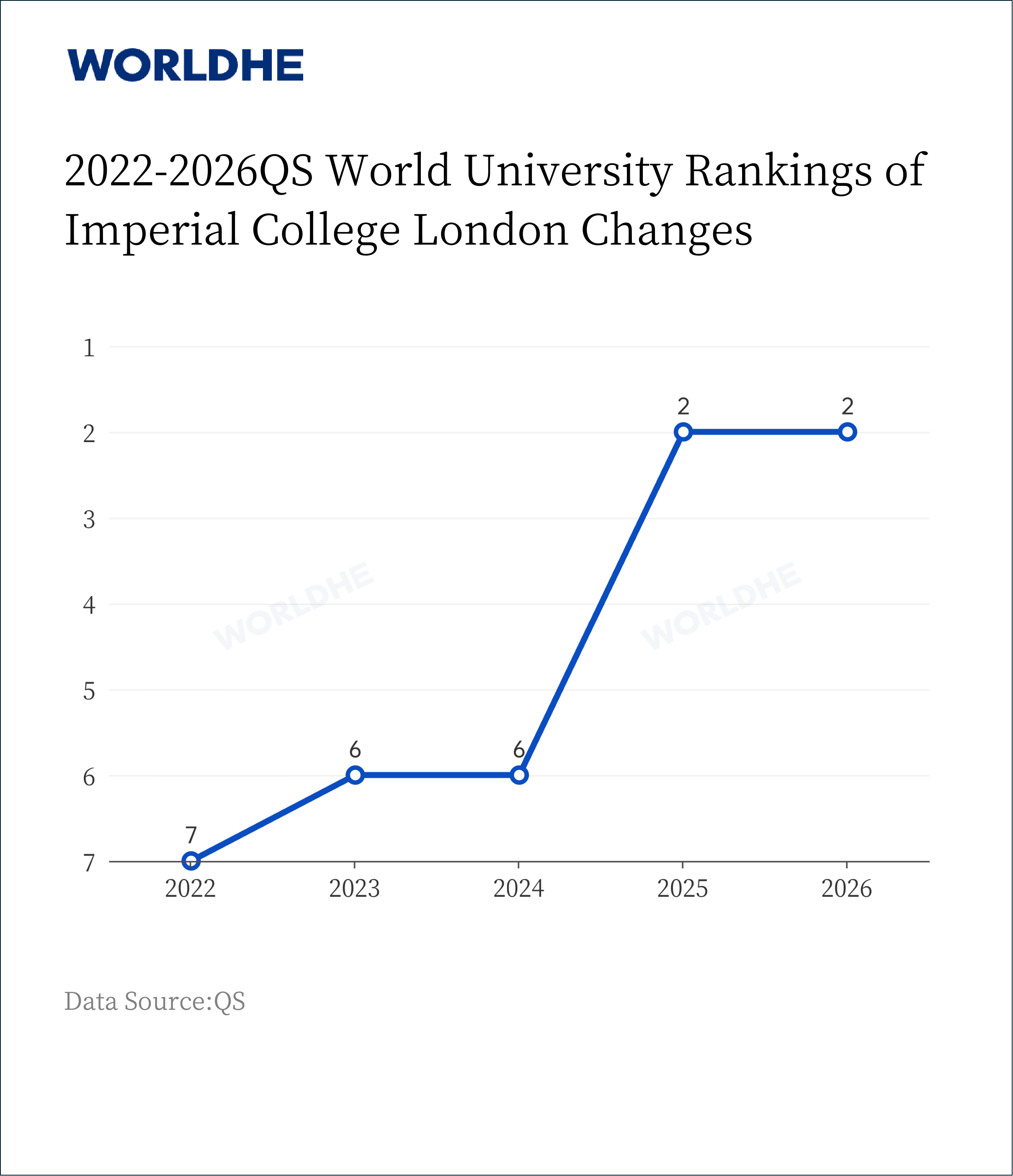
Why has Imperial surpassed Oxford and Cambridge in recent years to become the UK’s top-ranked university in QS? The answer may lie in the university’s own transformation.
“Science for Humanity” Strategy Drives Research Excellence
Since its founding in 1907, the philosophy of “to be useful” has been deeply embedded in Imperial’s identity. The university’s mission is to “achieve enduring excellence in research and education in science, technology, engineering, medicine and business for the benefit of society.”
However, as President Professor Hugh Brady has noted, today “being useful” means “delivering global impact through research and innovation, and shaping the next generation of leaders and change-makers.”
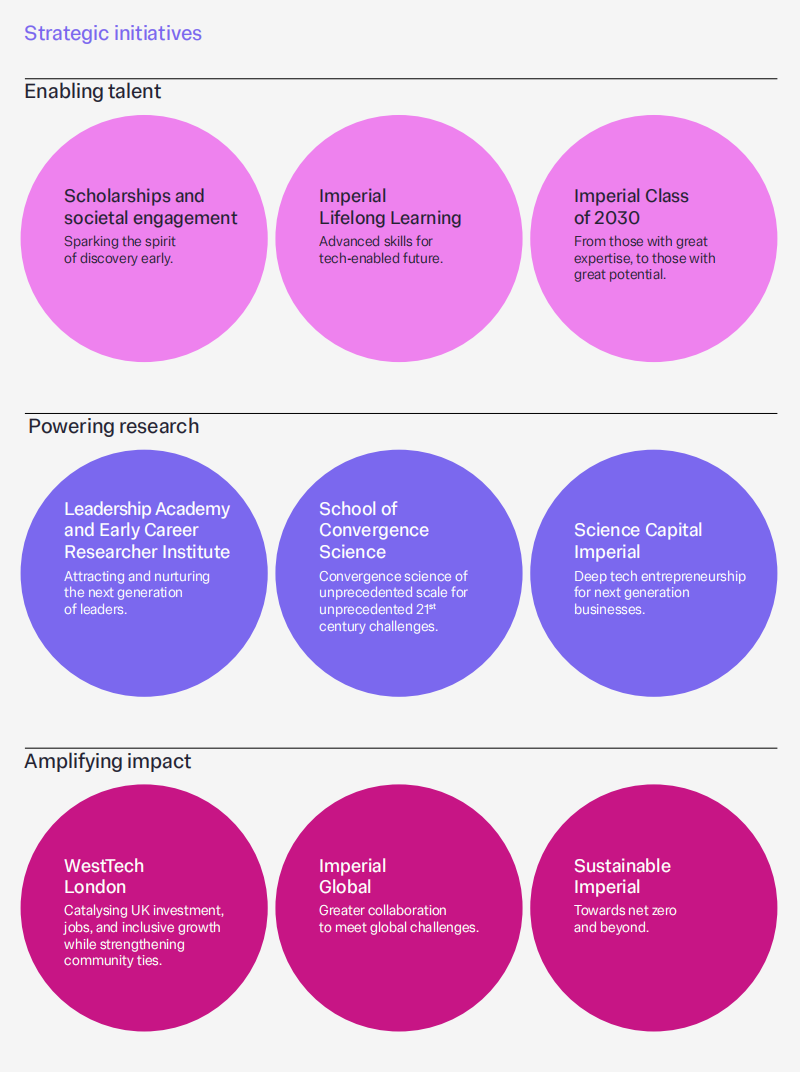
In March 2024, leveraging its strong foundations in STEMB disciplines, Imperial launched an ambitious strategy titled “Science for Humanity.” Through three core aims — enabling talent, powering research, and amplifying impact — the university aims to shape an entirely new future.
Coincidentally, in 2023 QS introduced the largest methodological overhaul in its history, adding three new indicators: Employment Outcomes, International Research Network, and Sustainability. Ben Sowter, Senior Vice President at QS, explained that the changes were designed to “closely align” its flagship rankings with the priorities of Gen Z and Gen Alpha students, who are “increasingly socially conscious students.”
Sowter further noted:
“An institution’s ability to make that global impact and really be recognised for their capability is directly linked to their ability to produce graduates who themselves go on to make the right leadership choices and make a global impact. And it’s critically important that universities take responsibility for bringing the best and brightest minds in different disciplines and different fields together to collaborate on solving some of those problems.”
QS’s proactive response to emerging trends in higher education and evolving student expectations aligns closely with Imperial College London’s “Science for Humanity” strategy. As President Professor Hugh Brady stated:
“This commitment to excellence has been recognised globally, as our excellence in world-leading research, outstanding employability scores, and exceptional commitment to sustainability contributed to our 2nd place in the QS World University Ranking.”
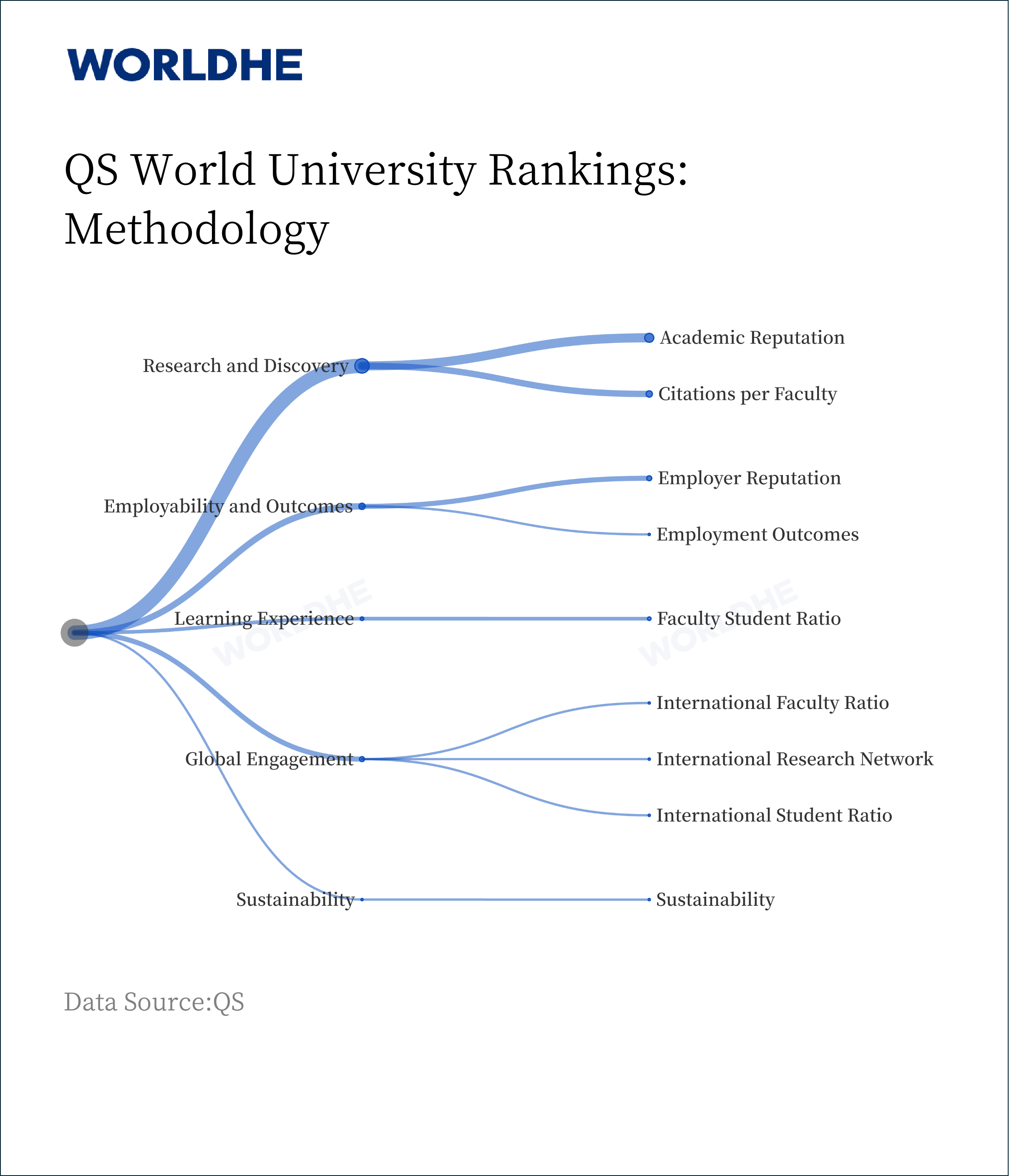
Looking at Imperial’s 2026 QS indicator scores, the university achieved 99.6 in Academic Reputation and 95 in Citations per Faculty, the two most heavily weighted metrics. Behind these exceptional scores lies the university’s sustained investment in research, innovation, and world-leading impact under the “Science for Humanity” strategy.
In June 2025, Imperial established four new Schools of Convergence Science, integrating the university’s strengths across science, technology, and business to address the world’s most urgent challenges. Rather than simple interdisciplinary collaboration, these schools aim to break down barriers between disciplines and departments, accelerating the implementation of the “Science for Humanity” strategy.
The four Schools focus respectively on:
- Health and Technology
- Space, Security and Telecoms
- Sustainability
- Human and Artificial Intelligence
Today, the majority of Imperial’s research activities are directly connected to these four schools.
For example, The School of Health and Technology has already produced significant breakthroughs in areas such as Parkinson’s disease, Alzheimer’s disease, and prostate cancer imaging. Professor Anthony Bull, School of Convergence Science Co-Director (Convenor), stated:
“The School of Convergence Science (Health and Technology) is a bold initiative to harness the depth and breadth of our research to drive lasting societal impact and build a healthier, more equitable, and resilient future for all.”
Meanwhile, in The School of Human and Artificial Intelligence, Imperial researchers are developing transformative tools and solutions designed to benefit society. Professor Alessandra Russo, Head of the Department of Computing, noted:
“AI will undoubtedly reshape our life, our world, our future. It's this convergence between AI and human intelligence that can unlock the potential and power of AI technology.”
At the same time, Imperial is striving to translate research into real-world applications and solutions, truly realizing the vision of “science for humanity.” One notable example is WestTech London, where more than 1,000 cutting-edge innovation companies have already established operations.
Outstanding Advantages in Internationalization and Graduate Employability
Beyond academic research, internationalization and student employability are also major strengths behind Imperial’s QS success.
Imperial achieved perfect scores in both International Faculty Ratio and International Student Ratio, making it one of the most international universities in the world. According to university data, international students account for 61% of the student body and come from more than 150 countries and regions. Likewise, Imperial’s academic staff represent top global talent, with 41% originating from outside the UK.
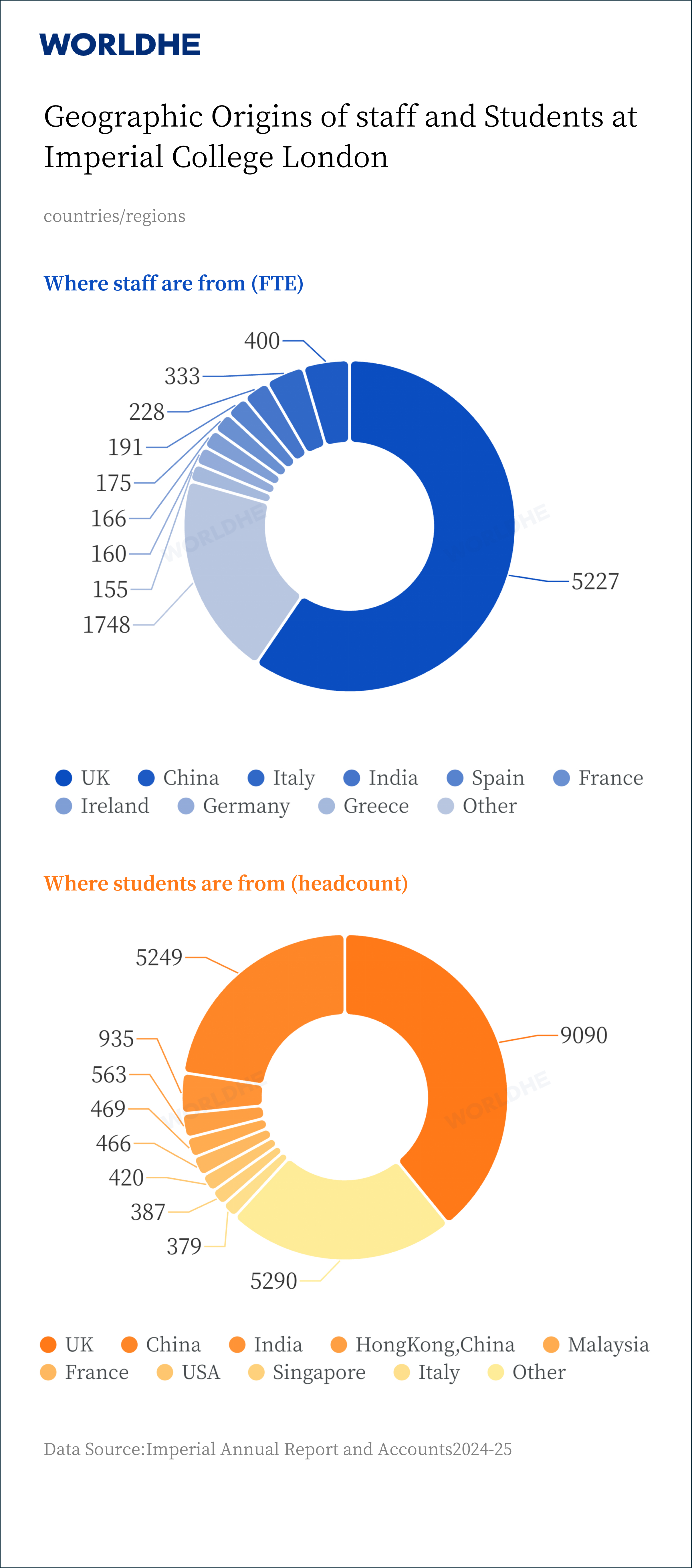
Under the “Science for Humanity” strategy, Imperial has established Imperial Global Hubs in Singapore, the United States, Ghana, and India. These hubs serve as bridges between the UK and major global innovation centers, enabling the free flow and exchange of research, knowledge, and technology worldwide. As a result, Imperial scored an impressive 97.5 in the International Research Network indicator in the 2026 QS rankings.
Equally impressive are Imperial’s scores in Employer Reputation (100) and Employment Outcomes (95.9), with the latter rising sharply from 83 in 2024 to 95.9 in 2026.
Located in central London, Imperial is surrounded by leading technology firms, innovative startups, and world-class medical institutions. Its curriculum and internship programs are deeply integrated with industry, contributing to strong graduate employability and competitiveness among top employers such as Google, DeepMind, fintech firms, and the UK’s National Health Service.
As a result, Imperial has become one of the world’s premier launching pads for graduate careers. It was ranked first for graduate career prospects in The Guardian’s University Guide 2025 and recognized as top for Graduate Employment in The Times/The Sunday Times Good University Guide 2025.
Yet Imperial is not stopping there. Professor Peter Haynes, Provost and Deputy President, believes:
“As the pace of innovation accelerates, our education must prepare our graduates to adopt emerging technologies not only for the careers of today, but also for the future jobs we cannot even imagine.”
To achieve this, Imperial continues to invest heavily in student innovation initiatives and digital education capabilities, aiming to deliver a truly world-class educational experience.
Sustained Financial Growth Supports the Rise in Rankings
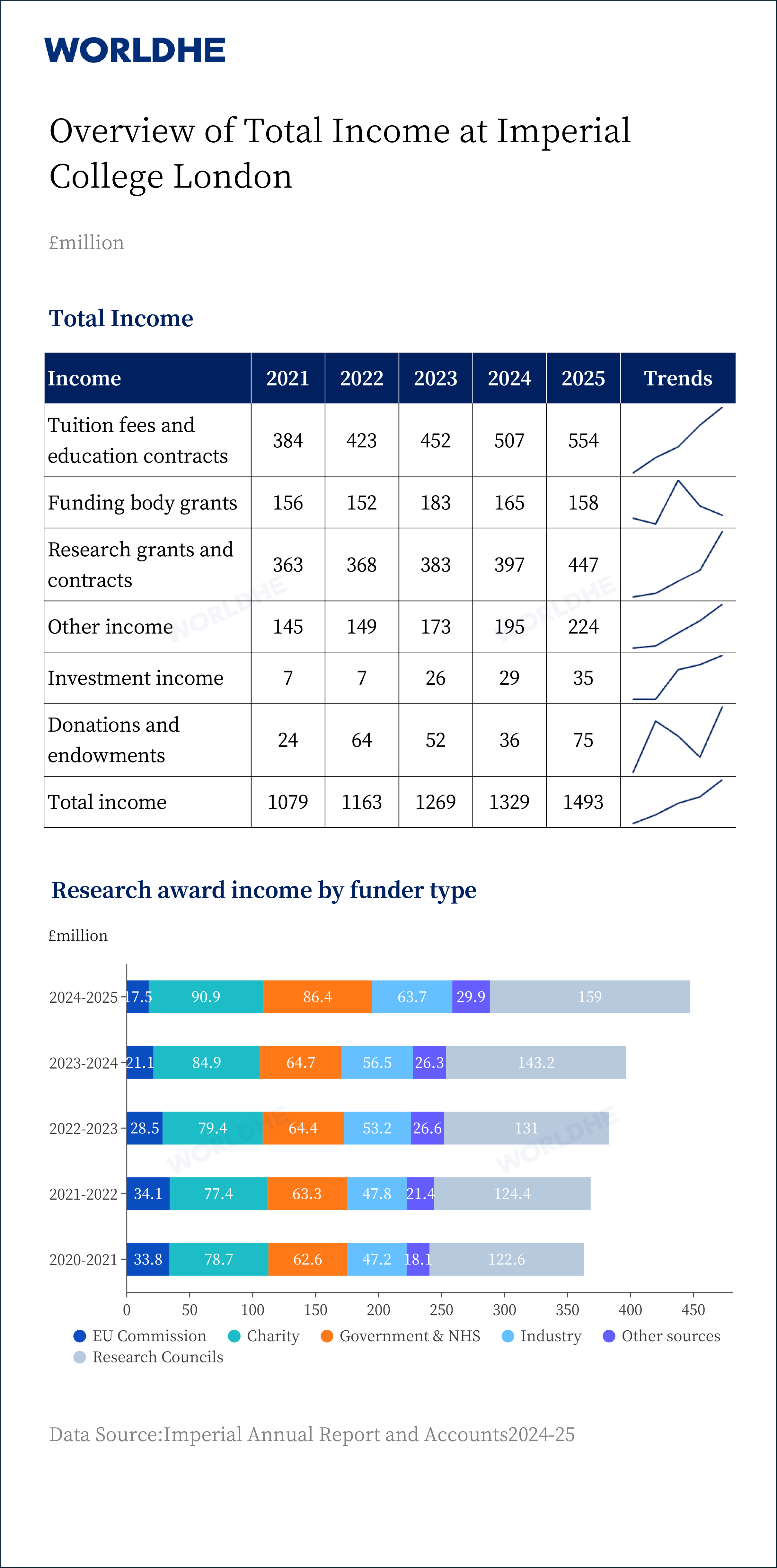
Imperial’s financial growth also reflects its upward trajectory. Between 2021 and 2025, the university’s total income increased from £1.079 billion to £1.493 billion, representing cumulative growth of nearly 38.4%. In 2025, all income streams except funding body grants recorded growth.
Among these, Tuition fees and education contracts rose dramatically from £384 million in 2021 to £554 million in 2025, an increase of 44.3%. Notably, international tuition fees accounted for as much as 80.7% of total tuition income, providing substantial resources that further strengthened teaching and research quality.
At the same time, Research grants and contracts increased by 12.8% year-on-year to £447.4 million. The year 2025 also marked particularly strong performance in securing new research funding. Industry funding rose significantly from £47.2 million in the 2020/21 academic year to £63.7 million in 2024/25, an increase of 35%, highlighting the depth of Imperial’s industry-academia collaboration.
Particularly noteworthy was the university’s donation income. As of July 31, 2025, Imperial received £74.6 million in donations — the highest level since 2019 — signaling strong confidence from alumni and external partners in the university’s future development.
Imperial’s rise to No. 2 globally reflects the resonance between changes in QS ranking methodology and the university’s own multidimensional strengths. As QS shifted its emphasis from traditional academic prestige toward employability and internationalization, Imperial’s deep-rooted advantages in engineering, technology, medicine, and applied sciences translated into overwhelming competitive strength in the rankings.
Behind the methodological transformation lies a broader shift in how universities are evaluated globally — and Imperial College London has emerged as one of the clearest symbols of that transformation.


TRENDING
Before the Nobel Prizes: Which Universities Are Leading the Pipeline of Future Laureates?
Data & Rankings
Where Fields Medalists Studied and Worked?
Data & Rankings
Which Universities Are Producing the Next Nobel Laureates? The Breakthrough Prize Offers Some Clues
Data & Rankings
MIT Tops QS World Rankings for 15th Straight Year
Data & Rankings
Harvard Tops U.S. News Global University Rankings
Data & Rankings