

UNESCO: Global Higher Education Reaches Record Levels


Recently, UNESCO released its first Higher Education Global Trends Report. The report shows that the number of students enrolled in higher education worldwide has more than doubled over the past two decades, reaching 269 million in 2024. International mobility has tripled over the same period, with nearly 7.3 million students studying abroad, half of whom are hosted in European and North American countries. Women now outnumber men in higher education, but they remain underrepresented at the doctoral level. Significant geographical inequalities also persist, with lower enrolment and completion rates in regions such as sub-Saharan Africa.
The report includes new data from 146 countries and indicates that the number of students enrolled in higher education worldwide increased from approximately 100 million in 2000 to 269 million in 2024, accounting for 43% of the population of typical higher education age (18–24 years old).
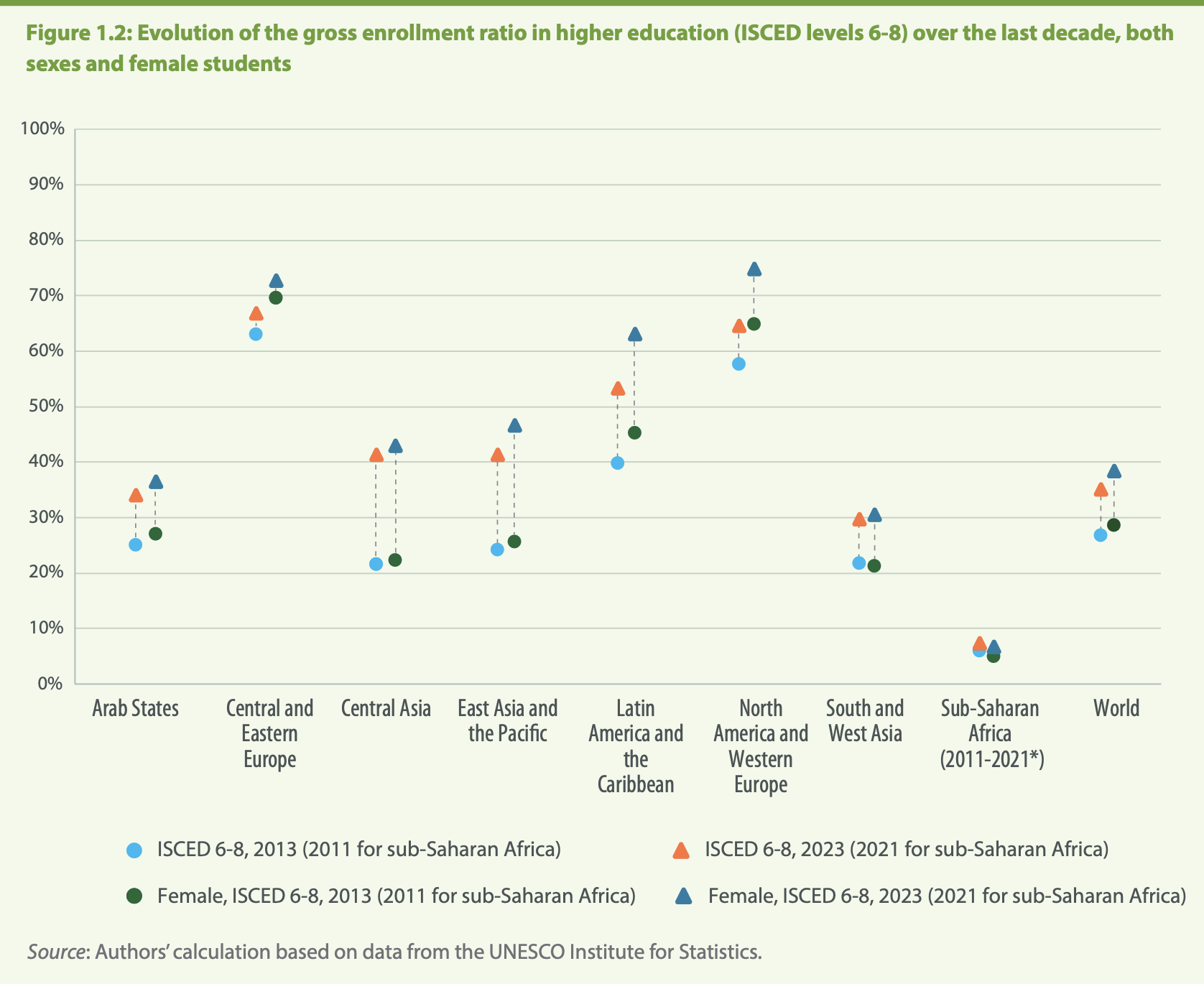
However, this growth masks stark regional disparities. While 80% of young people in Western Europe and North America are enrolled in higher education, the corresponding figures are 59% in Latin America and the Caribbean, 37% in the Arab States, 30% in South and West Asia, and only 9% in sub-Saharan Africa.
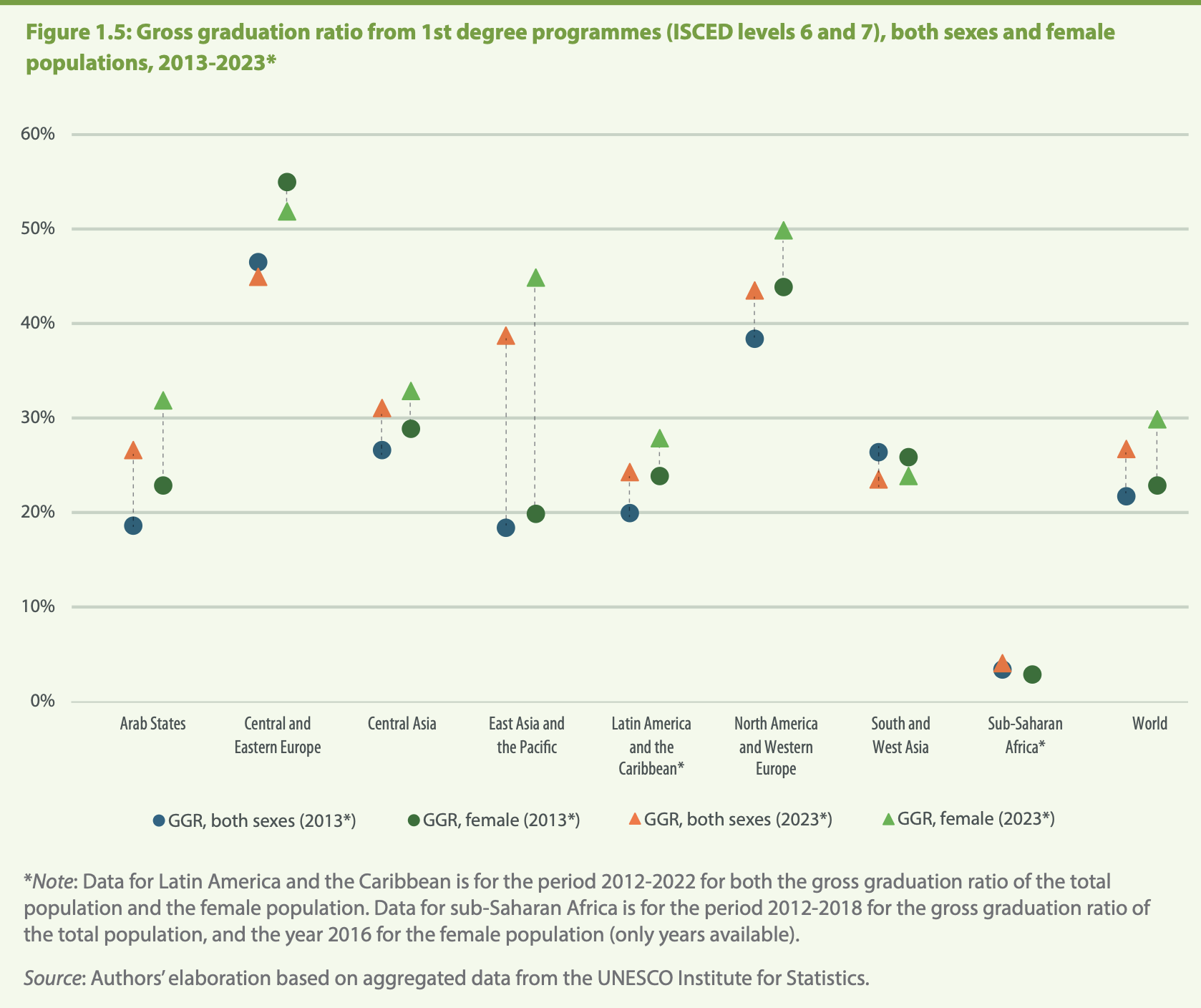
The completion of studies has not kept pace with enrolment growth, with the global gross graduation ratio increasing only modestly from 22% in 2013 to 27% in 2024.
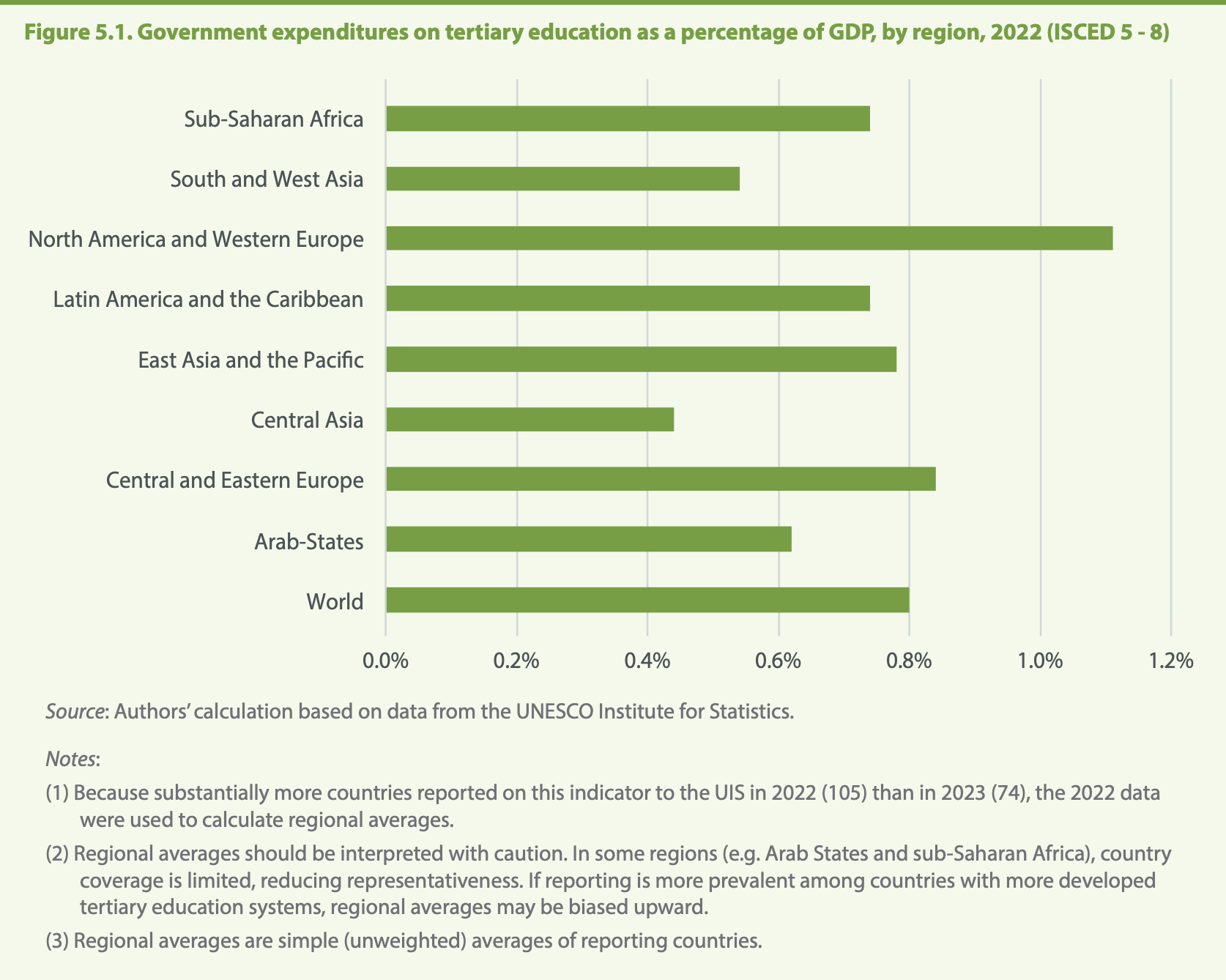
The report also examines the financing of higher education. Data show that in 2022, average public expenditure on higher education (ISCED levels 5–8) amounted to approximately 0.8% of GDP globally. This average, however, conceals significant regional differences. Income level is also a key factor, with public spending ranging from below 0.3% of GDP in low-income countries to over 1.5% in high-income systems (UNESCO GEM Report, 2024).
Governments in Western Europe and North America invest an average of 1.11% of GDP in higher education, supporting robust public systems. In East Asia and the Pacific, government expenditure on tertiary education averages 0.78% of GDP. Countries such as China and the Republic of Korea invest above the global average.
At the same time, international student mobility has become an increasingly important topic in higher education, as mobility flows continue to rise worldwide, driving unprecedented levels of global exchange.
According to the report, the number of students pursuing higher education abroad has more than tripled over the past two decades, rising from 2.1 million in 2000 to nearly 7.3 million in 2023. However, mobility benefits only 3% of the global student cohort, with substantial regional disparities.
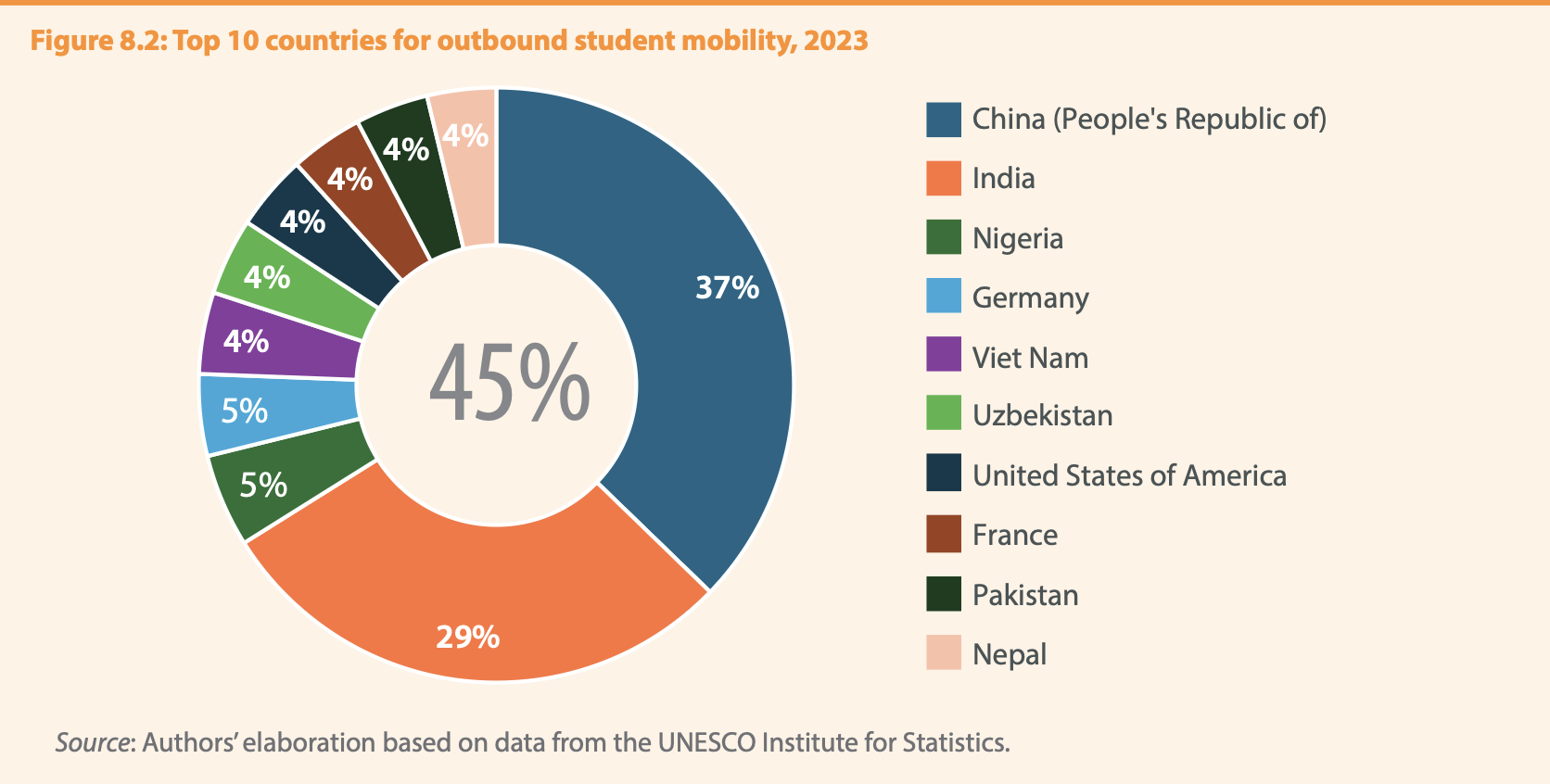
Looking at specific countries, nearly half of all internationally mobile students in 2023 came from just ten countries. China and India account for the largest shares of outbound international students, a trend projected to continue at least until 2030 (British Council, 2024b).
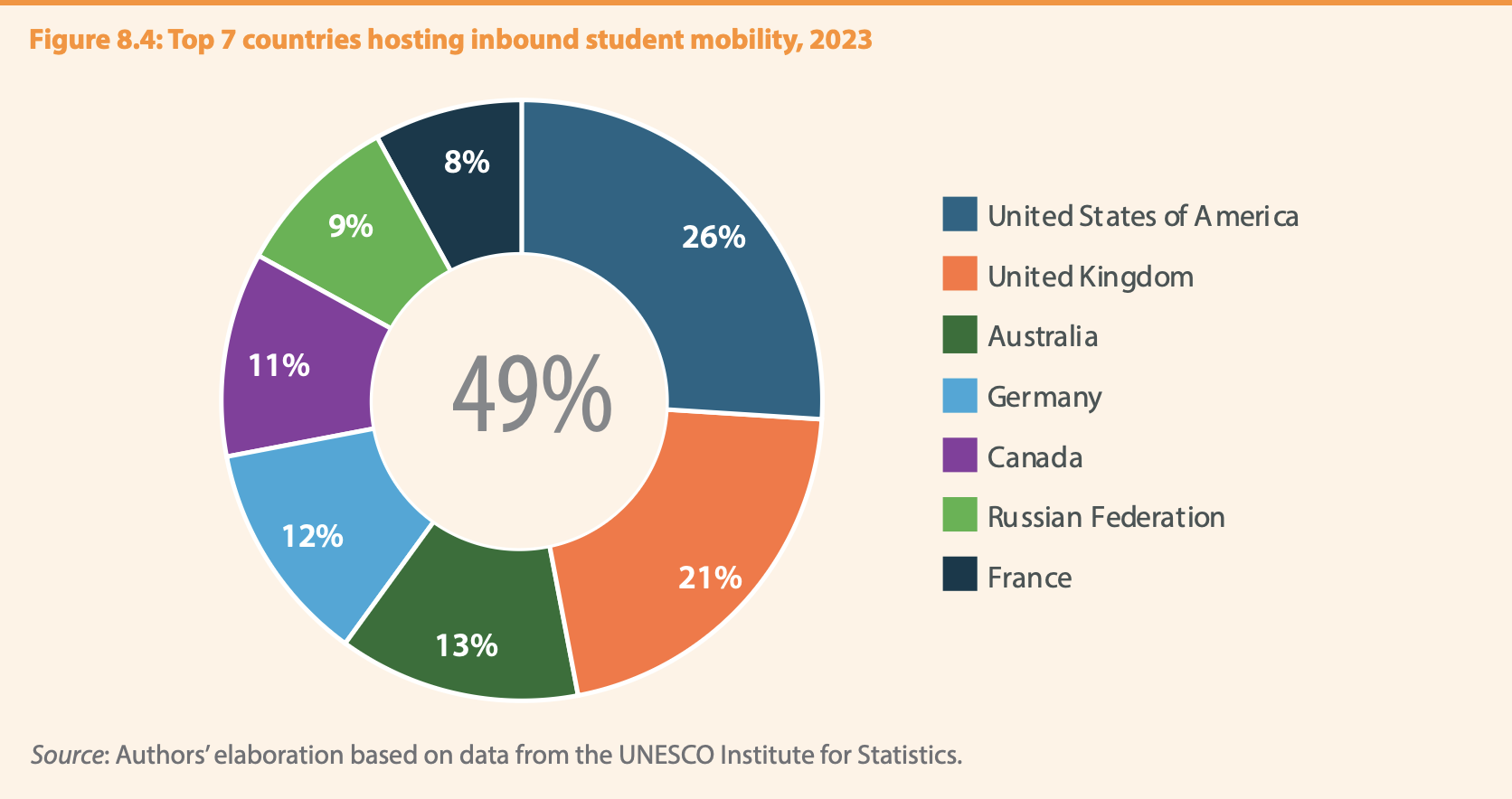
In terms of destination countries, seven countries—the United States, the United Kingdom, Australia, Germany, Canada, the Russian Federation, and France—continue to host half of all international students. Countries such as Türkiye and the United Arab Emirates are becoming increasingly popular destinations. With mobility numbers increasing at least fivefold over the past decade, they are now closely trailing France.
The report also highlights an important finding: women now outnumber men in higher education. Globally, there were 114 women enrolled in higher education for every 100 men in 2024. Gender parity has been achieved in all regions except sub-Saharan Africa. Central and Southern Asia have made remarkable progress, rising from 68 women enrolled per 100 men in 2000 to achieving gender parity in 2023. Nevertheless, women remain underrepresented at the doctoral level and hold only around one-quarter of senior leadership positions in academia.


TRENDING
MIT Tops QS World Rankings for 15th Straight Year
Data & Rankings
Harvard Tops U.S. News Global University Rankings
Data & Rankings
Global Nature and Science Leaders, H1 2026
Data & Rankings
Nobel Laureate Omar M. Yaghi Joins Tsinghua Full-Time
Top Universities
Top-Ranked Journals in Each JCR Category: 2026 Rankings Released
Research & Innovation