
China Sees Rise in International Student Mobility as Inbound Enrollment Grows 15%


The 27th China Annual Conference for International Exchange (CACIE) was held in Beijing from October 29 to 31.
The conference saw the launch of the Report on the Development of International Cooperation and Exchange in China’s Higher Education (2026), the first edition of a report examining the development of international engagement in Chinese higher education. It outlines key trends and models of internationalized education, assesses the challenges currently facing the sector, and calls for more open, high-quality, mutually beneficial and sustainable international cooperation in higher education.
The report identifies eight major trends in China's international higher education cooperation, including changes in two-way student and academic mobility.
Around 570,000 Chinese students studied abroad last year, with the composition of the outbound student population continuing to shift towards postgraduate study. The number of students pursuing master's degrees and higher qualifications has continued to grow.
Meanwhile, more than 380,000 international students were enrolled at educational institutions in China in 2025, reflecting a shift in student composition and a growing emphasis on quality in inbound international education.
Yang Jun, vice-president and secretary-general of the China Education Association for International Exchange (CEAIE), said the number of international students studying in China had increased by 15% from the previous year.
"This is relatively rapid growth," Yang said. He added that degree-seeking students now account for more than 50% of the total, with their share continuing to rise.
"More and more students want to come to China to study, which also shows that the international influence and competitiveness of China's higher education are growing," he said.
International education expo reaches five-year high
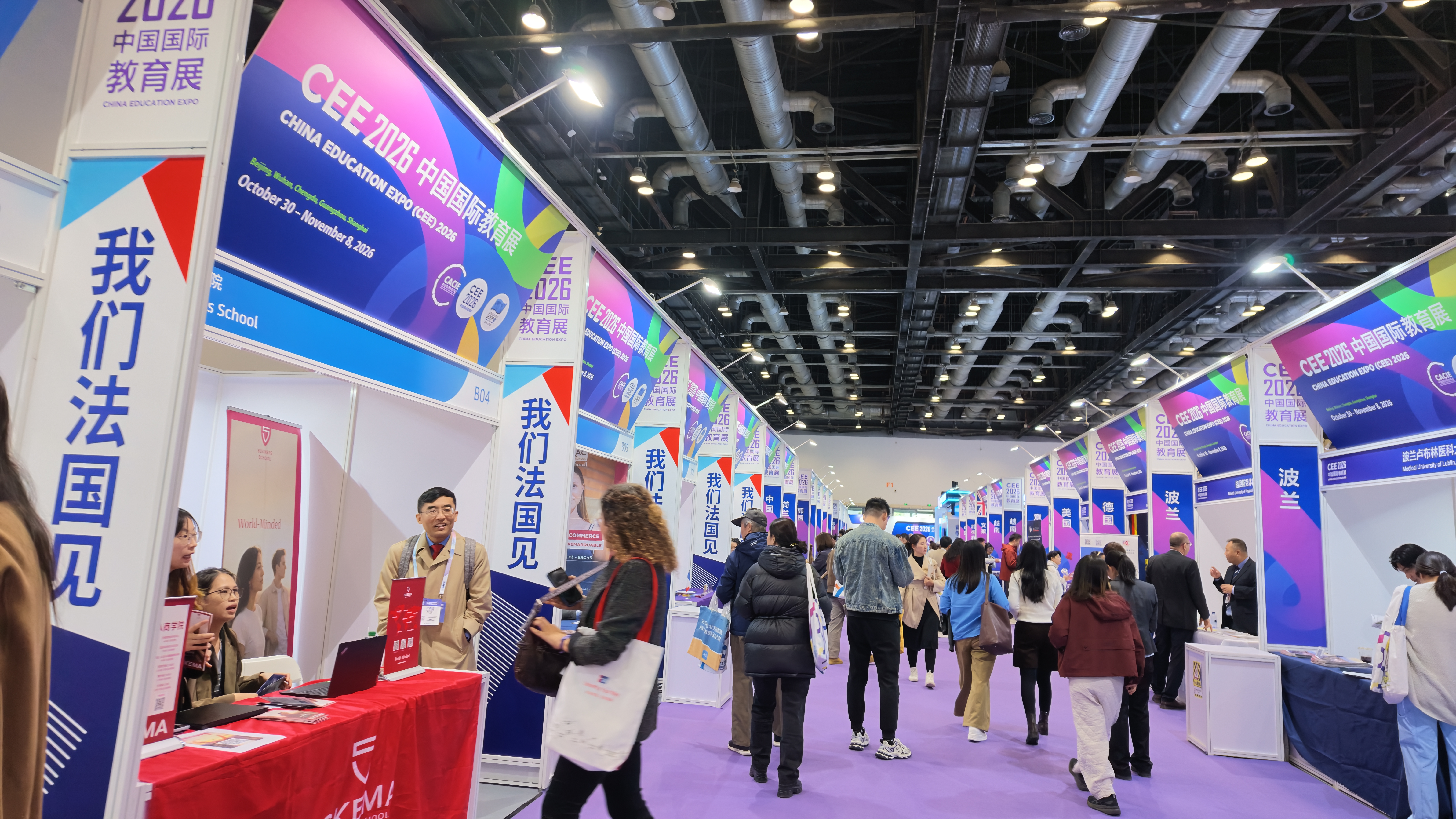
The China International Education Expo, held alongside CACIE, was another major event of the conference. More than 420 universities and other institutions from 35 countries and regions took part, marking the expo's largest scale in five years.
Among the participating countries, Germany introduced a new policy in September allowing Chinese students who score at least 60% of the total possible marks in the national college entrance examination, or gaokao, to qualify for admission to relevant preparatory programmes at German universities. Students who meet the same examination threshold and have completed at least two semesters at a Chinese undergraduate institution may also qualify for direct admission to relevant bachelor's degree programmes in Germany.
Malaysia established a national pavilion at the expo for the first time. Türkiye also made a major debut, bringing more than 50 universities to the event in its first large-scale participation. Many of the institutions were recruiting students in China for the first time.
Chen Rong'en, education counsellor at the Embassy of New Zealand in China, said China was New Zealand's largest source of international students, accounting for 34% of its international student population.
"Over the past year, the number of our cooperative education programmes has almost doubled," Chen said. "There are now 90 joint education programmes or institutions, with annual enrollment of around 14,000 students. More than 30% of the courses are delivered by New Zealand institutions."
According to China's Ministry of Education, more than 1,700 Sino-foreign cooperative education institutions and programmes at the undergraduate level and above had been established in China as of October this year, accounting for approximately 70% of all such cooperative education arrangements.


TRENDING
The Global Higher Education Map Is Shifting: The Universities on the Rise — and in Retreat
Data & Rankings
The Global Higher Education Map Is Changing: Winners, Rising Powers and New Entrants
Data & Rankings
MIT Overtakes Harvard as U.S. and China Dominate September Nature and Science Output
Data & Rankings
HKU Retains Asia’s No. 1 Spot as Chinese Mainland Universities Make Strong Gains in QS 2027 Rankings
Data & Rankings
From Training Talent to Winning Nobels: The Universities Behind the Laureates
Data & Rankings