
University of Oregon receives record $1 billion gift for new engineering college


Phil and Penny Knight have pledged $1 billion to the University of Oregon to establish a new College of Engineering, in what the university says is the largest gift ever made to a comprehensive public university.
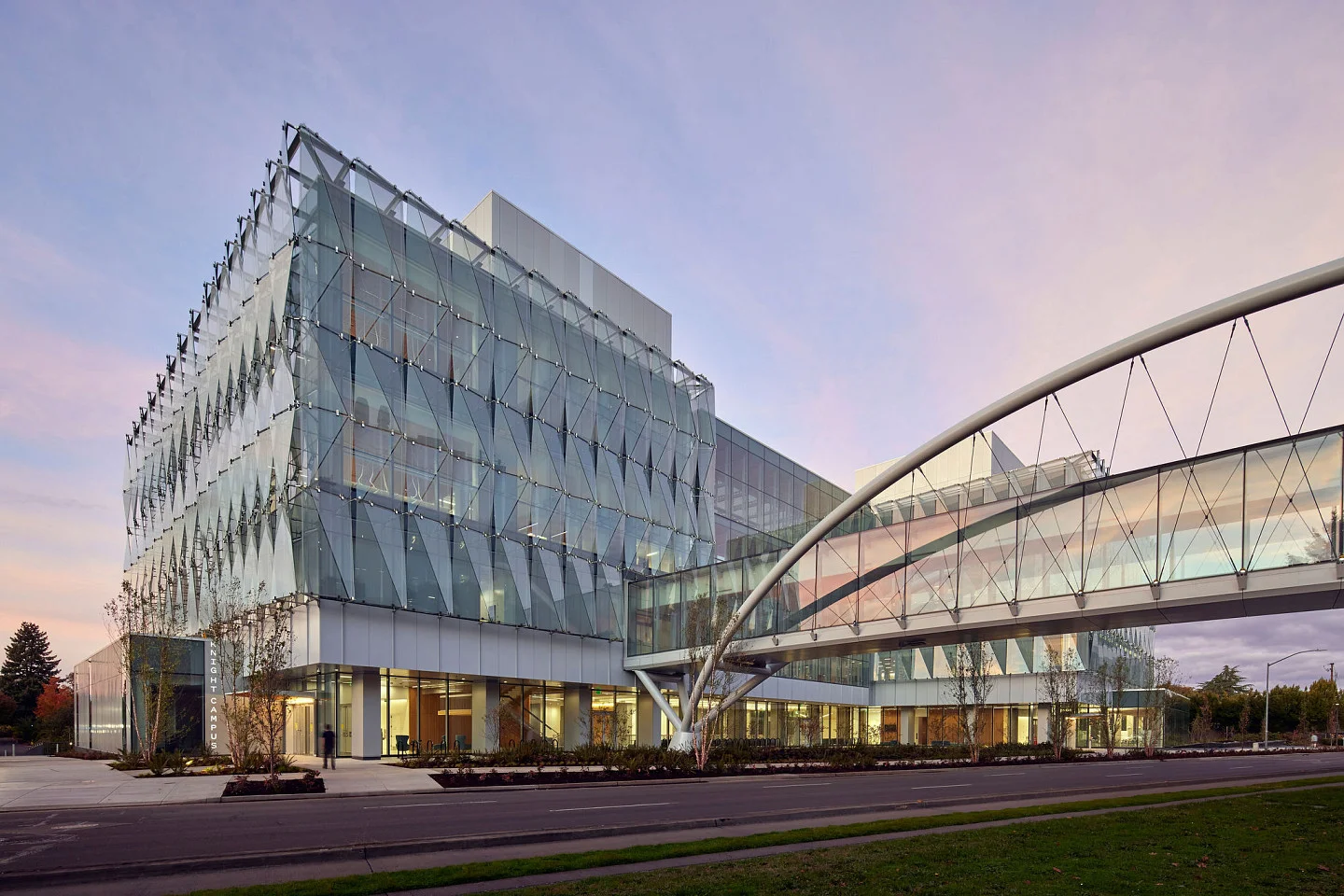
The proposed college will be based at the Phil and Penny Knight Campus for Accelerating Scientific Impact and will train engineers and applied scientists in bioengineering and other high-demand fields.
The university said the investment will expand engineering education, help attract faculty and researchers, and strengthen its ability to translate scientific discoveries into products, therapies, technologies and new companies.
“This is a scale that is genuinely hard to take in,” University of Oregon president Karl Scholz said, noting the Knights’ long-standing support for the university.
The latest commitment follows two previous $500 million gifts from the Knights, in 2016 and 2021, which established and expanded the Knight Campus. Those investments subsequently attracted additional support from state and industry partners, foundations and other donors.
Since its creation, the Knight Campus has established the university’s first engineering department and graduated the first engineers in the university’s history. It now has 17 research laboratories involving more than 500 students and trainees each year.
The campus has also reported strong outcomes for its graduate programmes. Around 40% of its graduate students have won National Science Foundation fellowships, compared with a national average of about 15%, while its master’s internship programme has recorded graduation and placement rates above 90%.
The campus has also developed an entrepreneurship ecosystem through incubator laboratories, corporate partnerships and access to capital. It has supported more than a dozen student- and faculty-led startups, including Penderia Technologies, VivoTex and restor3D.
The proposed College of Engineering will build on this infrastructure while adopting an interdisciplinary model. Bioengineering will combine engineering with basic sciences, data science and medicine, while students will receive training in communication, entrepreneurship and ethics alongside technical subjects.
Innovation will also be incorporated into faculty tenure and promotion criteria, according to the university.
Bob Guldberg, vice-president and executive director of the Knight Campus, said the proposed college would extend the campus’s original focus on translating university research into real-world applications.
The investment comes amid growing demand for engineering talent across sectors including biotechnology, semiconductors, life sciences, advanced materials, manufacturing, sports performance and artificial intelligence.
A 2026 report from the US National Science Foundation and Bureau of Labor Statistics said employment in science, technology, engineering and mathematics occupations is projected to grow at three times the rate of other occupations, with science and engineering among the fastest-growing fields.
Oregon expects about 2,500 engineering job openings each year, according to the university, while employers report that engineering positions are among the hardest roles to fill.
The state is also a major semiconductor hub, accounting for nearly one-tenth of the US semiconductor workforce. However, Oregon trains fewer workers for the sector relative to the size of its semiconductor industry than other major semiconductor states, the university said.
The University of Oregon estimates that it contributes $3.7 billion annually to the state economy. The Knight Campus accounted for more than $160 million of that impact in fiscal year 2024, before the opening of its second building.
The university will establish the new college and its degree programmes through the appropriate state and shared-governance processes.
The proposal forms part of the university’s Oregon Rising strategic plan, which aims to strengthen distinctive research areas, prepare students for high-demand careers and increase the impact of research on the state.
The Knights’ latest gift continues a relationship with the University of Oregon spanning more than five decades. Phil Knight, who graduated from the university before co-founding Nike, and Penny Knight have supported a range of university initiatives, including the Knight Law Center, Knight Library, endowed professorships and the Knight Campus.


TRENDING
Harvard Leads the Citation Laureates Rankings as Nobel Prize Season Approaches
Data & Rankings
Good University Guide 2027: St Andrews Takes No. 1 as Imperial Climbs Three Places
Data & Rankings
From Lasker to Nobel: The Universities Behind Biomedical Breakthroughs
Data & Rankings
Before the Nobel: Which Universities Are Leading in Biomedical Breakthroughs?
Data & Rankings
WorldHE NS Watch: Harvard, MIT and Stanford Lead Global Nature and Science Output in August
Data & Rankings