
Here's Who Runs the World's Top 50 Universities


A deep dive into the highest degrees, alma maters, disciplinary backgrounds, interdisciplinary pathways, and age profiles of the leaders steering the 2026 QS World University Rankings top 50 institutions.
The presidency of a world-class university is one of the most influential roles in global higher education. But who exactly occupies these offices? A newly compiled dataset examining the leaders of the top 50 universities in the 2026 QS World University Rankings reveals a strikingly consistent profile: an academic in their sixties, armed with a doctorate, most likely trained in the natural or social sciences, and nearly half of them once studied at the university they now lead.
When it comes to the highest degree attained, the data leaves little room for ambiguity. An overwhelming 90% (45 individuals) of these presidents hold a doctorate. Only three have a master's as their terminal degree, and just two hold a bachelor's degree alone.
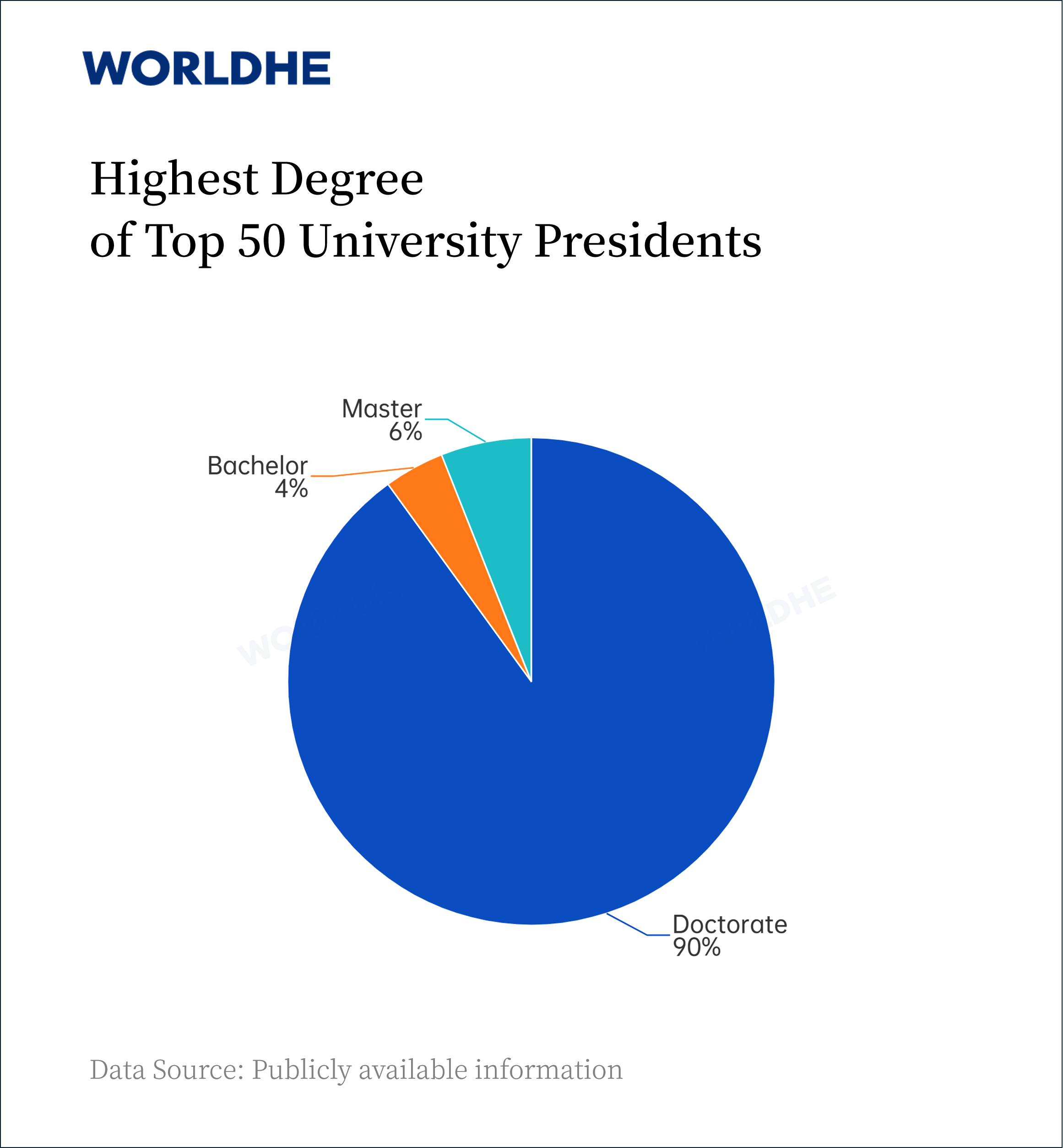
This near-universal attainment of a doctorate underscores that despite the increasingly corporate and managerial demands of running a complex global institution, deep scholarly credibility remains a non-negotiable prerequisite for leadership at the apex of academia.
Oxford, Cambridge, Harvard: The Dominant Sources of Presidential Degrees
Beyond the degrees themselves, the institutions that granted them reveal a pronounced concentration of academic pedigree. The data tracks every degree earned by the 50 presidents, Oxford leads with 7 degree affiliations, closely followed by Cambridge and Harvard with 6 each, Yale and University of Toronto with 5 each. The list is dominated almost exclusively by Anglo-American institutions, with the University of Toronto and a cluster of Australian universities—University of New South Wales and the University of Sydney—representing the broader Anglosphere. Notably, Nanjing University stands as the sole non-English-speaking institution among the top suppliers, reflecting the diversification of leadership pathways in global higher education.
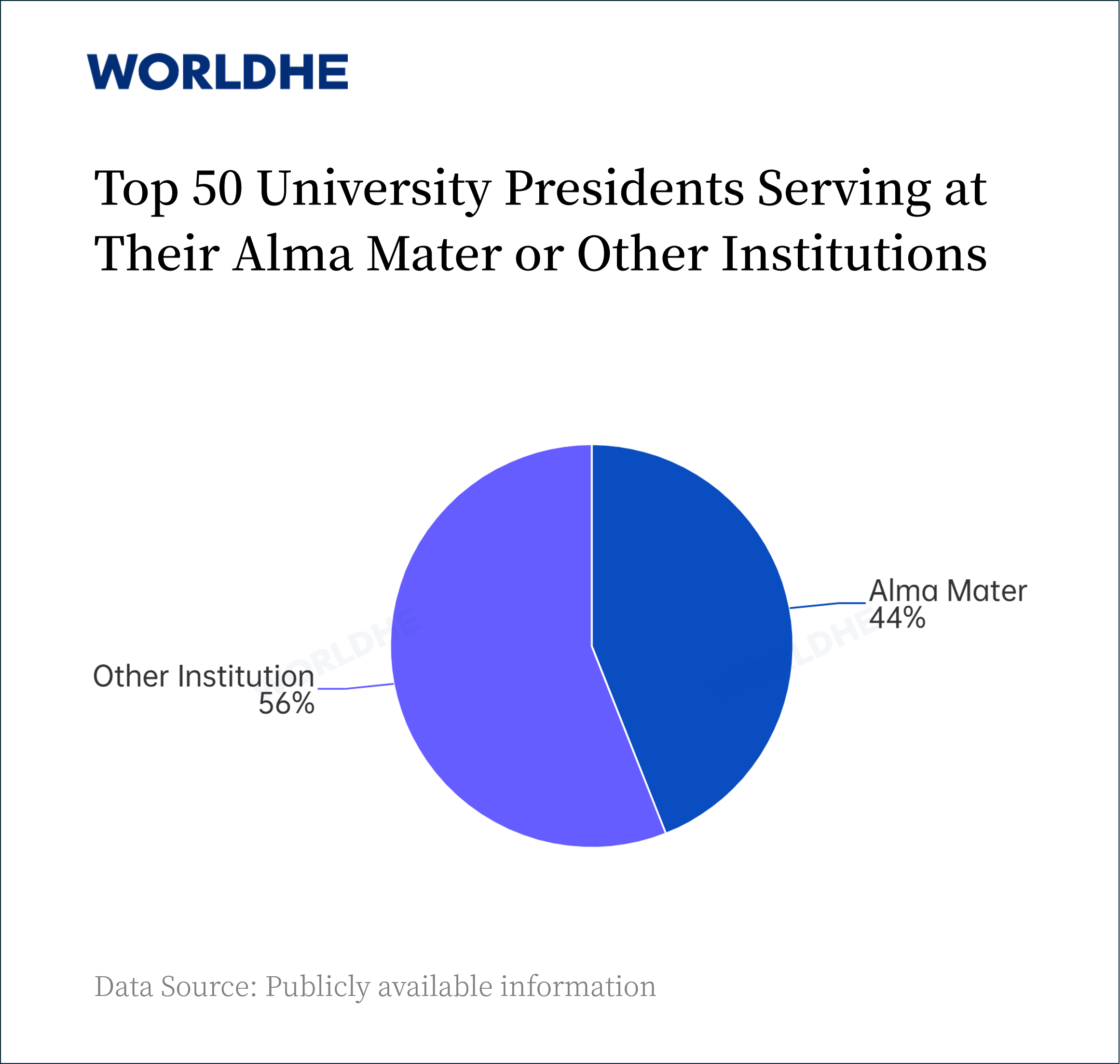
The data reveals a notable pattern: 22 out of 50 presidents—44%—are graduates of the university they now lead. This near-even split between alumni and external hires suggests that governing boards at the world's top universities value both institutional continuity and fresh strategic perspective. An alumnus president brings deep cultural familiarity and long-standing campus relationships, while an external appointee offers cross-institutional experience and an outsider's clarity.
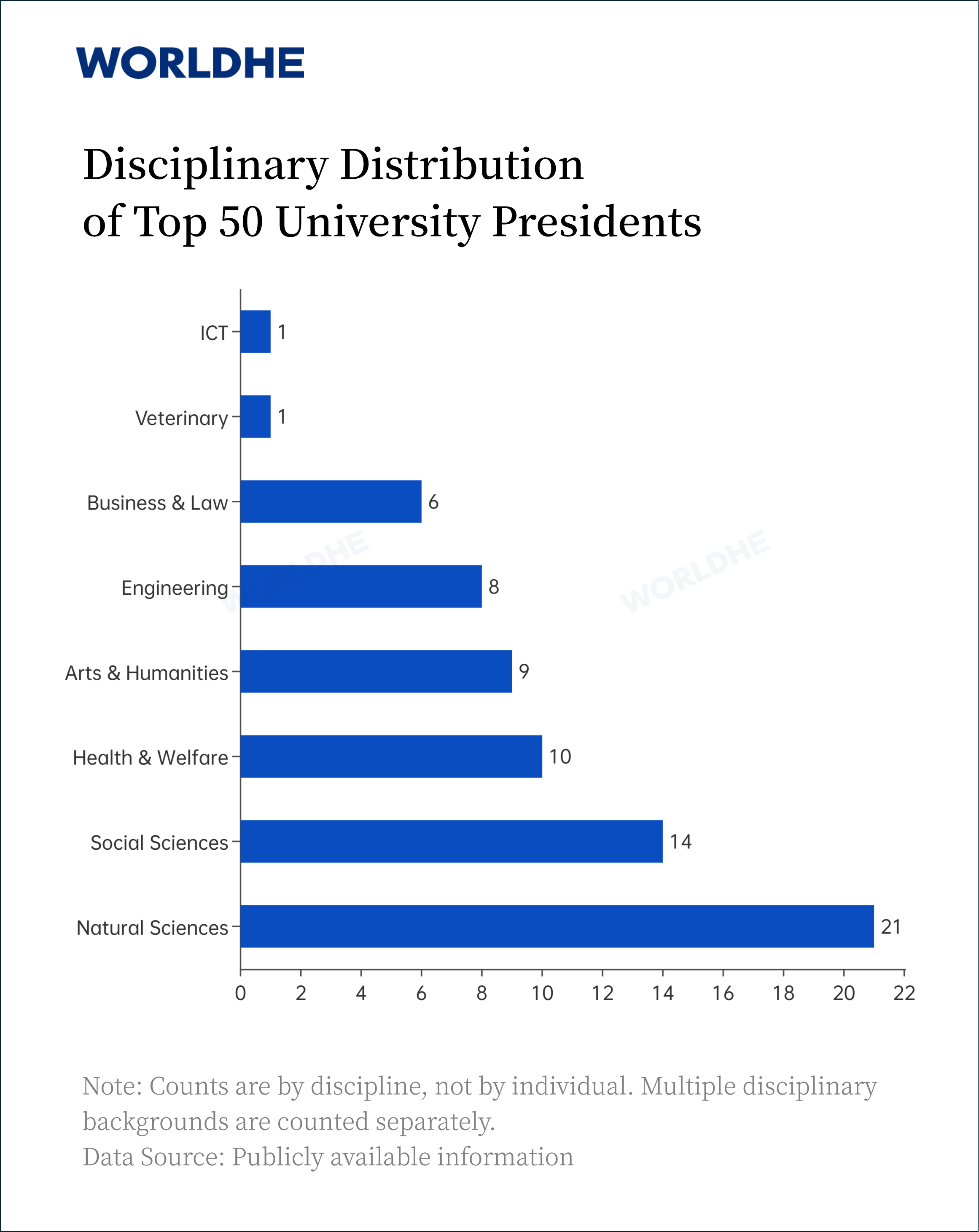
An analysis of the presidents' academic disciplines reveals a clear hierarchy of expertise. Natural sciences, mathematics, and statistics form the most common background, claimed by 42% (21) of the leaders. This is followed by social sciences, journalism, and information (28%) , and health and welfare (20%) .
Nearly 40% of Top 50 University Presidents Have an Interdisciplinary Background
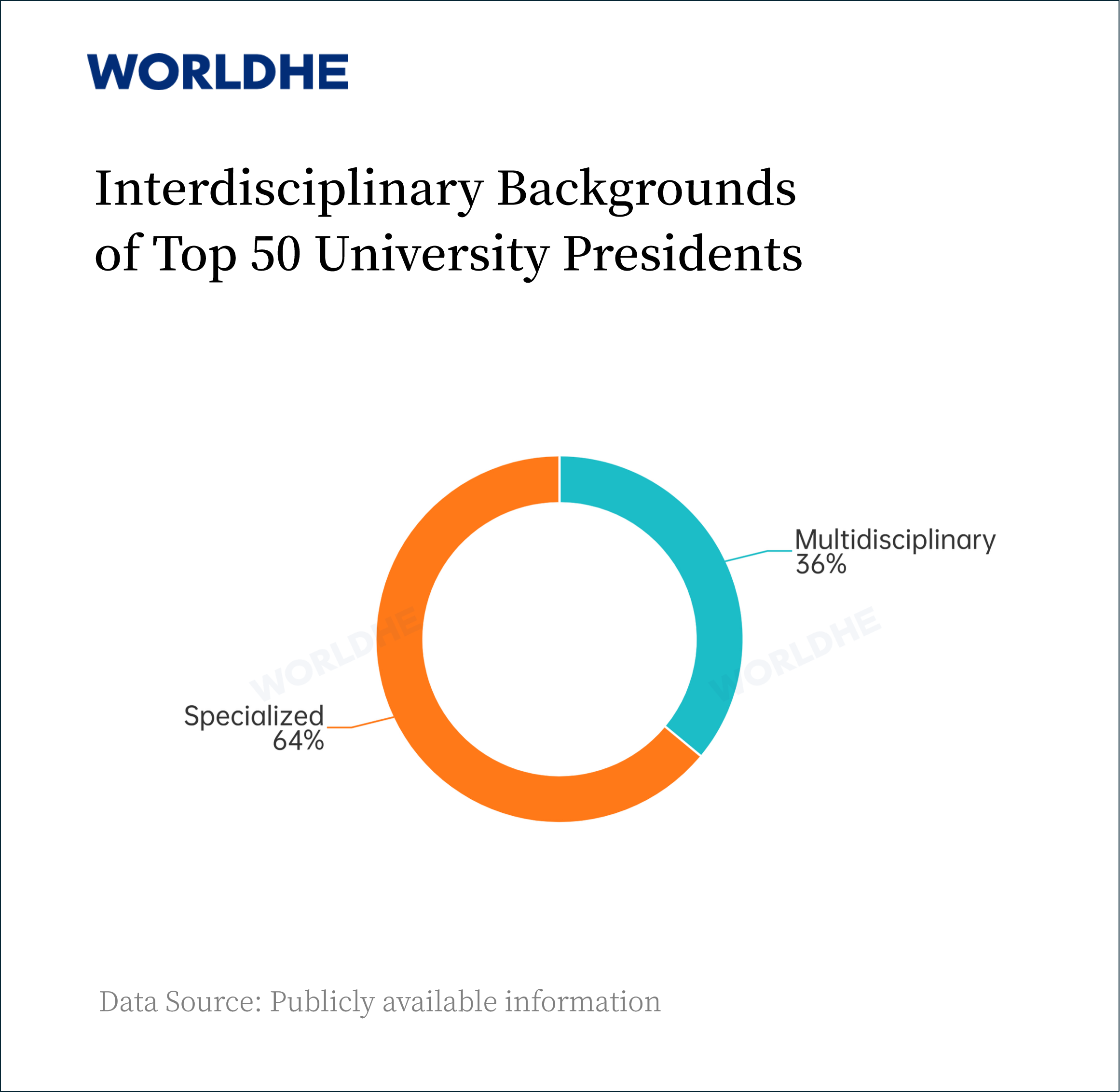
Notably, the total count of disciplinary affiliations exceeds 50, indicating that 38% of presidents (18 individuals) possess an interdisciplinary background, blending training from multiple fields.
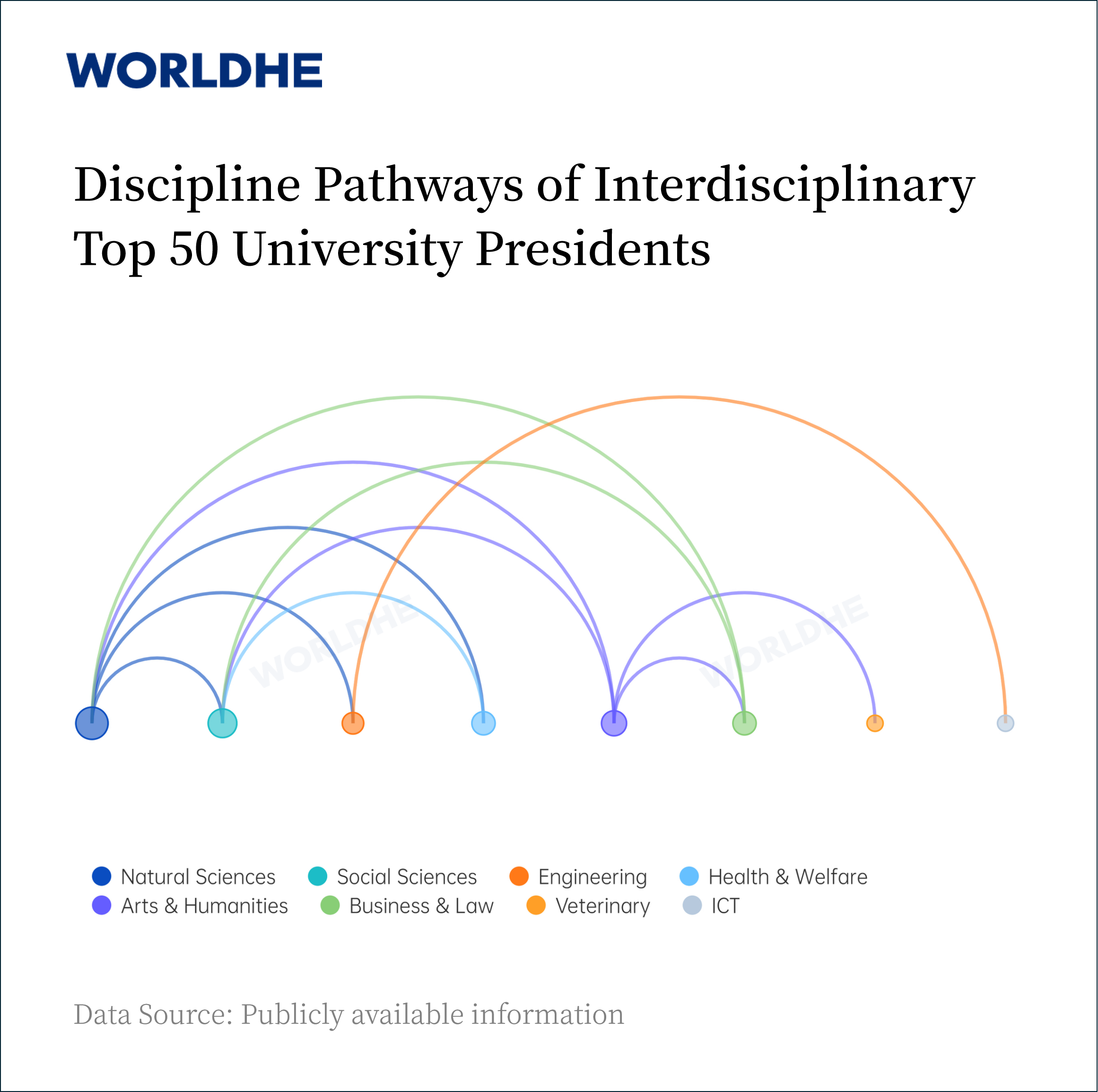
A closer look at the specific combinations pursued by the 18 interdisciplinary presidents reveals which academic bridges are most commonly traveled. The most frequent pairing occurs between Natural Sciences and Engineering, as well as between Natural Sciences and Health & Welfare, each accounting for three presidents. These connections reflect the natural convergence of foundational science with applied technical and medical fields—a trajectory that aligns with the research-intensive missions of top-tier universities.
The data also highlights a noteworthy cluster at the intersection of Business & Law and Social Sciences, with three presidents drawing from both domains. This combination suggests a leadership profile equipped to navigate the policy, regulatory, and organizational complexities that increasingly define higher education governance.
While most presidents(66%,32 individuals) still come from a single discipline, these cross-disciplinary profiles signal a growing recognition that the complex challenges of modern university governance often demand leaders who can bridge divides between the sciences, humanities, and professional fields.
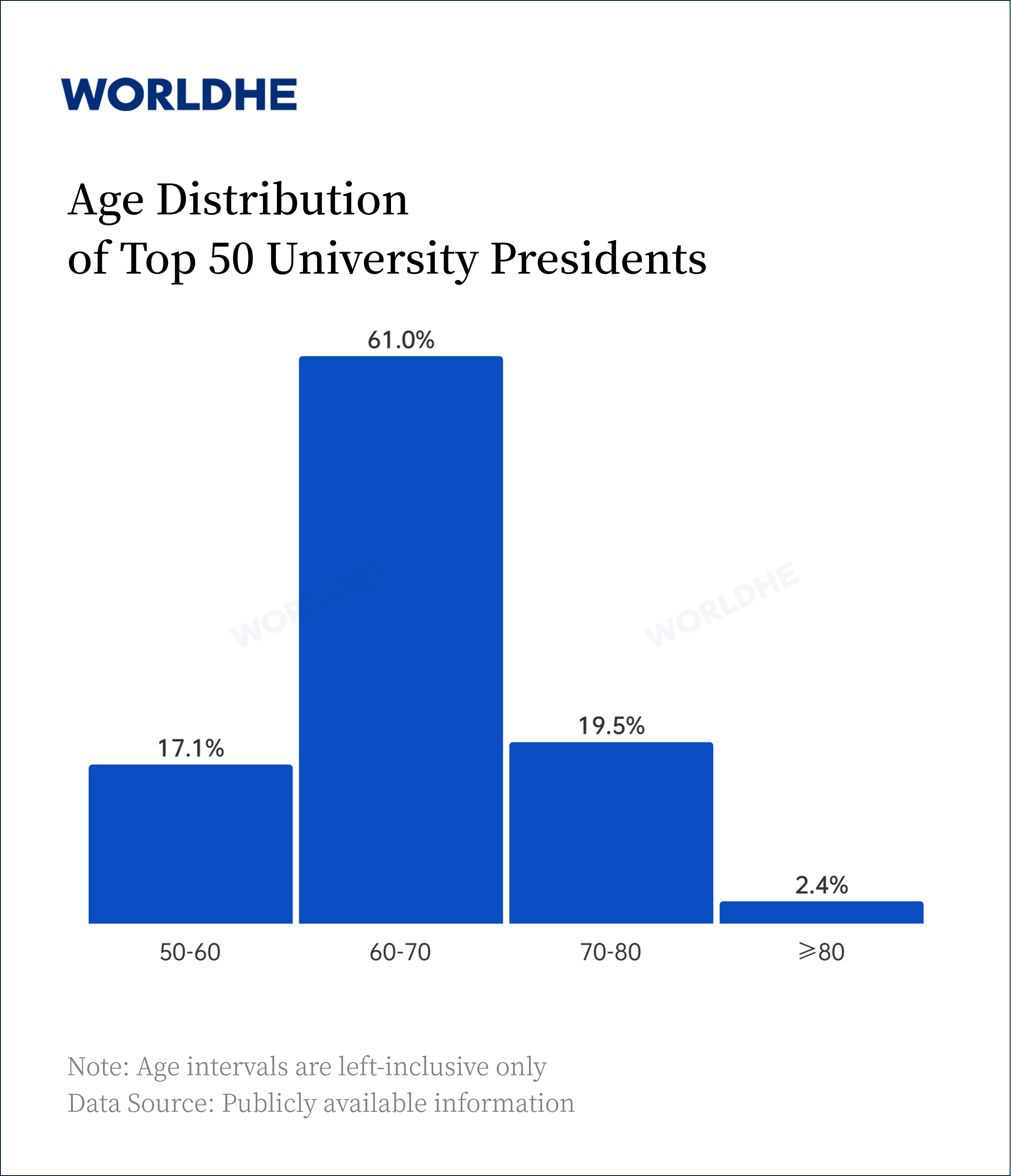
A commanding 61% of all presidents (25 individuals) are aged between 60 and 70, reinforcing this decade as the peak of university leadership tenure. The cohort skews heavily toward seniority, with an additional 19.5% (8 presidents) in their seventies and one leader aged 80 or above (2.4%) .
Data note:
- All information presented in this article is compiled from publicly available sources and is intended for reference purposes only.
- The disciplinary categories used in this analysis follow the broad field definitions of the International Standard Classification of Education: Fields of Education and Training 2013 (ISCED-F 2013), as established by the UNESCO Institute for Statistics. Abbreviations in this article correspond to ISCED-F as follows: Natural Sciences (Natural sciences, mathematics and statistics), Social Sciences (Social sciences, journalism and information), Engineering (Engineering, manufacturing and construction), Business & Law (Business, administration and law), Veterinary (Agriculture, forestry, fisheries and veterinary), ICT (Information and Communication Technologies), Arts & Humanities (Arts and humanities), and Health & Welfare (Health and welfare).


TRENDING
Why Imperial Surpassed Oxford and Cambridge in QS Rankings
Top Universities
Here's Who Runs the World's Top 50 Universities
Data & Rankings
Global University Rankings 2026: Who Leads the World?
Data & Rankings
Five University Scholars Win $1.2M 2026 Shaw Prize
Research & Innovation
Weekly Analysis: Nature, Science Output Concentrates Among Elite Universities
Data & Rankings