
Princeton Scientist Bonnie Bassler Awarded Royal Society’s Copley Medal


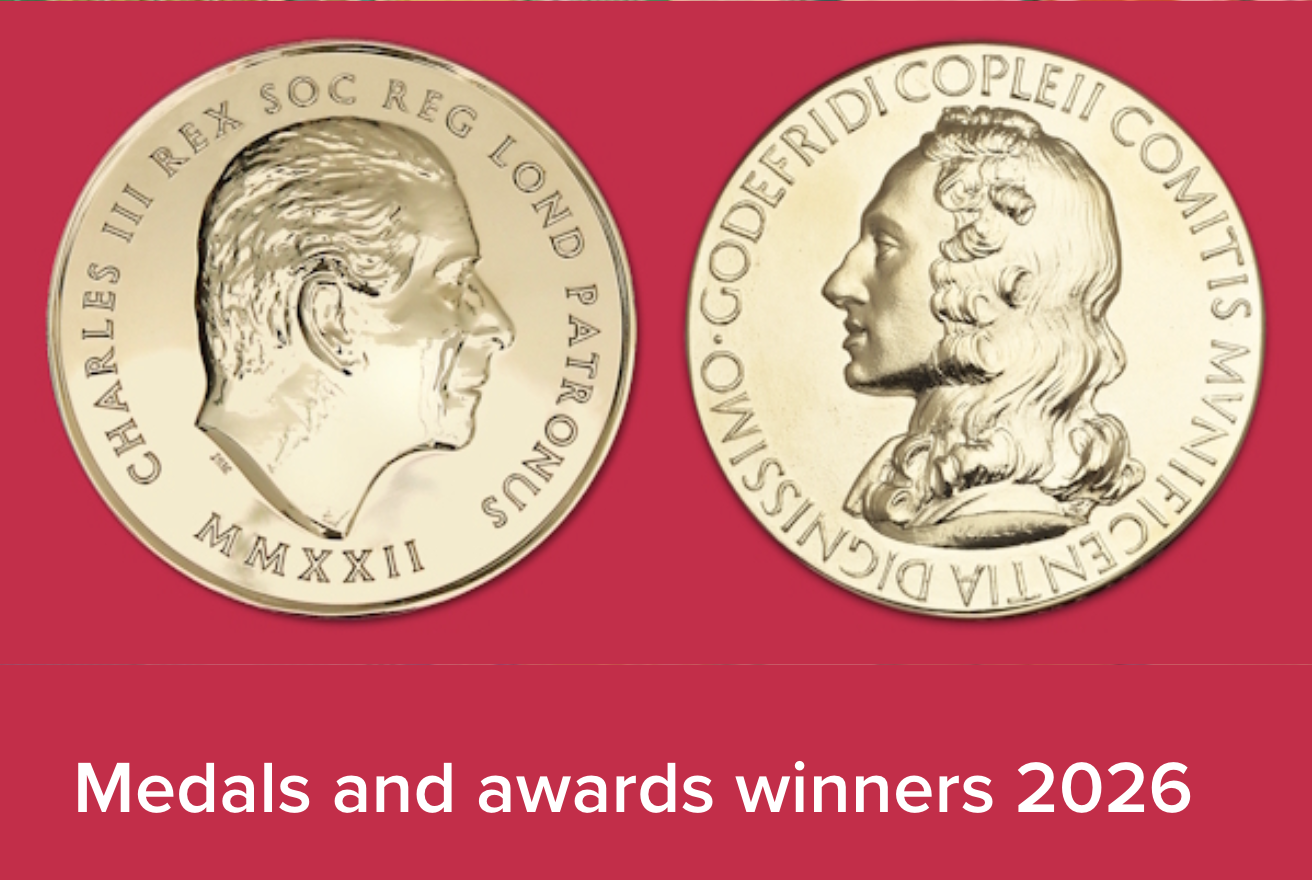
Renowned microbiologist Bonnie Bassler, the Andrew K. Golden University Professor at Princeton University and a Howard Hughes Medical Institute investigator, has been awarded the Royal Society’s 2026 Copley Medal, the world’s oldest scientific prize.
Bassler is among 28 scientists and researchers recognized this year by the Royal Society for contributions to scientific discovery, public engagement and research culture. The awards were announced Aug. 27.
The Copley Medal is the Royal Society’s most prestigious scientific award. Established in 1731, it recognizes sustained and outstanding achievements in any field of science and carries a £25,000 prize. Previous recipients include Nobel laureate Dorothy Hodgkin, Albert Einstein, Stephen Hawking, Jocelyn Bell Burnell and Charles Darwin.
Bassler was recognized for research that has transformed scientists’ understanding of how bacteria communicate and coordinate their behavior.
Her work has shown that single-celled bacteria are capable of acting collectively by exchanging chemical signals through a process known as quorum sensing. Rather than functioning solely as individual organisms, bacteria can use these signaling systems to detect the presence of other cells, coordinate behavior and respond collectively to changes in their environment.
The research has implications for medicine as well as basic microbiology. By revealing how bacteria communicate, Bassler’s work has opened up the possibility of developing therapies that disrupt bacterial signaling and potentially target disease-causing bacteria without relying solely on conventional antibiotics.
Sir Paul Nurse, president of the Royal Society, said Bassler’s research had “transformed our understanding of how bacteria communicate with each other.”
He added that her discoveries could contribute to the development of drugs that serve as alternatives to antibiotics by interfering with bacterial communication systems.
“This well-deserved award recognises her invaluable contribution to science, as well as the extraordinary creativity with which she approaches research,” Nurse said.
The Copley Medal is the latest recognition for Bassler, whose research has helped establish quorum sensing as a major area of microbiological research. Her work has examined how bacteria use chemical signals to regulate collective behaviors, including processes that can contribute to infection.
The Royal Society’s 2026 awards recognize 28 recipients across scientific research, public engagement and research culture. The Society said the recipients had made exceptional contributions to science and would help inspire future generations of researchers.
“Celebrating excellence in science is core to the Society’s mission,” Nurse said, congratulating this year’s recipients.
The full list of 2026 winners
Premier awards
Copley Medal
Professor Bonnie Bassler FRS, for her discovery of the universality of chemical communication among bacteria, and for her dogma-overturning idea that interfering with bacterial communication could form the basis of completely novel anti-bacterials.
Bakerian Medal and Lecture
Professor Karen Heywood OBE FRS, for her outstanding contributions as a physical oceanographer who has documented how the Southern Ocean interacts with the Antarctic continent.
Croonian Medal and Lecture
Dame Janet Thornton DBE FMedSci FRS, for pioneering work in protein structural and functional bioinformatics.
Royal Medal (Physical)
Professor John Pyle CBE FRS, for his foundational and policy-relevant contributions to the understanding of stratospheric and tropospheric ozone via major advances in the numerical modelling of the atmosphere, his insightful interpretation of atmospheric measurements and his leadership of major field campaigns.
Royal Medal (Biological)
Professor Lewis Kay FRS, for his remarkable contribution to understand and quantify protein dynamics and its relevance to protein function.
Royal Medal (Applied)
Professor Fiona Wood AO, for her pioneering work resulting in the invention of spray-on-skin, an innovation that has transformed the lives of burns patients globally.
Prize lectures
Francis Crick Medal and Lecture
Dr Kelly Nguyen, for her ground-breaking discoveries into the molecular mechanisms of telomere maintenance.
Royal Society Africa Prize
Professor Clive Gray, for pioneering research into the immunological impacts of HIV on maternal and child health, particularly the mechanisms affecting HIV-exposed uninfected children.
Milner Award and Lecture
Professor Monika Henzinger, for pioneering research in areas including efficient algorithms, differential privacy, web information retrieval, and systems profiling, and having a long-lasting impact in academia and industry.
Environment Medal and Lecture
Professor Paul Bates CBE FRS, for developing improved flood modelling approaches, including advances in shallow water equations and remote sensing, that are widely used in flood-risk management internationally.
Michael Faraday Prize and Lecture
Professor Anjali Goswami FRS, for her transformational research in vertebrate evolution and her exceptional public engagement, particularly her dedication to championing and advocating for women and people from minoritised communities within science and research.
Royal Society David Attenborough Award and Lecture
Dame Maggie Aderin MBE, for her commitment to widening participation, reshaping public understanding of space science and scientific discovery, and innovative outreach that has impacted millions.
Wilkins-Bernal-Medawar Medal and Lecture
Professor Gregory Radick, for his exemplary work as a historian and philosopher of science, and his contributions to our understanding of genetics and evolutionary theory.
Royal Society Rosalind Franklin Award and Lecture
Dr Patricia Rodríguez Maciá, for her achievements in developing new artificial metalloenzymes and her proposed outreach and mentorship programme that engages secondary school girls from underrepresented communities.
Ferrier Medal and Lecture
Professor Kenneth Harris, for his revolutionary contributions to neuroscience by unifying experimental neurophysiology with advanced analytical methods, and for pioneering the technologies and computational methods that allow recording from thousands of neurons.
Awards
Buchanan Medal
Dr Ketan Patel FMedSci FRS, for the discovery that two simple aldehydes (acetaldehyde and formaldehyde) are major sources of endogenous DNA damage, and that a fundamental two-tier protection system prevents these reactive metabolites from disrupting essential physiological processes.
Darwin Medal
Professor Michael Benton OBE FRS, for his contribution to many aspects of palaeontological science, as well as authoring the standard textbooks in the field, popular science and children’s books.
Royal Society Research Culture Award
Dr Audrey Cameron OBE, for groundbreaking contributions to both science education and accessibility for the Deaf community. Cameron has significantly advanced the use of British Sign Language (BSL) in STEM education, particularly the compilation of over 4,000 signs for STEM with BSL definitions and examples.
Royal Society Athena Prize
NU STEM, for their work promoting equity in STEM and strengthening the (research) evidence base around effective STEM Education and Engagement.
Royal Society Armourers & Brasiers' Company Prize
Professor Charlotte Williams OBE FRS, for innovative materials science for sustainable oxygenated polymers as plastics, thermoplastic elastomers, ionomers and polyelectrolyte binders.
Hauksbee Award
Stuart Naismith, for his entrepreneurial approach to science education, despite having no science background, dedicating his time to developing his delivery of science throughout his school and beyond.
Davy Medal
Professor Douglas Stephan FRS, for his discipline-changing discovery and elaboration of the concept of ‘frustrated Lewis pairs’ that revolutionised catalysis, by introducing main-group reactivity and that became a globally embraced paradigm for new reactivity across the periodic table, leading to innovations and applications in inorganic, organic materials, and radical chemistry, microfluidics, heterogeneous catalysis, and bioinorganic chemistry.
Gabor Medal
Professor Sarah Teichmann FMedSci FRS, for fundamental contributions to deciphering the molecular and cellular basis of living systems by combining biophysics, genomics and data science.
Rumford Medal
Professor Laura Herz FRS, for her outstanding research on the physics of light interaction and energy conversion in semiconductors, including metal-halide perovskites, nanomaterials and molecules, which has had profound implications for solar cell development.
Sylvester Medal
Professor Wendelin Werner FRS, for playing an instrumental role in the development of the Schramm-Loewner evolution, a random curve which describes the scaling limit of many models from statistical mechanics in two dimensions.
Hughes Medal
Professor Iain McCulloch FRS, for innovative advancements in the field of energy through the discovery of new organic semiconducting materials and formulations for photovoltaics and solar fuels.
Mullard Medal
Professor Quentin Pankhurst, for pioneering leadership in establishing the field of Healthcare Biomagnetics which has resulted in profound scientific, clinical, and economic impact in the UK and internationally; and established the UK as a global centre for biomagnetic medical technologies.


TRENDING
Before the Nobel Prizes: Which Universities Are Leading the Pipeline of Future Laureates?
Data & Rankings
Where Fields Medalists Studied and Worked?
Data & Rankings
Which Universities Are Producing the Next Nobel Laureates? The Breakthrough Prize Offers Some Clues
Data & Rankings
MIT Tops QS World Rankings for 15th Straight Year
Data & Rankings
Harvard Tops U.S. News Global University Rankings
Data & Rankings