
Wang Jinsong Wins China's First William Nordberg Medal


At the 46th COSPAR Scientific Assembly on Aug. 3, Chinese space physicist and meteorologist Wang Jinsong and U.S. space physicist David Gary Sibeck were awarded the William Nordberg Medal, one of the Committee on Space Research's (COSPAR) highest scientific honors. Each recipient will also have an asteroid named in recognition of their contributions.
COSPAR, a scientific body of the International Science Council, presents the William Nordberg Medal every two years to scientists who have made distinguished contributions to the application of space science. Since 2022, the award has been presented to two recipients each cycle.
According to China Central Television (CCTV), Wang is the first Chinese scientist to receive the medal since it was established in 1988, marking a milestone for China's growing international profile in space science and its applications.
Wang Jinsong
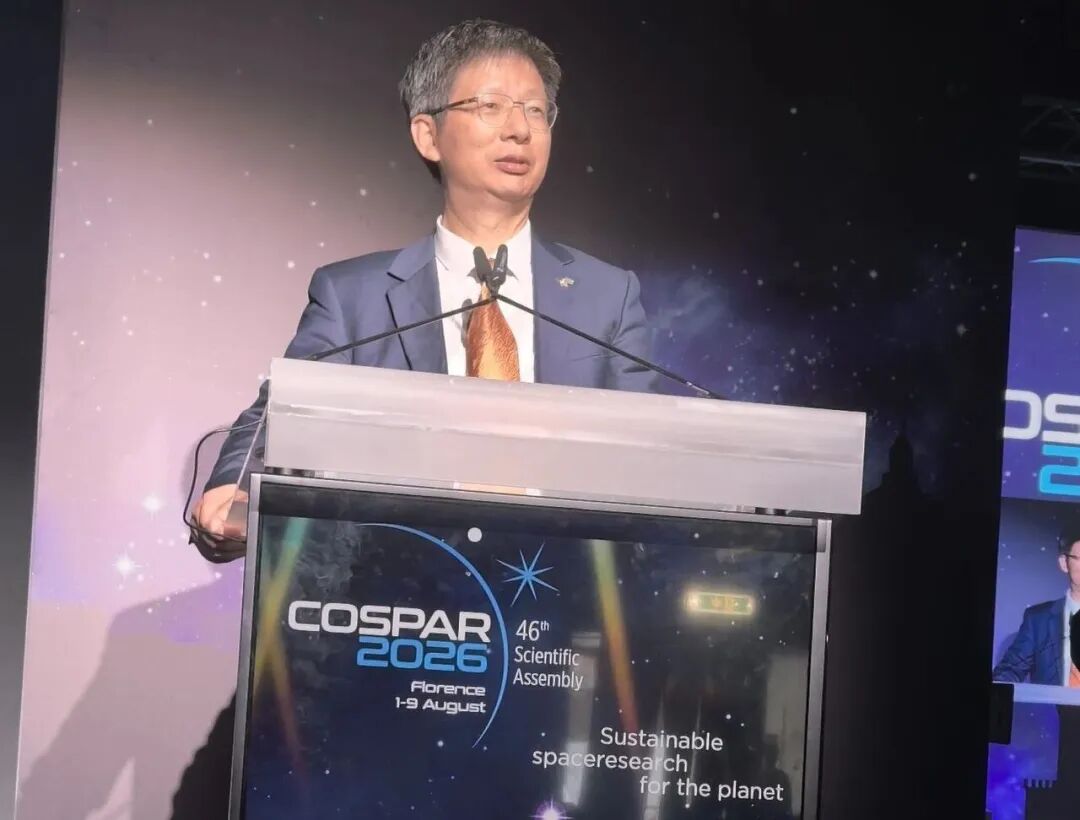
Wang is director of the National Satellite Meteorological Center—also known as the National Center for Space Weather—under the China Meteorological Administration, and chief designer of China's Fengyun meteorological satellite program.
Over a career spanning more than three decades, Wang has played a leading role in building China's operational space weather capability. He led the establishment of the country's national space weather system and advanced the development and international application of the Fengyun satellite series.
His research team has achieved technological advances in high-precision solar imaging from non-sun-pointing platforms, wide-field auroral imaging, broadband omnidirectional particle detection and weak airglow observations. Wang also proposed new approaches for modeling Sun–Earth interactions and led the development of China's first generation of numerical space weather forecasting systems.
More recently, he oversaw development of Fengyu, described by the China Meteorological Administration as the world's first end-to-end artificial intelligence forecasting model spanning the solar wind, magnetosphere and ionosphere. Designed to improve the speed and accuracy of space weather prediction, the system is intended to enhance forecasting during extreme solar events.
Wang also introduced a "three-element, five-level" framework for evaluating satellite performance, which has become a theoretical basis for the planning, design and operation of China's Fengyun meteorological satellite program.
Wang earned bachelor's and master's degrees in space physics from Peking University before completing a Ph.D. in space physics at the Chinese Academy of Sciences. He joined the National Satellite Meteorological Center in 2005 after holding research and faculty positions at Peking University.
David Gary Sibeck
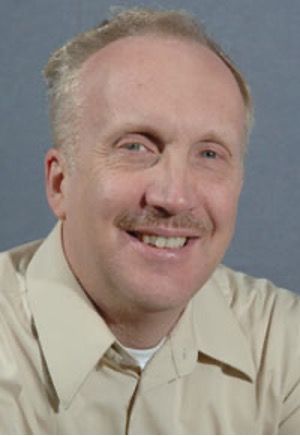
Sibeck serves as chief scientist of NASA's Heliophysics Division. His research focuses on the interaction between the solar wind and Earth's magnetosphere and ionosphere, where space weather effects are most directly experienced.
After earning bachelor's, master's and doctoral degrees at the University of California, Los Angeles, Sibeck conducted postdoctoral research on Earth's radiation belts before joining the Johns Hopkins University Applied Physics Laboratory in 1987.
During his career, he has made significant contributions to international magnetospheric science, participating in the Prognoz and Interball spacecraft programs, helping preserve NASA's historical magnetospheric data archives, organizing international research collaborations through Switzerland's International Space Science Institute, and contributing to studies defining U.S. military space weather requirements. He is a Fellow of the American Geophysical Union and recipient of the AGU's James B. Macelwane Medal.
Since joining NASA's Goddard Space Flight Center in 2002, Sibeck has helped shape NASA's heliophysics program. He served as deputy program scientist for the agency's Living With a Star initiative before becoming project and mission scientist for the THEMIS/ARTEMIS and Van Allen Probes missions. He currently leads development of a wide-field soft X-ray imager designed to observe interactions between the solar wind and planetary magnetospheres.
In addition to his research, Sibeck has held numerous leadership roles in the international space physics community, including as a former president of the American Geophysical Union's Space Physics and Aeronomy Section and a long-serving advisor to the European Space Agency's Cluster Active Archive.


TRENDING
Where Fields Medalists Studied and Worked?
Data & Rankings
MIT Tops QS World Rankings for 15th Straight Year
Data & Rankings
Harvard Tops U.S. News Global University Rankings
Data & Rankings
2026 Fields Medal Winners Announced: Four Mathematicians Honored
Research & Innovation
ICM 2026 Leak Reveals Possible Fields Medal Winners
Research & Innovation